

CCMT 2026: Exhibition Insights and Trend Analysis
Abstract
As a major biennial exhibition, the China CNC Machine Tool Fair (CCMT) is one of the key windows for observing developments in China’s machine tool industry. CCMT 2026 highlighted a clear trend toward domestic substitution and technological self-reliance in mainland China, particularly through a notable increase in the number of multitasking machines on display compared with the previous edition, CCMT 2024. The exhibition also featured flexible manufacturing system (FMS) total solutions and diversified applications of CNC systems, indicating that market attention is gradually extending toward system integration. Driven by rapid growth in downstream demand and policy support, mainland China has long pursued leapfrog development as its primary model, and its machine tool industry is advancing along the same path by accelerating the adoption of mid- to high-end equipment. Based on on-site observations and compiled market data, this article analyzes the directions of integration, systemization, and automation reflected at the exhibition, with the aim of providing industry participants with reference points for market planning and strategic decision-making. As a key supplier of critical machine tool components, GPM International will continue deepening its capabilities in product technology, application orientation, system integration, and technical collaboration, while building closer partnerships with machine tool builders to meet evolving industry needs.
Trend 1: Continued Growth in Five-Axis Machining Centers and Five-Axis Turn-Mill Centers
At CCMT 2026, mainland China’s machine tool industry demonstrated a shift from simply improving standalone machine performance toward enhancing high-precision machining capability and integrating multiple processes. The most representative examples were five-axis machining centers and five-axis turn-mill centers. Compared with the previous exhibition, CCMT 2024, the number of both machine categories on display increased significantly (Table 1). Among them, domestically developed models accounted for roughly 50% to 60%. Some five-axis machines made in mainland China have already reached international precision standards and successfully entered high-end supply chains such as aerospace and new energy.
Table 1. Number of Five-Axis Machining Centers and Five-Axis Turn-Mill Centers on Display
|
Machine Type |
CCMT 2024 |
CCMT 2026 |
|
Five-axis machining centers |
Approx. 170–180 units |
235 units |
|
Five-axis turn-mill centers |
Approx. 20–30 units |
53 units |
Source: China Machine Tool & Tool Builders’ Association (2026); compiled by GPM
The development of mainland China’s machine tool industry has been driven primarily by policy support and investment, as well as market demand. On the policy side, mainland China has established an Industrial Mother Machine Industry Investment Fund, with the first phase totaling approximately RMB 15 billion, focusing on investment in and support for high-end machine tools, CNC systems, and critical functional components. On the market side, downstream industrial demand continues to drive machine tool development, including:
- New energy vehicles: long-term demand for high-efficiency, highly consistent precision components
- Aerospace: demand for machining structural aircraft parts and highly reliable components
- Robotics / drones: miniaturized, high-precision, and diversified parts are becoming a standard requirement
A common characteristic of these industries is their long product life cycles and high requirements for machining stability. This creates sustained room for growth for five-axis machining centers and five-axis turn-mill centers. It is also worth noting that mainland China’s recently released 15th Five-Year Plan outline states that it will achieve decisive breakthroughs in key core technologies across priority areas such as industrial mother machines. This implies that the machine tool industry in mainland China will continue moving toward greater technological self-reliance, higher precision, and further advancement into the high-end segment.
Trend 2: AI Development Is Driving Growth in Swiss-Type CNC Lathes
Swiss-type CNC lathes (hereinafter referred to as Swiss-type machines) have become one of the most popular machine tool categories in recent years. These machines integrate turning, milling, drilling, tapping, and other processes, and are designed for small, high-precision, high-volume multitasking applications. Observations at CCMT 2026 showed the following changes compared with previous years:
- Model upgrades: machines capable of independent simultaneous machining with three tool groups have emerged;
- Tooling evolution: the addition of B-axis live tools supports angled holes, inclined surfaces, and complex curved-surface machining;
- Performance optimization: thermal compensation functions improve precision stability.
In addition to demand from the automotive and electronics sectors, one of the most important recent market changes is the surge in demand for liquid-cooling connectors used in AI servers. As AI applications become more widespread, server rack power has increased from the traditional 5–10 kW per rack to a mainstream range of 15–40 kW, while high-end servers can reach 40–120 kW. Traditional air cooling can no longer meet these higher cooling requirements, and liquid cooling is gradually becoming a critical configuration. Under this trend, liquid-cooling connectors have become one of the components with the most significant increase in demand. According to TrendForce research (Table 2), global AI server shipments reached approximately 2 million units in 2025, and are projected to grow by more than 28% year over year in 2026. Liquid-cooling technology penetration was around 33% in 2025 and is estimated to rise to 40% in 2026. Based on an estimated 14 to 16 liquid-cooling connector sets per AI server rack, the liquid-cooling connector market in both 2025 and 2026 could reach tens of millions of sets.
Table 2. Estimated AI Server Shipments and Liquid-Cooling Connector Demand
|
Year |
AI Server Shipments |
Liquid-Cooling Penetration |
|
2025 |
Approx. 2 million units |
33% (estimated) |
|
2026 |
Approx. 2.5 million units (based on 28% YoY growth) |
40% (forecast) |
Source: TrendForce (2025, 2026); compiled by GPM
The component characteristics of liquid-cooling connectors make them highly compatible with Swiss-type machines from a machining perspective. Approximately 70% to 80% of the internal parts in liquid-cooling connectors are characterized by slender geometries, small dimensions, multiple steps, and numerous internal threads, and they generally require high-volume, high-precision machining. Swiss-type machines can complete complex structures such as slender shafts, multi-step forms, and internal threading within a single process, while also offering high concentricity, low deformation, and stable precision, making them well suited to large-scale automated production. This match between part characteristics and process capability is a key factor driving Swiss-type machine demand through the growth of the liquid-cooling connector market.
Looking further, liquid-cooling connectors are highly standardized products that have already entered scaled mass-production applications. The market generally exhibits large-volume demand and strict delivery requirements. Supported by a more complete equipment base, mainland China is better positioned to rapidly take on orders and achieve batch delivery, thereby creating a positive cycle of increasing orders, higher capacity utilization, and rising demand for Swiss-type machines.
Trend 3: Early Moves Toward High-Precision Grinding for Robotics Applications
At CCMT 2026, some mainland Chinese manufacturers could be seen attempting to enter the high-precision grinding field. For example, the exhibition featured key core components such as wafer-grinding spindles, hydrostatic spindles, and aerostatic spindles. Some exhibitors also displayed high-precision bearings and other parts required for humanoid robots. However, these developments remain concentrated at the component and technical verification level and have not yet evolved into complete, mass-production-oriented solutions.
The development of high-precision grinding is closely related to demand for the core components of robots that have received significant attention in recent years, including humanoid and quadruped robots. These robots make extensive use of joint reducers, high-precision miniature bearings, and transmission shaft components, all of which require extremely high dimensional accuracy and consistency. A TrendForce study released in April 2026 pointed out that mainland China’s robotics industry is accelerating the expansion of its mass-production capability, and forecast that production in the Chinese humanoid robot market could increase by 94% year over year in 2026. On the supply side, one representative leading company has already planned annual capacity of approximately 75,000 humanoid robots and about 115,000 quadruped robots, showing that relevant firms are gradually expanding capacity in preparation for future commercialization demand.
As robot applications continue to advance, related precision-machining demand is likely to grow cumulatively and could create a clear expansion effect for component demand on the manufacturing side. Based on this trajectory, high-precision grinding may become one of the development directions in mainland China worth close attention in the future.
Trend 4: Automation Is Moving from Point Solutions to System-Level Deployment
Another important signal at CCMT 2026 was the emergence of relatively complete flexible manufacturing system (FMS) architectures on the show floor, typically configured with:
- Five-axis machining centers or turn-mill centers
- Automatic pallet changers (APC)
- Gantry systems or articulated robots
- Autonomous mobile robots (AMR)
The development of FMS is closely related to changes in the demand structure of mainland China’s manufacturing sector. In a competitive environment, the share of demand for low-volume, high-mix products that still require both precision and efficiency is gradually increasing. This reduces the suitability of traditional single-function equipment and correspondingly amplifies the advantages of multitasking and system integration. As a result, most exhibitors no longer focused on individual machine models or isolated performance metrics, but instead presented solutions centered on high precision, one-stop machining, and expandable automation system architectures. At the same time, FMS applications are gradually extending from large enterprises to small and medium-sized factories, with implementation paths that more closely resemble the following:
- Start with a standalone machine (a five-axis machining center or turn-mill center)
- Introduce APC first
- Then gradually connect articulated robots or gantry systems
- Finally introduce AMR according to plant conditions
In other words, the logic of FMS construction is shifting from full-system deployment toward modular, phased accumulation. This characteristic makes FMS more flexible in practical application and helps lower the threshold for initial adoption. The exhibition also showed that some mainland Chinese manufacturers are beginning to promote “machine + simplified FMS cell” solutions through miniaturized, modular approaches focused on specific machining scenarios. Whether such solutions will become more widespread remains to be seen, but they already indicate that FMS is attempting to penetrate small and medium-sized manufacturing operations. This change shows that automation systems once primarily used in large-scale manufacturing settings are now spreading into smaller manufacturing environments through modularization.
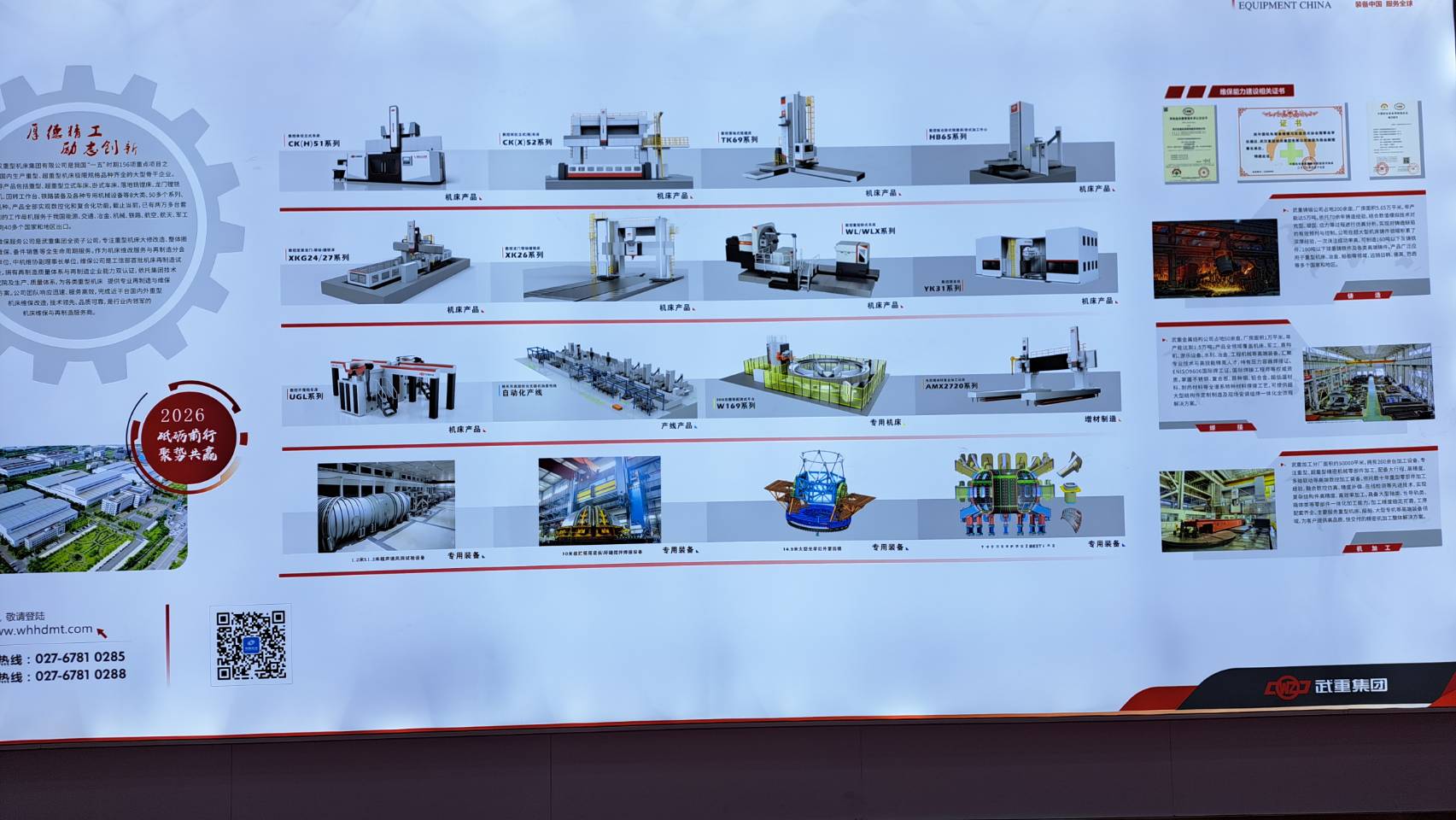 |
 |
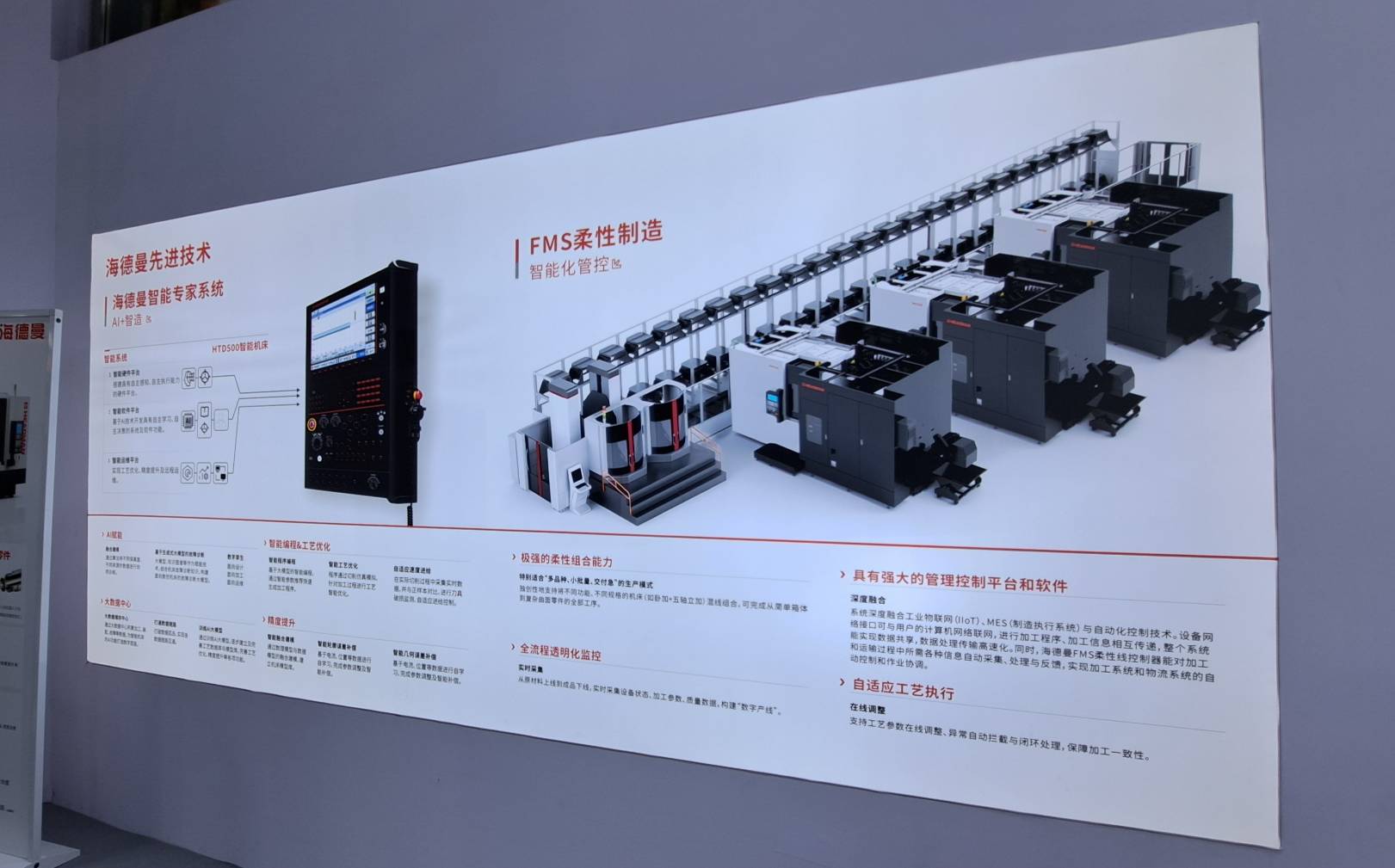 |
| 武重集團 / Wuhan Heavy Duty Machine Tool Group | 宁波大正工业机器人 / DZICS | 浙江海德曼智能裝備 / HEADMAN |
Source: CCMT 2026; compiled by TMBA
Trend 5: Hidden Competition in CNC Systems and the Spread of Thermal Compensation Technology
Within the technology landscape presented at CCMT 2026, the competitive focus in CNC systems has gradually shifted from the performance of the machine itself toward control capability and algorithmic sophistication. At present, the high-end market in mainland China is still dominated by foreign brands, which hold roughly 70% of the overall mid- to high-end market. As demand for five-axis machining centers continues to rise, the importance of advanced control systems has become even more prominent, and Siemens, Heidenhain, and FANUC still maintain clear advantages in high-end applications. Overall, the core of competition is now concentrated in key capabilities such as multi-axis control, real-time computing, and precision compensation.
Although the high-end market is still led by foreign brands, mainland China’s CNC systems continue advancing toward localization. At this year’s exhibition, Huazhong CNC and Guangzhou CNC displayed CNC systems covering functions such as multi-axis machining and thermal compensation. In particular, they also showcased built-in CAM functionality within machine tool controllers, supporting the direct import of 2D DXF files and enabling automatic toolpath generation and G-code output within the software, greatly improving process integration efficiency. However, many mainland Chinese machine tool manufacturers at the exhibition also candidly acknowledged that end customers still have limited acceptance of localized control systems. In response, some manufacturers are considering an entry strategy through the education sector by targeting teaching and training markets with desktop five-axis machines using domestic controllers. If educational institutions gradually adopt these control systems and software in the future, they could create long-term competitive pressure on other brands.
Meanwhile, thermal compensation technology is spreading rapidly and is no longer confined to high-end international machine tools such as those from Europe and Japan. Thermal compensation is gradually forming closed-loop control with automated production lines and is becoming an important technical foundation for stable machining and unmanned production. At this year’s exhibition, many machine tools displayed by mainland Chinese manufacturers had already incorporated thermal compensation functions, showing an overall trend from a high-end feature toward a standard configuration. Based on on-site observations, Huazhong CNC’s thermal error compensation can already meet the basic operational needs of standalone machines, but compared with FANUC, it still lacks advanced functions such as centralized multi-machine management and independent compensation by individual programs.
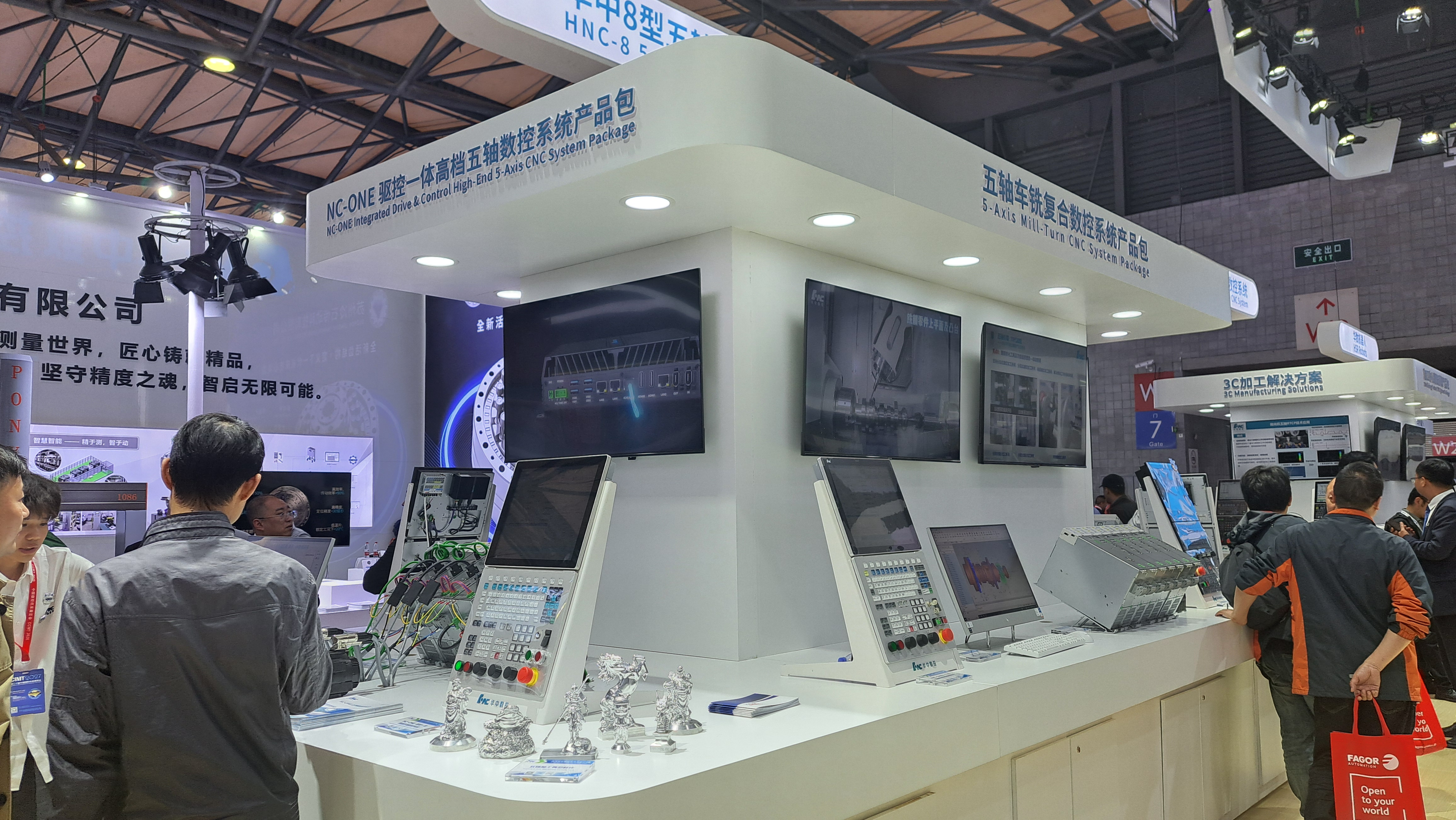 |
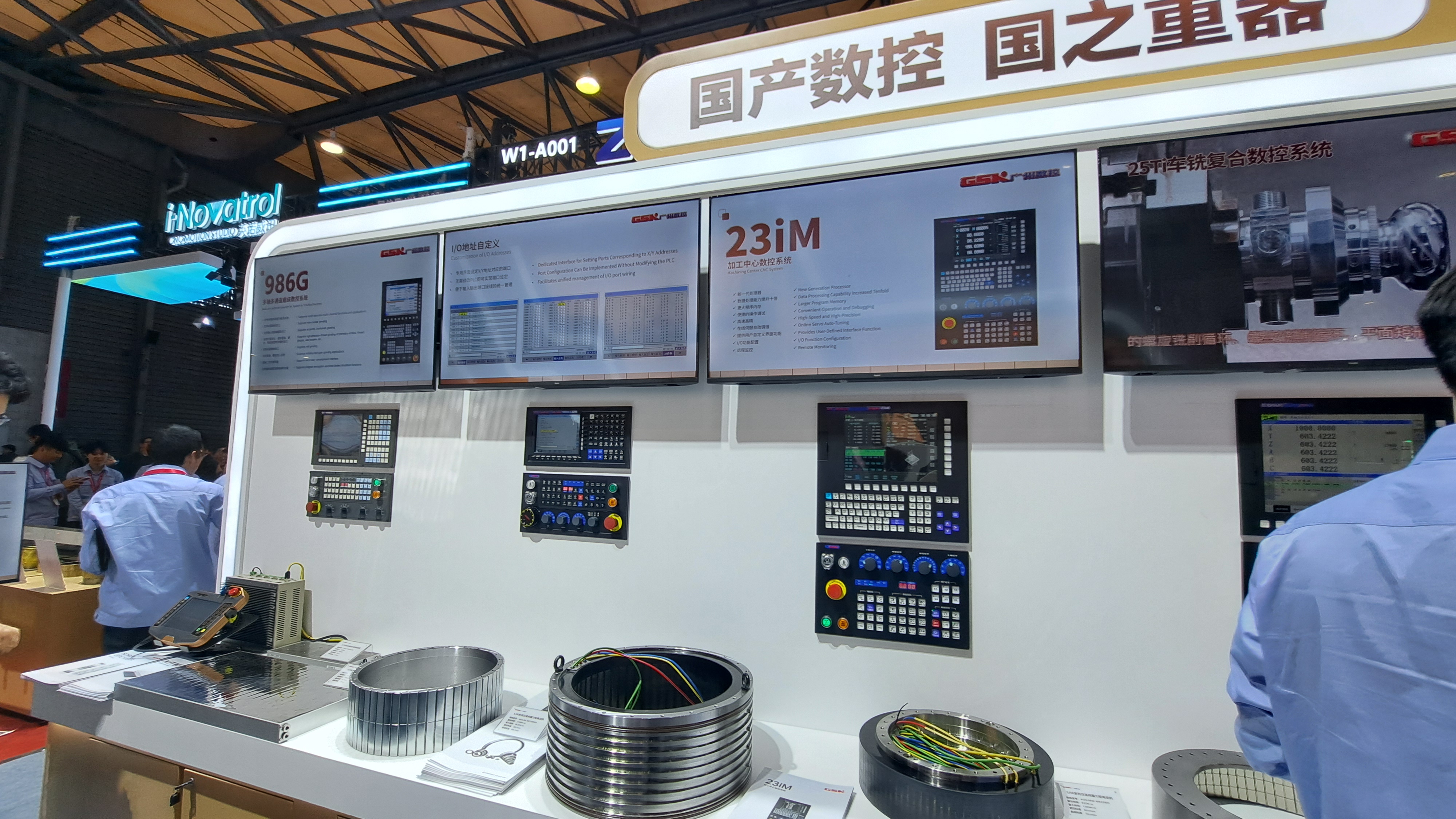 |
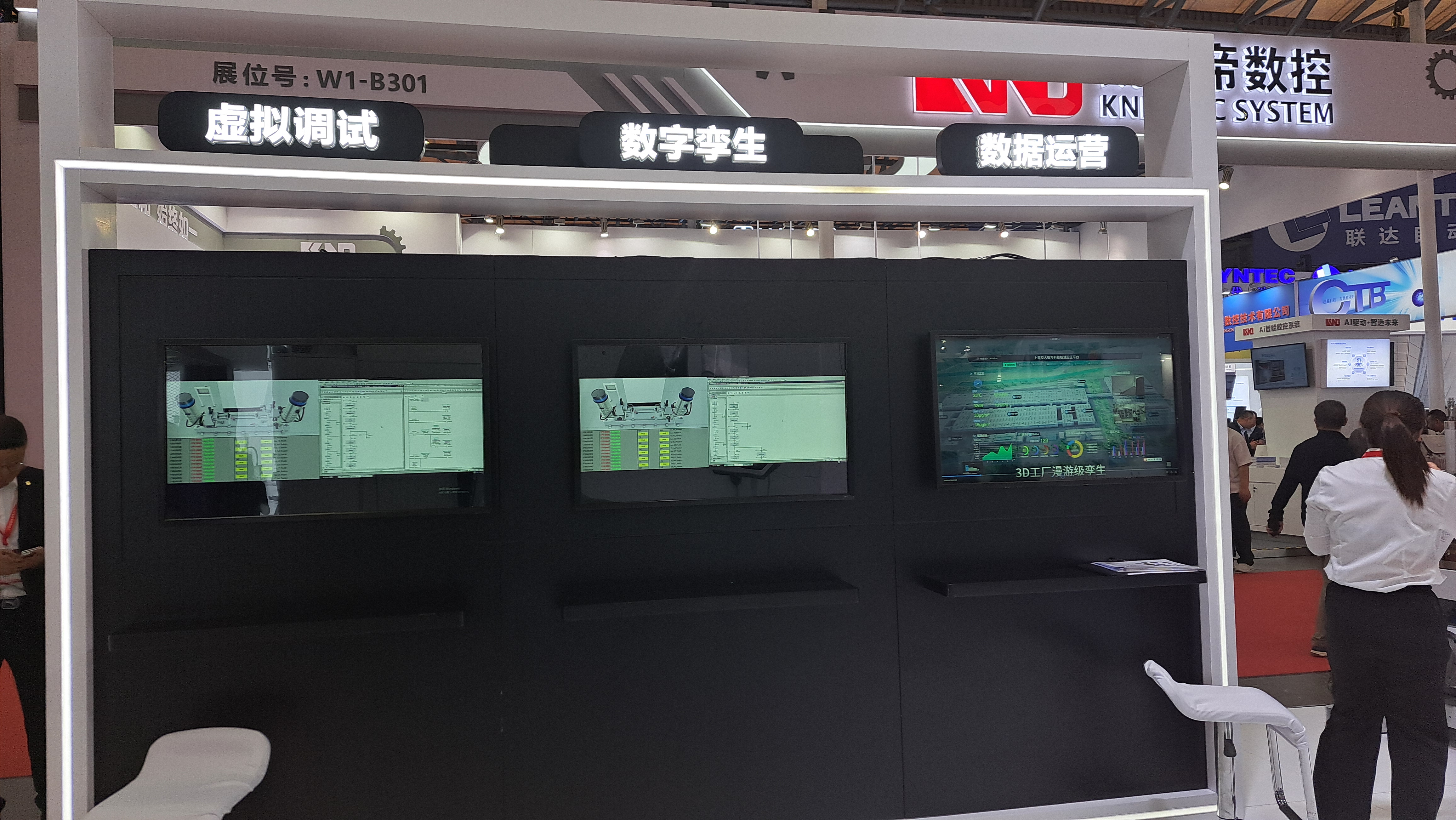 |
| 華中數控 / HUAZ/HONGCNC | 廣州數控 / GSK CNC EQUIPMENT | 凱恩帝數控 / KND CNC SYSTEM |
Source: CCMT 2026; compiled by TMBA
Conclusion
Taken together, observations from CCMT 2026 show that the development of five-axis machining centers, five-axis turn-mill centers, and Swiss-type machines reflects long-term downstream demand from industries such as aerospace, new energy, and AI for high-precision and stable machining capability. Driven by policy support and demand from emerging industries, mainland China has long adopted leapfrog development as its primary growth model, and its machine tool industry continues along this same trajectory. In terms of precision and machining stability, related technical capabilities are gradually approaching international standards such as those seen in Europe and Japan, enabling some five-axis machines to successfully enter high-end supply chains in aerospace and new energy.
As technical capabilities continue to improve, the barriers to acquiring mid- to high-end equipment are gradually declining, and the pace of adoption and diffusion is accelerating significantly, allowing more manufacturers to directly introduce five-axis and multitasking equipment. At the same time, the ongoing development of FMS solutions, CNC systems, and thermal compensation technology shows that manufacturing is evolving toward higher levels of automation and system integration, further reinforcing the leapfrog development trend described above. In short, CCMT 2026 shows that mainland China’s machine tool industry is continuing to move toward integration, systemization, and automation, while also exhibiting leapfrog development as its technology rapidly approaches international standards.
From the perspective of industry development, as the machine tool sector continues to evolve, the influence of key components on overall machining performance is steadily increasing. As a supplier of critical machine tool components, GPM International will continue deepening its capabilities in the following four areas in response to industry trends:
- Product technology: continue focusing on the R&D of critical components and improve their adaptability and stability across different machining scenarios
- Application orientation: emphasize the match between components and machining requirements to support multitasking and high-precision process needs
- System integration: strengthen the compatibility of components with CNC systems and automation systems to align with the development of overall machining and manufacturing systems
- Technical collaboration: establish closer technical collaboration with machine tool builders that have product-upgrade capability and long-term growth potential
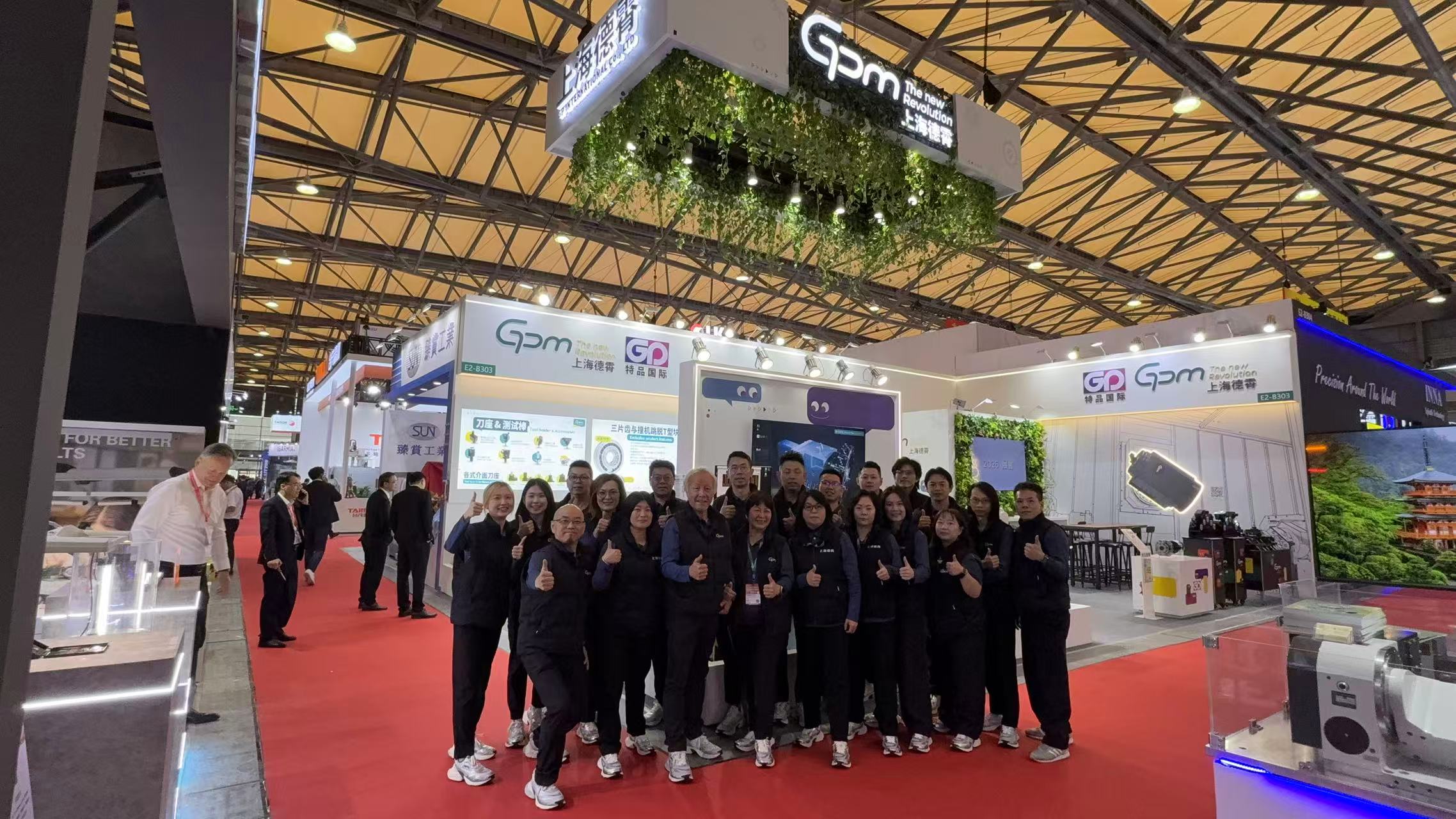
As the machine tool industry continues moving toward greater integration, system integration, and automation, GPM International will continue providing key components aligned with industry development trends and maintain long-term, stable technical collaboration with machine tool builders in order to respond to evolving industry needs.
 |
References
China Machine Tool & Tool Builders’ Association. (March 12, 2026). CCMT2026 Highlights | From “Manufacturing” to “Intelligent Manufacturing”: CCMT2026 Showcases a New Global Landscape for the Machine Tool Industry. China Machine Tool & Tool Builders’ Association. https://mp.weixin.qq.com/s/rADwR6voJfoOcQXBLuEwOQ
China Machine Tool & Tool Builders’ Association. (April 8, 2026). Overview of Selected Lathe Exhibits at CCMT2026. The 14th China CNC Machine Tool Fair. http://www.ccmtshow.com/197001/10373.html
TrendForce. (2026, January 20). Global AI server shipments forecast to grow over 28% YoY in 2026, with a rising share of ASIC-based systems. https://www.trendforce.com/presscenter/news/20260120-12887.html
TrendForce. (2025, July 2). Geopolitical tensions and US export restrictions slightly temper AI server shipment growth in 2025. https://www.trendforce.com/presscenter/news/20250702-12630.html
TrendForce. (2025, August 21). Liquid cooling to scale in AI data centers, penetration to surpass 30% in 2025. https://www.trendforce.com/presscenter/news/20250821-12682.html
TrendForce. (April 9, 2026). TrendForce: China’s Humanoid Robot Market Output Is Expected to Grow 94% Year over Year in 2026. https://www.trendforce.cn/presscenter/news/20260409-13006.html


