

The New Geoeconomic Normal: Market Insights into Korea, India, and ASEAN, and Taiwan Machine Tool Industry's Expansion Strategies
After the U.S.-China trade war, geopolitical conflicts, and the impact of the pandemic, global supply chains have entered an irreversible new normal. Facing this major shift in geoeconomics, Taiwan’s machinery industry has not retreated. Instead, with sharp market insight and strong cross-border adaptability, it has delivered a strategically significant performance in the Asia-Pacific market: India’s machine tool market surged by 98%, Taiwan-made grinding machines captured more than 60% market share in a single product category in India, and leading companies deeply rooted in the market now generate as much as 35% of their revenue from India.
These frontline achievements demonstrate that Taiwan’s machinery industry has successfully moved beyond the traditional export-only mindset and transformed into a new international business model that combines localized operations with precision digital marketing. They have also strengthened confidence in Taiwan’s overall machinery exports this year, which are expected to return to pre-pandemic levels and approach US$4.5 billion.
To help more companies replicate successful models and capture new opportunities in Asia-Pacific, the Bureau of Foreign Trade under the Ministry of Economic Affairs organized the forum “A New Era of Smart Manufacturing in Asia-Pacific: Strategies for Key Markets in South Korea, India, and ASEAN and Case Studies in Cross-Border Marketing.” The event was jointly implemented by the Precision Machinery Research & Development Center (PMC) and the Taiwan External Trade Development Council (TAITRA), with support from the Taiwan Machine Tool & Accessory Builders’ Association (TMBA). Held at TAITRA’s Taichung Office, the forum brought together representatives from industry, government, academia, and research institutions, as well as senior executives from numerous companies, to examine the latest strategies for the Asia-Pacific market.
Industry, Government, and Research Experts See Strong Momentum from India and ASEAN
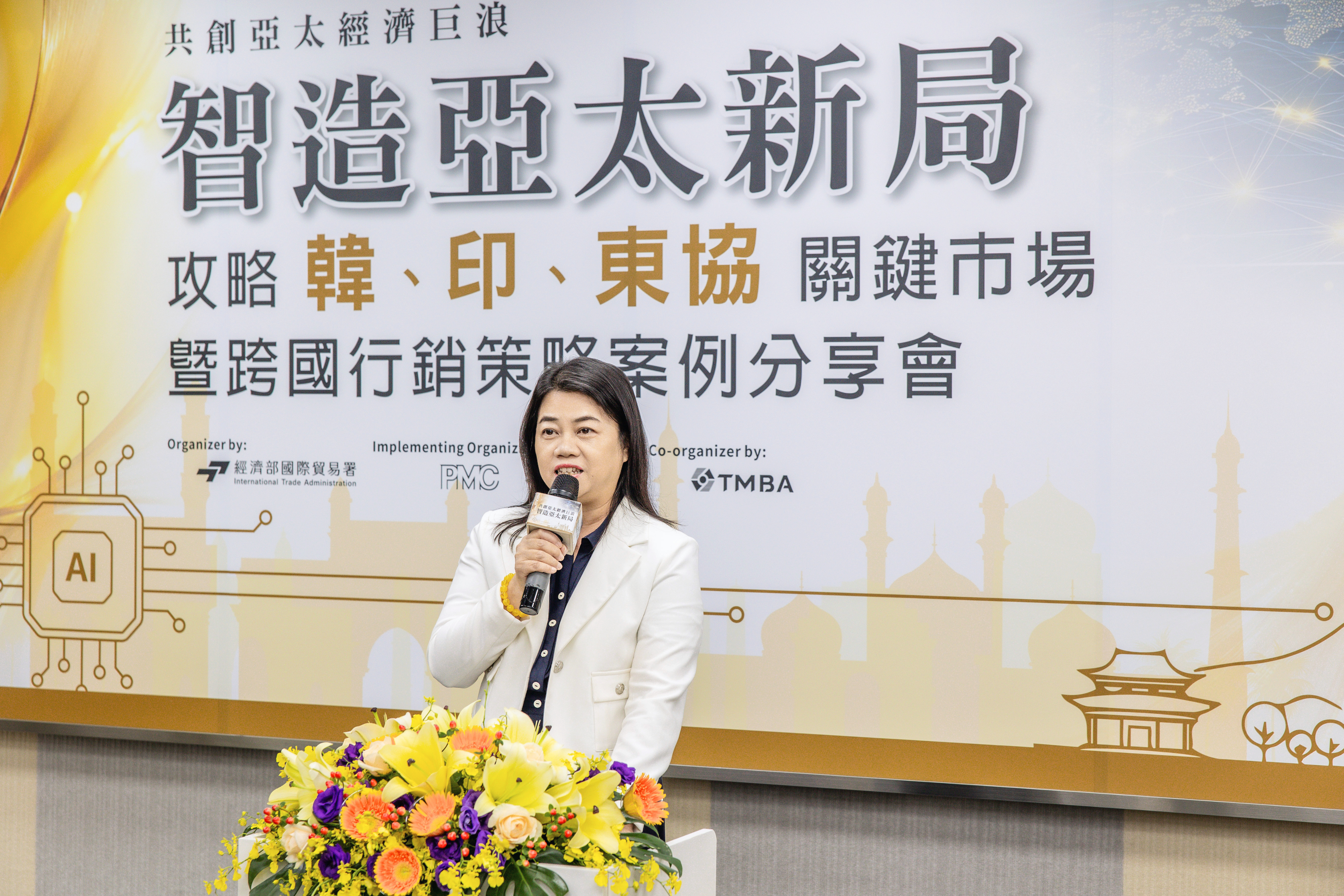
According to the latest statistics from the International Monetary Fund (IMF), the three major markets highlighted at the forum—India, South Korea, and ASEAN—are showing unprecedented economic momentum. In her opening remarks, Li-jung Chou, Deputy General Manager and project leader of PMC’s overseas smart machinery promotion program, noted that India’s economic growth rate is expected to reach approximately 6%, while ASEAN’s overall GDP is projected to exceed US$4.0 trillion. As these markets see surging demand for advanced precision processing equipment in semiconductors, servers, PCB, and automotive batteries, Taiwan’s machinery exports are entering a crucial golden window.
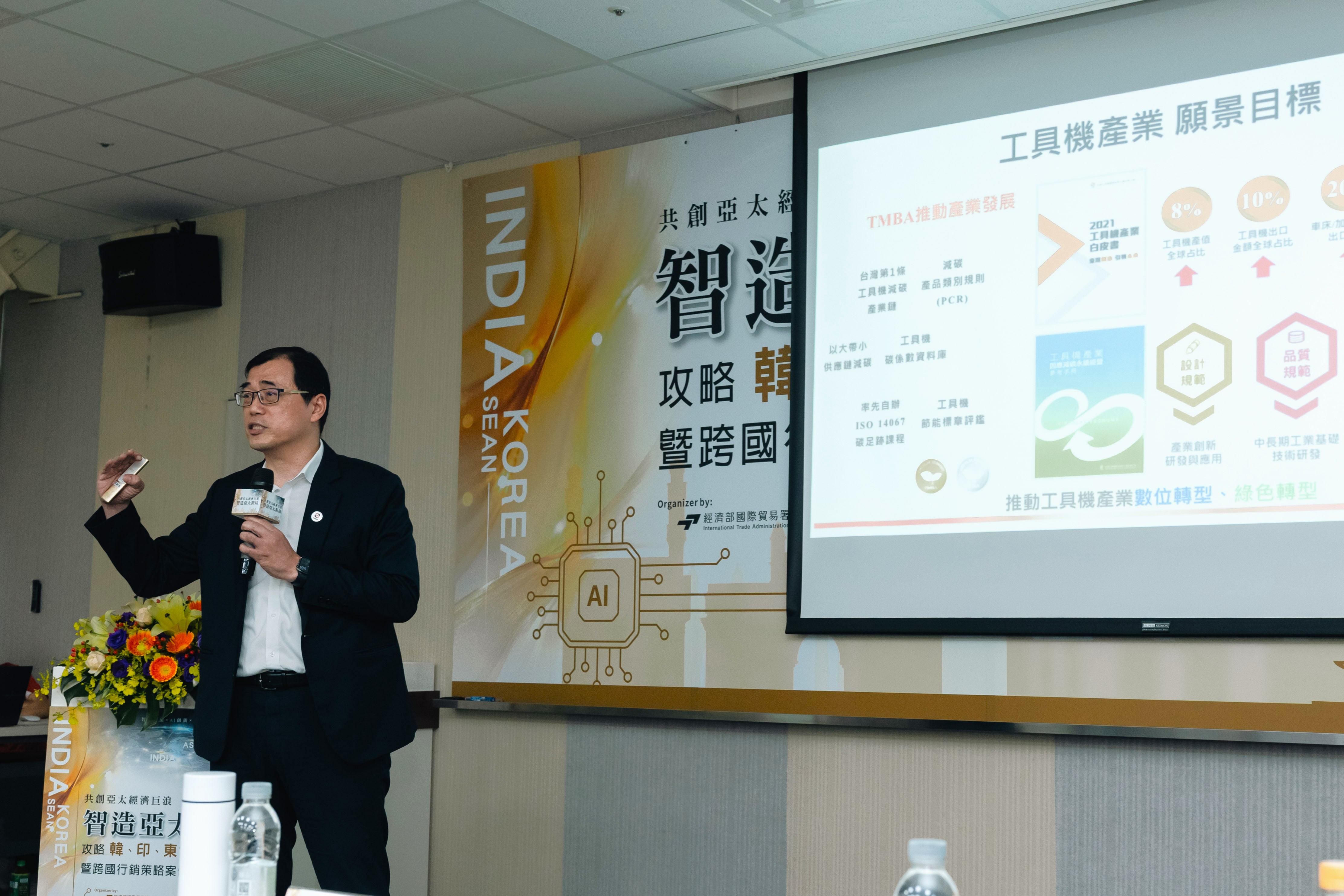
TMBA Secretary-General Daniel Chen emphasized that the strong performance of Taiwan’s machine tool and component industries in India, Vietnam, and Thailand in recent years proves that Asia-Pacific remains one of the most promising strategic bases for Taiwanese manufacturers. As an industry service platform, TMBA will continue to integrate international customs data, member companies’ practical experience, and government policy tools to serve as a strong support system for companies expanding overseas.
From a broader strategic perspective, TAITRA Section Chief Shu-hui Lin cited an on-site survey showing that ASEAN, with 61% of respondents expressing interest, has become the top choice for Taiwanese companies’ overseas expansion. ASEAN has evolved from an extension of the “world’s factory” into a dual engine for manufacturing and digital transformation. India, meanwhile, is benefiting from ICT supply chain relocation and is expected to become the world’s third-largest economy around 2030. Lin advised Taiwanese companies to benchmark their offerings against advanced industrial needs, accelerate product localization and customization, and make effective use of supply chain visualization and carbon inventory tools to strengthen their ability to secure international orders amid digital and green transformation.
 |
 |
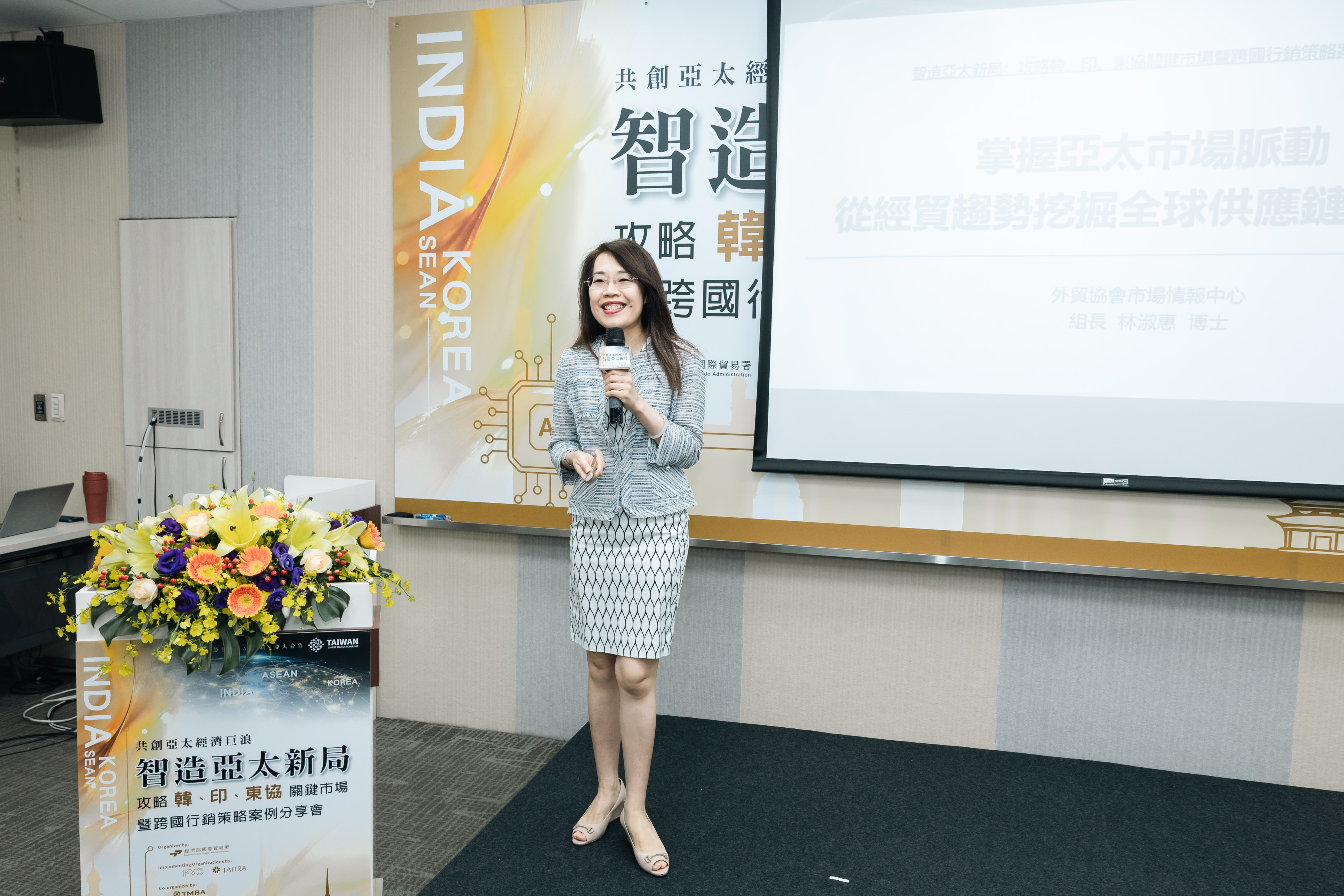 |
| Li-Jung Chou, Deputy General Manager of Precision Machinery Research & Development Center | Daniel Chen, Secretary-General of TMBA | Shu-hui Lin, Section Chief of TAIRA |
Data-Driven Insights Reveal India’s Golden Window for Localization and Imports
Regarding the rapidly growing Indian market, PMC Deputy Manager Liu Chi-yung used nearly 10,000 Indian customs data records to outline a clear supply-and-demand landscape for Taiwanese manufacturers. He explained that India’s economy is mainly driven by foreign direct investment (FDI) and expanded government infrastructure spending, while 55% of local machine tool demand still relies on imports.
This represents an excellent window in which localization and imports coexist. Among imported products, machining centers are growing the fastest, and more than 80% of such equipment enters India through Chennai before being distributed to major automotive industry clusters such as New Delhi. Liu advised Taiwanese companies entering India to adjust product specifications and pricing based on customers’ return on investment (ROI), study the “Make in India” policy in depth, and establish local after-sales service networks early in order to seize the benefits of localization policies.
Benchmark Companies Share Practical Strategies and Long-Term Commitment
A key highlight of the forum was the experience sharing by three benchmark companies with proven success in China, South Korea, India, and Vietnam.
- GPM: Technological Innovation and Four Areas of R&D
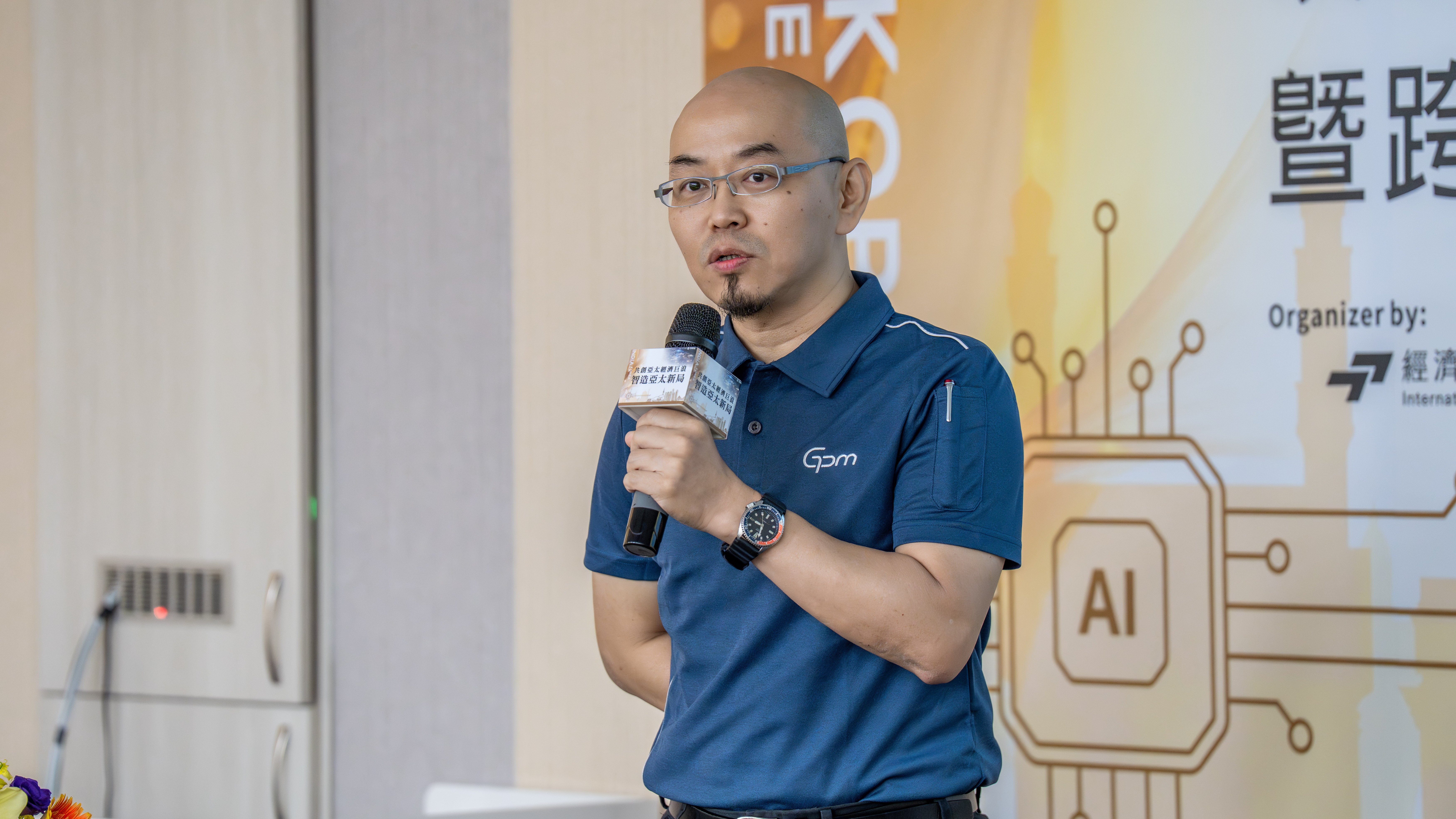
Sauter International, which transformed from a German joint venture into a wholly Taiwanese-owned company, has entered high-end markets in Japan, South Korea, and India through systematic self-reform. Manager Daniel Hsiao noted that India still imports around 40% of its high-end products, providing a major opportunity for Taiwanese firms. In South Korea, where business culture is relatively closed and seniority is highly valued, companies must send experienced personnel to negotiate in person and build trust. He emphasized that overseas customers are not looking for a single machine unit, but for complete solutions. Companies must continue investing in product, marketing, management, and manufacturing R&D to remain competitive.
- TOPWORK of Palmary Machinery Group One-Stop Ecosystem and Dual-Track Service
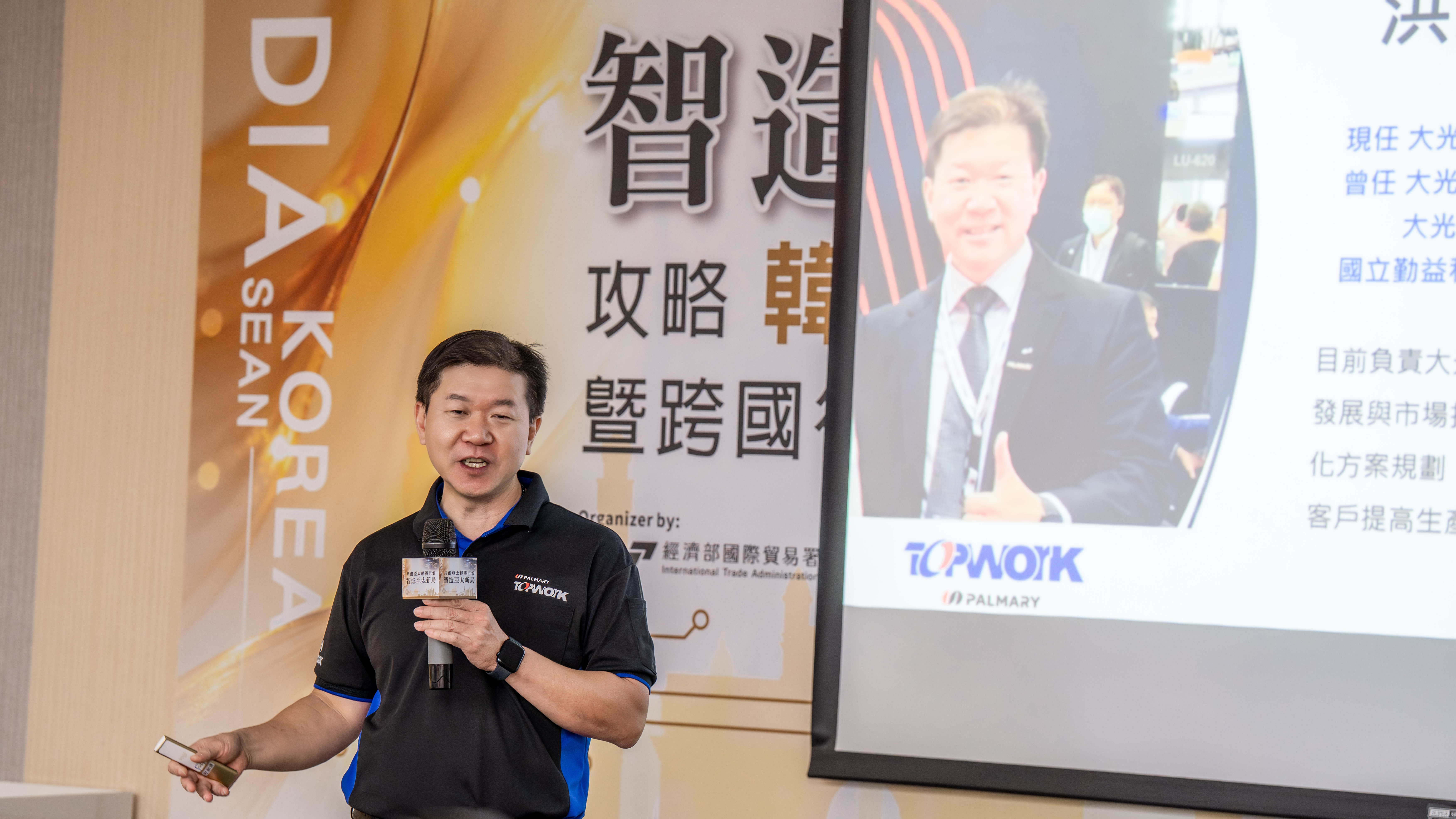
General Manager Chung-liang Hung , drawing on more than 20 years of experience in India, pointed out that India’s domestic demand is remarkable. The country produces more than 6 million cars and nearly 20 million motorcycles annually, while aerospace giant Airbus recently received an order for 500 aircraft from an Indian airline, driving huge demand across the component supply chain. Taiwanese machine tools are comparable in quality to Japanese products and more competitive in price, while special-purpose models and customized modifications are key advantages for Taiwanese manufacturers.
Palmary Machinery Group has adopted a dual-track real-time service model combining local agents with Taiwanese engineers, while building a one-stop ecosystem from tungsten powder to downstream tooling processes. This strategy has proven highly successful: among Taiwan’s grinding machine exports to India, Palmary has achieved a market share of more than 66%, while Ding-Wei’s revenue from India has climbed to 35%. The group plans to establish a local repair center and eventually move toward wholly owned local operations.
- SYIC: A Three-Level Cost Philosophy and Full Commitment
President Pen-hung Chen shared a global expansion philosophy built around three levels of cost. The first is digital footprint: since 2013, the company has actively operated its official website, app, and ten major social media platforms. Its YouTube channel has accumulated more than 300 multilingual videos, using digital marketing to expand visibility. The second is staying aligned with national teams by leveraging resources from government, trade, and industry organizations to reduce overseas marketing risks. The third is full human-resource commitment. Chen revealed that to deepen its presence in Vietnam, the company assigned core executives and their families to relocate and live there long term, demonstrating a strong determination to grow together with the local market.
 |
 |
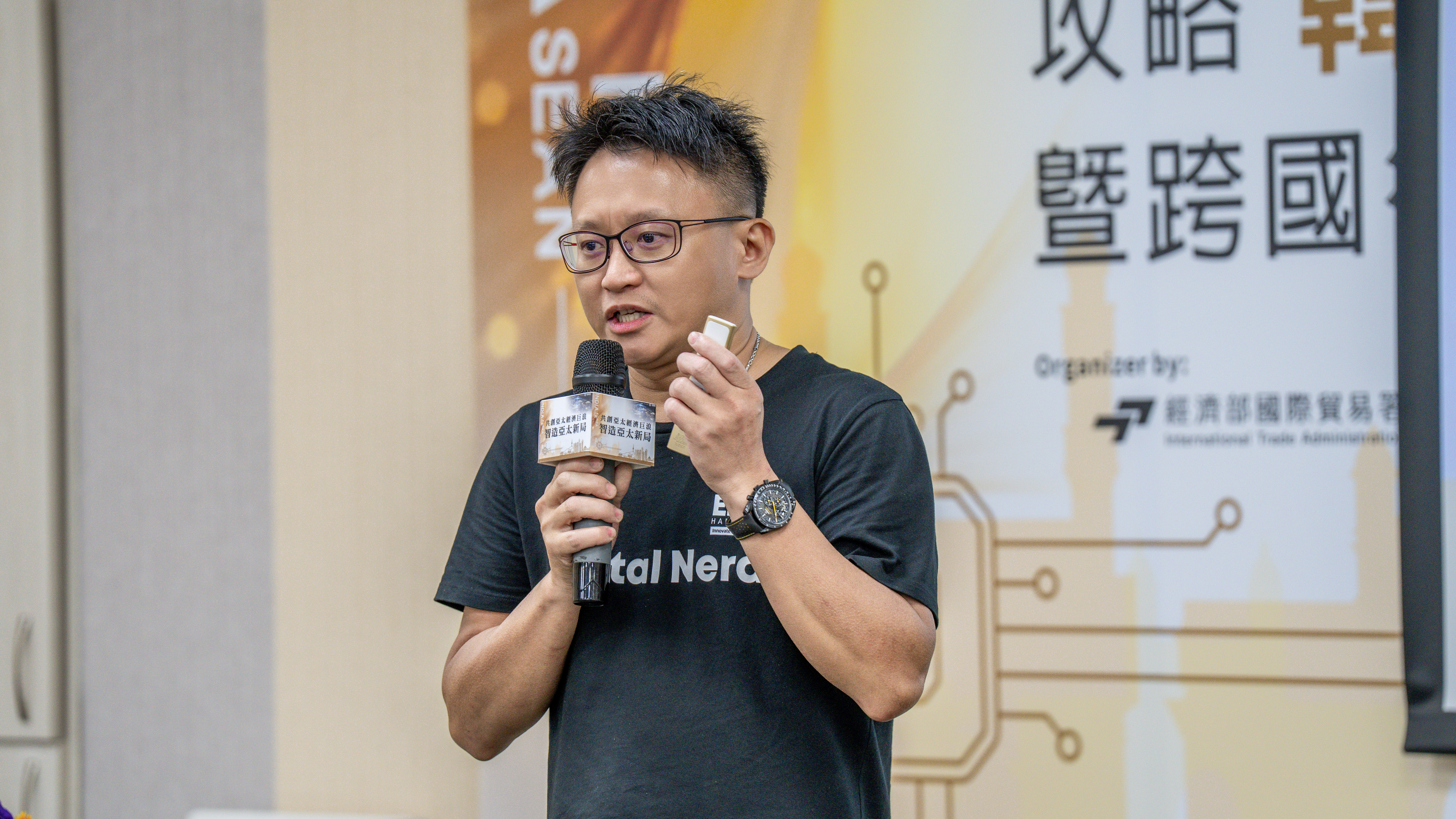 |
| Manager Daniel Haiso, GPM |
GM Chung-liang Hung, Palmary Machinery Group-TOPWORK |
President Pen-Huang Chen, SYIC |
Conclusion: Building Strategic Depth to Capture Asia-Pacific’s New Smart Manufacturing Blue Ocean
Overall, the forum presented a comprehensive picture of Taiwan’s machinery industry’s strategic depth in Asia-Pacific, from macroeconomic data to frontline corporate success stories. In the face of global transformation, Taiwanese companies are responding not only with resilient supply chains and dual transformation strategies, but also with one-stop solutions and localized services to deepen their presence in emerging markets. As India and ASEAN rise rapidly, collaboration among industry, government, research institutions, and benchmark enterprises is injecting strong momentum into Taiwan’s machinery industry as it moves to capture Asia-Pacific’s new blue ocean in smart manufacturing.


