

From Obscurity to Becoming a National Strategic Industry – Drones
Deputy Director, Field Operations Division, Asia UAV AI Innovation Application R&D Center – Pei-Chen Hsu
In recent years, drone applications have evolved from early recreational use to high-value sectors such as commerce, agriculture, and national defense. According to the Drone Industry Insights report (DII, 2022), the global drone market was valued at $30.6 billion in 2022 and is expected to grow rapidly, reaching $55.8 billion by 2030 with a compound annual growth rate of 7.8%. These figures clearly show that the drone industry offers enormous business opportunities and development potential.
Military Origins of Drones
Drones were originally developed for military purposes. In 1952 during the Vietnam War, the U.S. military used drones for interception, jamming, and reconnaissance—the first large-scale deployment of drones in warfare. In the 2001 Afghanistan War, drones were used for precision strikes, ushering in the era of “integrated reconnaissance and strike.” In 2019, Yemen’s Houthi rebels (non-state actors) attacked Saudi oil facilities using drones. In the ongoing Russia-Ukraine war since February 24, 2022, and the Israel-Hamas conflict starting October 7, 2023, drones have shifted from a supporting role to a decisive weapon, prompting countries worldwide to accelerate development.
The Genesis of Chiayi County’s Drone Industry Cluster
Chiayi County’s Asia UAV AI Innovation Application R&D Center is Taiwan’s key drone industry hub. The site was repurposed from the former National Taiwan Sport University Chiayi campus, aligning with County Magistrate Weng Chang-Liang’s vision of transforming Chiayi into an “agro-industrial county.” Since acquiring the site in 2018, the county government has actively promoted drone industry clustering.
Development Process
Initially, the county invited institutions such as the National Chung-Shan Institute of Science and Technology (NCSIST), National Formosa University, Industrial Technology Research Institute (ITRI), and Metal Industries Research & Development Centre to discuss feasibility and strategies. In 2020, the plan was finalized to establish a drone R&D center. Leveraging Director Jiang Zhen-Wei’s 20+ years of experience in drones and aviation, and NCSIST’s existing supply chain, the team began visiting companies across Taiwan to invite them to join the base.
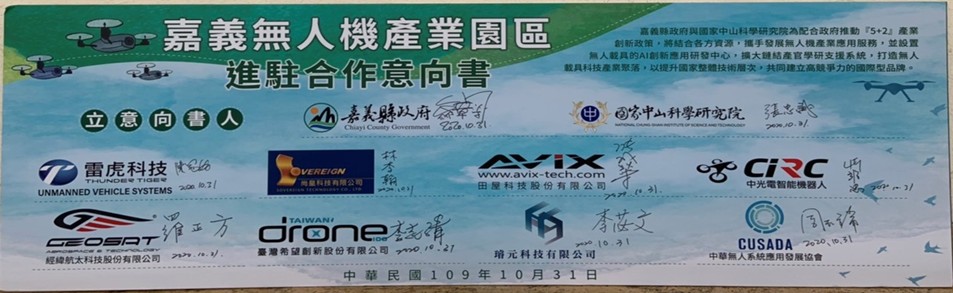
The abandoned campus was in ruins, but the county promised funding for renovation. On October 31, 2020, a drone seminar was held with key agencies and industry players, featuring innovation showcases and signing of MOUs for park entry. Regular preparatory meetings followed.
Milestones and Government Support
- Jan 22, 2021: President Tsai Ing-Wen visited the center for the first time, highlighting its strategic importance.
- Dec 15, 2021: Officially named “Asia UAV AI Innovation Application R&D Center.”
- Aug 13, 2022: President Tsai’s second visit marked the grand opening, signaling Taiwan’s first complete drone industry cluster.
- Mar 25, 2023: President Tsai’s third visit included a high-level meeting with ministries and industry leaders, confirming drones as a national strategic industry.
- Aug 2023: Ministry of Economic Affairs designated as the lead agency, establishing a project office at the center.
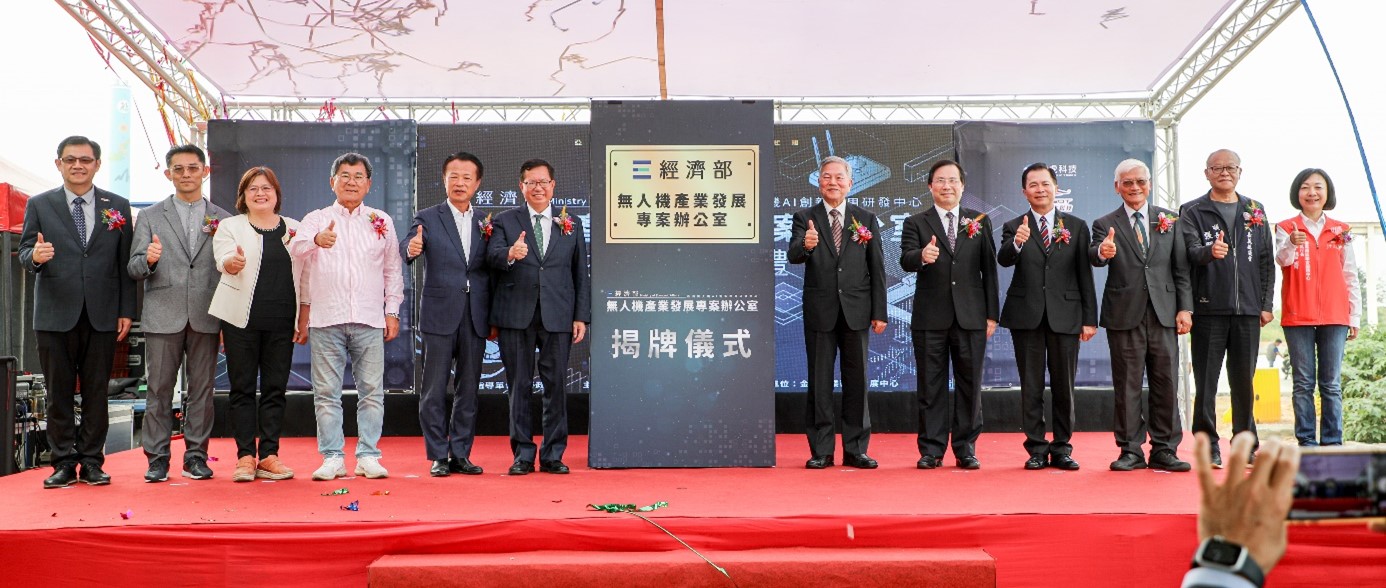
- Dec 11, 2023: Official inauguration of the MOEA Drone Development Project Office, with plans for a national supply chain alliance.
- 2024: President-elect Lai Ching-Te and VP-elect Hsiao Bi-Khim visited, underscoring the new administration’s commitment.
Asia UAV AI Innovation Application R&D Center – Pioneer Base
In May 2020, Chiayi County partnered with NCSIST and industry elites to propose a national drone innovation and testing plan, aiming to create a full-cycle cluster for R&D, manufacturing, testing, and certification.
National Drone Industry Cluster Layout
- Asia UAV Center: Pioneer base linking Minxiong Aerospace Park and Yizhu Test Site for R&D and international cooperation.
- Minxiong Aerospace Park: Led by NCSIST, with standard factories for dual-use drone manufacturing (groundbreaking Dec 5, 2023).
- Yizhu Test Site: 600–800m runway for large UAV testing over the Taiwan Strait.
- Chiayi Science Park: Focus on unmanned vehicles, smart agriculture, and precision health (groundbreaking May 22, 2023).
Industry Impact and Challenges
By 2024, about 50 companies—including major players like Thunder Tiger, Geosat Aerospace, and Evergreen Aviation—had joined the center, making it the world’s largest UAV cluster. Benefits include:
- Domestic and international procurement hub
- Accelerated R&D
- Global supply chain integration
- Taiwan’s international showcase (18 countries visited by April 2024)
However, challenges remain:
- Regulatory hurdles after security concerns over Chinese-made drones in 2022
- High compliance costs (e.g., testing fees rising from NT$500 to NT$8,000)
- Supply chain gaps for components like motors, given low domestic demand
- Need for phased regulations and support measures
Recommendations
- Strategic: Establish a national-level UAV development plan.
- Organizational: Empower MOEA’s UAV office to coordinate efforts.
- Supply Chain: Form a Taiwan UAV Supply Chain Alliance for global outreach.
- International Branding: Host exhibitions under “DRONE Taiwan” to boost visibility.
- Infrastructure: Optimize Chiayi’s four major sites for integrated development.
- Regulatory: Provide transition periods and subsidies for compliance.
- Capital: Mobilize national funds and encourage private investment to overcome early-stage financing barriers.
References
-
“Drone Market Analysis 2022-2030”, Drone Industry Insights, September 2022.https://droneii.com/project/drone-market-analysis-2022-2030-infographic
-
Droneii on Linkedin:The Drone Readiness Index: Leaders in Drone Regulation,February2023.https://www.linkedin.com/pulse/drone-readiness-index-leaders-regulation-drone-industry-insights/
 |
 |


