

Observation and Outlook on the Overall Situation in 2025
2025 / 01 / 20
Views:585
Writer: Su Hanyang, Industry Analyst
Economic protectionism is spreading rapidly.
If 2024 is an election year, then 2025 will be a swing year. At the beginning of 2024, governments around the world will elect new leaders one after another, and they will have to deal with severe economic, social, security, environmental and scientific and technological challenges immediately after taking office. These problems can be solved one by one, but the complexity has increased by more than several times after they appear simultaneously in the turbulent geopolitical background. Looking back, it seems that the golden age of previous trade has ended. In 2023, the trade in goods shrank by about 2%, which is higher than any contraction in this century except during the global economic recession, and the current supply chain management has become more difficult. The main routes, from the Red Sea to the Baltic Sea, have fallen into chaos, while the tension in Northeast Asia, the two sides of the strait and the South China Sea has gradually increased, bringing greater uncertainty to shipping logistics.
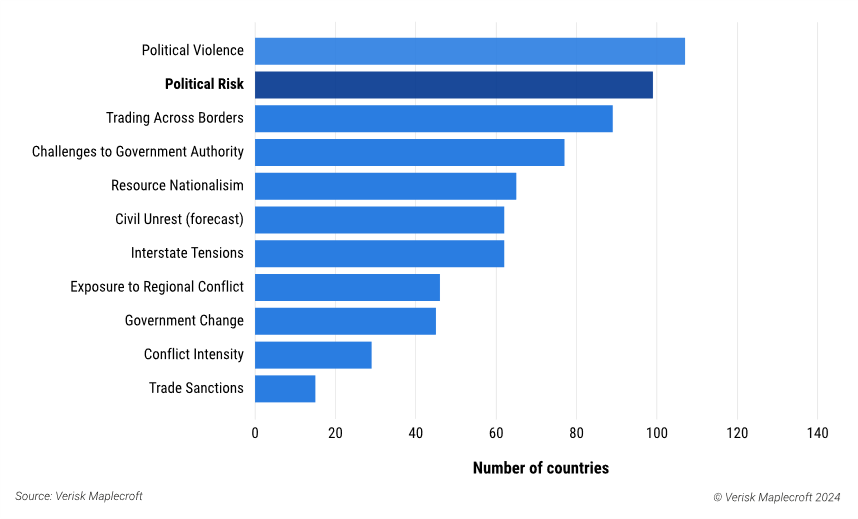
Figure 1. Political risk is the most important thing in the past two years.
Source: Verisk
At the same time, due to the changes in domestic political situation and global value chain, protectionist industrial policies have made a comeback. After seeing clearly the industrial subsidy policies and technological substitution intentions of some countries, many countries have begun to adopt their own subsidy policies under the slogan of economic security.
For example, the anti-inflation bill of the United States has aroused the dissatisfaction of major foreign trade partners, forcing more Asian and European industries to set up factories, and this situation should only be more severe after Trump takes office; The European Union has also raised similar concerns through the carbon border adjustment mechanism. In response to green inflation, many enterprises have also set up factories in Europe and invested a lot of compliance resources. In fact, the supply chain led by protectionism may lead to the inefficiency of the global economic system, which will bring new inflationary pressure and restrict the flow of people, logistics, gold and information.
The rise of a medium-sized power may lead to the shift of the supply chain.
The global geopolitical landscape is undergoing the biggest change in decades. Global trade is changing its mode, the supply chain is being reorganized, and new security alliances are being established one after another. In this rapidly developing order, what some countries have in common is the opportunity to use their opportunities as a "medium-sized power" and a "geopolitical swing country" in a multipolar world to seek their own greatest interests. In global politics and economy, Although these countries are not superpowers (such as the United States, China, Britain, France and Russia), they still have considerable influence, such as countries in the northern hemisphere such as Australia, Canada, India and South Korea, and countries in the southern hemisphere such as Argentina, Brazil and Indonesia. These countries usually play the role of mediators, constructive partners or advocates in the international arena.
A medium-sized power has several characteristics: (1) Its economic scale, military strength and international influence are between a super power and a small country, such as Canada, Australia and South Korea among G20 members. (2) Support international cooperation, rules and multilateral systems, such as the United Nations and the World Trade Organization, while emphasizing the peaceful settlement of disputes and promoting global governance issues, such as climate change, human rights and sustainable development. (3) A balanced policy is usually adopted to avoid complete alliance with superpowers, so as to maintain certain strategic autonomy. Take the United Arab Emirates as an example.
On November 5, 2024, the United Arab Emirates announced the "National Investment Strategy for 2031" at the annual meeting of the UAE government held in Abu Dhabi. The goal is to double the foreign direct investment (FDI) to US$ 354 billion by 2031, accounting for 30% of the total national investment. The practical approach is to promote investment in innovation and high-tech fields and further consolidate its position as the world's leading trade and business center. In 2023, the inflow of foreign direct investment in the UAE reached a record $30.7 billion, an increase of 35% compared with 2022, making the UAE the second country in the world with new FDI projects, showing its attraction to international businessmen and investors. In order to promote foreign direct investment, the UAE has launched a series of measures in the past few years, including relaxing visa restrictions and providing incentives for small and medium-sized enterprises.
The government has also launched the "next generation foreign direct investment" approach, aiming at accelerating the approval process, increasing the issuance of bulk visas and gold visas, improving banking services, and providing commercial and residential rental incentives for technology companies wishing to move to the UAE. In the past decade, the cumulative amount of FDI in the UAE has increased by 150%. Far exceeding the global growth rate of 97%, at present, the UAE focuses on renewable energy, artificial intelligence and advanced manufacturing, and the government has introduced a large number of incentives, including subsidies, tax exemption and research and development funds, to attract investment in these industries.
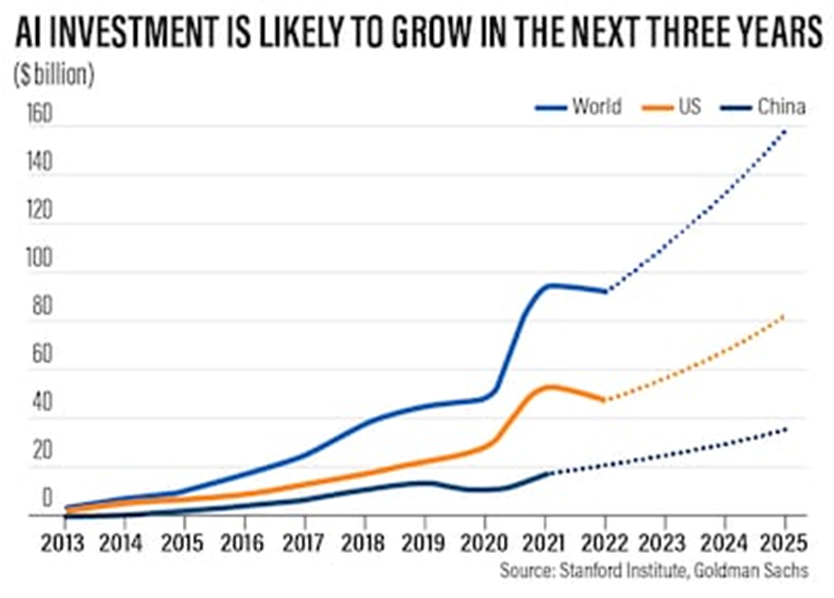
The United Arab Emirates is transforming itself into the next generation of emerging technologies in the fields of artificial intelligence, life sciences and space economy. The G42 company, sovereign fund Mu Badala, new york University Abu Dhabi and Mohammed Rashid Space Center are working with American institutions such as Microsoft, IBM and NASA to explore the application potential of artificial intelligence. At the same time, the UAE has also negotiated with TSMC and Samsung, hoping to establish semiconductor production facilities in the country. If this strategy is successful, it may change the industrial ecology in the Gulf region and lay the foundation for artificial intelligence investment in the whole region. It is worth noting that the top executives of the two companies also visited the country recently, and it is expected that Abu Dhabi sovereign wealth fund Mu Badala will provide financing.
Figure 2. Artificial intelligence is the focus of investment in UAE.
Source: The National
UAE should play a certain role in strengthening the flexibility of global supply chain in the future. Its strategic position is at the crossroads of major markets, which can promote faster delivery to nearby markets. This geographical advantage, coupled with the trend of local manufacturing, can greatly reduce its dependence on Asian countries. This phenomenon partly reflects a compromise of geopolitical disputes between the United States and China. Even though China has become increasingly close to Middle Eastern countries recently, in traditional fields, such as diplomacy, military affairs and science and technology, Arab countries such as the United Arab Emirates still adopt a balanced bilateral strategy and seize the opportunity to develop emerging technologies and industries.
With the rise of risk awareness, the industry may need a risk manager to respond to the overall situation.
chief risk officer (CRO) reports to the board of directors and CEO on various issues, including insurance, IT security, financial audit, internal audit, global business variables, fraud prevention and other internal affairs. The risk manager must design a risk management process to prevent losses caused by inadequate or failed procedures, systems or policies. At the same time, it is necessary to ensure the risk management process, including disaster recovery and business continuity planning, formulating information security strategies and managing compliance materials. Risk managers usually pay attention to the following four risk categories. The first is compliance risk, which is related to the ability of enterprises to identify and fulfill their responsibilities stipulated by laws, rules and regulations; The second is operation-related risks, including business interruption, labor problems, technical problems and the loss of suppliers; Then there is the risk of reputation damage, which may damage the reputation, recognition, status and value of the organization among employees, shareholders, customers and the public; Finally, strategic risk: any risk that may affect an organization's ability to implement its policies. In most cases, most risk managers have a master's degree, usually a master's degree in business administration. Generally speaking, they have worked in accounting, economics, law or actuarial fields for many years and have received risk management training. At the same time, due to information securITy and online risk mitigation, it is very important for the success of enterprises. Some risk managers have also worked in the field of IT or network security.
A typical candidate has a background in auditing, accounting, financial analysis, loss prevention, operation management, risk management and safety analysis, and the ideal risk manager should have experience in managing change in addition to cooperation with senior executives, internal audit and reporting to the board of directors. Traditionally, companies with long-term risk positions are mostly large international enterprises and financiers. According to the traditional risk categories, such as operational risk, financial risk, supply chain risk, regulatory risk, labor market risk and financial market risk, we identify and propose solutions. However, in recent years, new types of risks have emerged one after another, such as geopolitics, information security, environmental risks (climate, biodiversity), supply chain transfer, and digital science and technology risks. It is difficult to analyze and judge new types of risks with historical data, and many traditional methodologies have failed because of their nonlinear characteristics. According to the survey conducted by Oliver Wyman, a global management consulting firm, most of the time (about half) of risk managers in 2023 will be spent on non-financial risks, most of which will be concentrated on the topics related to compliance and operation/flexibility, and the rest of their time will be evenly distributed between financial risks (about 30%) and corporate, strategic and other risks (about 20%).
Obviously, in this period of economic crisis and change, enterprises need risk assessment ability more than ever before, and the demand in the field of digital processes is growing, which requires strong analysis and data control. Operators must pay equal attention to the "hard" components (analysis engine and data infrastructure) and "soft" components (personnel skills improvement) of these changes. Recently, most consulting organizations have also begun to list the risk categories in 2025, among which geopolitical risks rank in the top three, and the industry may need such candidates to help cope with the changes. It has gradually become the mainstream to establish a visual war room in response to the situation in 2025. In response to the more complicated international situation and overall environment, current manufacturers need to have the ability to visualize and control their operations, which enables suppliers, factories, distribution centers, logistics providers and customers to realize real-time insight and data sharing. However, there is still considerable room for improvement. Only 16% of the companies surveyed have these functions, and only one-tenth of them have near-instant alarms. This lack of visibility prevents them from effectively coping with and recovering from the impact.
Generally speaking, the average time for a company to recover from the interruption alarm is three months, or even five months. For 57% of companies, it takes one week or more to receive the alarm of production or supply network interruption. Even so, nearly 80% of senior executives said it would take another week or more to assess the impact of the interruption. Among them, "demand foresight ability" provides enterprise structural analysis and insight into customer trends to promote the launch of new products and help arbitrate demand in case of shortage, while intelligent end-to-end control tower can provide scene analysis and real-time visibility of issues, so as to find and adjust operational problems as early as possible.
Reconfigurable supply chain network and independent production provide a flexible backbone, which can dynamically change the operation of a manufacturing node or move from one site to another to keep production uninterrupted in the face of continuous fluctuations. Finally, generative artificial intelligence can establish action plans by sharing data, translate conference contents for participants in different regions in real time, and even realize the automation of cross-departmental information exchange, thus providing wider cross-organizational collaboration capabilities. Strengthening the resilience strategy of "moving closer to R&D" enterprises are under pressure to improve flexibility, reduce costs, shorten cycle time and improve product quality. The strategy of "moving closer to R&D" subverts the status quo and helps manufacturers achieve these goals. It emphasizes the flexibility of moving activities in the early stage of the development process to achieve closer cooperation between R&D and manufacturing processes, so that companies can obtain products, processes and solutions to potential problems before production begins. Among them, the digital avatar solution helps to build flexibility by improving transparency and providing real-time visualization of production activities. As digital copies of physical production facilities (specific to each assembly line and machine), they allow product designers and engineers to actively identify and solve potential prototype problems or defects, and iteratively design before production begins. Digital avatars also democratize the access of valuable product data and opinions, thus promoting the improvement of cooperation in research and design stages. By involving suppliers and customers in the method of "moving closer to R&D" as early as possible, the company can solve the problem before it does not meet the customer's needs and leads to customer dissatisfaction, and achieve these goals by seeking customer feedback in the product development or service enhancement stage, and then use this feedback to continuously upgrade products and accelerate the R&D speed of product life cycle.
In the application of tools, enterprises can use digital solutions to enhance this ability. At the same time, the increasingly strict environmental regulations indicate that manufacturers must also consider sustainable factors in the product design process, such as carbon footprint, environmental impact and recycling. By using the ecological design method of "close to R&D", the company can integrate the principle of sustainable development into product design from the beginning and embed it in the whole value chain. Attracting "multi-functional and compound talents" In response to the increasingly complex situation, flexible enterprises need decentralized decision-making, and front-line teams can make decisions quickly near the operating location. These teams should be able to use emerging forecasting and data-driven tools, so as to make rapid decisions and shorten the time to restore the resilience of the supply chain when encountering diverse and simultaneous interference conditions. In order for this more agile organizational model to work, employees need to have the skills to effectively use these high-level functions. Therefore, although professional knowledge in the fields of procurement, operation, production and logistics is always important, thinkers who understand the overall situation, have digital literacy, and are multi-skilled and cross-functional will also be invaluable in helping enterprises adapt to the new complexity. For example, employees need to know how to use forecasting and visualization tools and make data-driven decisions to cope with the complexity of modern supply chain. Relevant functional teams can quickly identify and solve these emergencies, and employees who can work across operating departments need to support each other.


