Industry-Research Synergy: Launch of the Taiwan AI Robot Industry Alliance by Six Associations to Fast-Track the Implementation of Smart Manufacturing
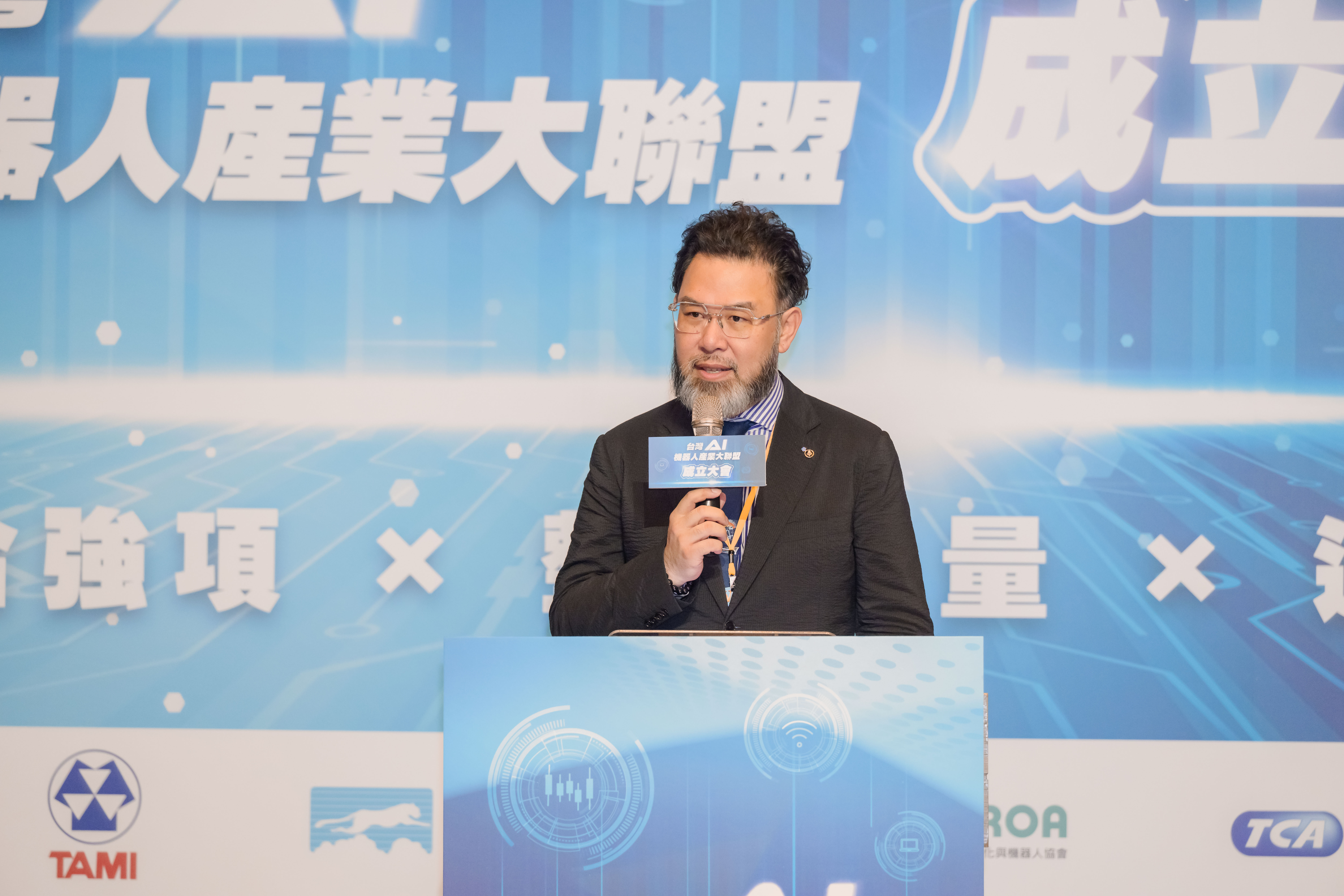
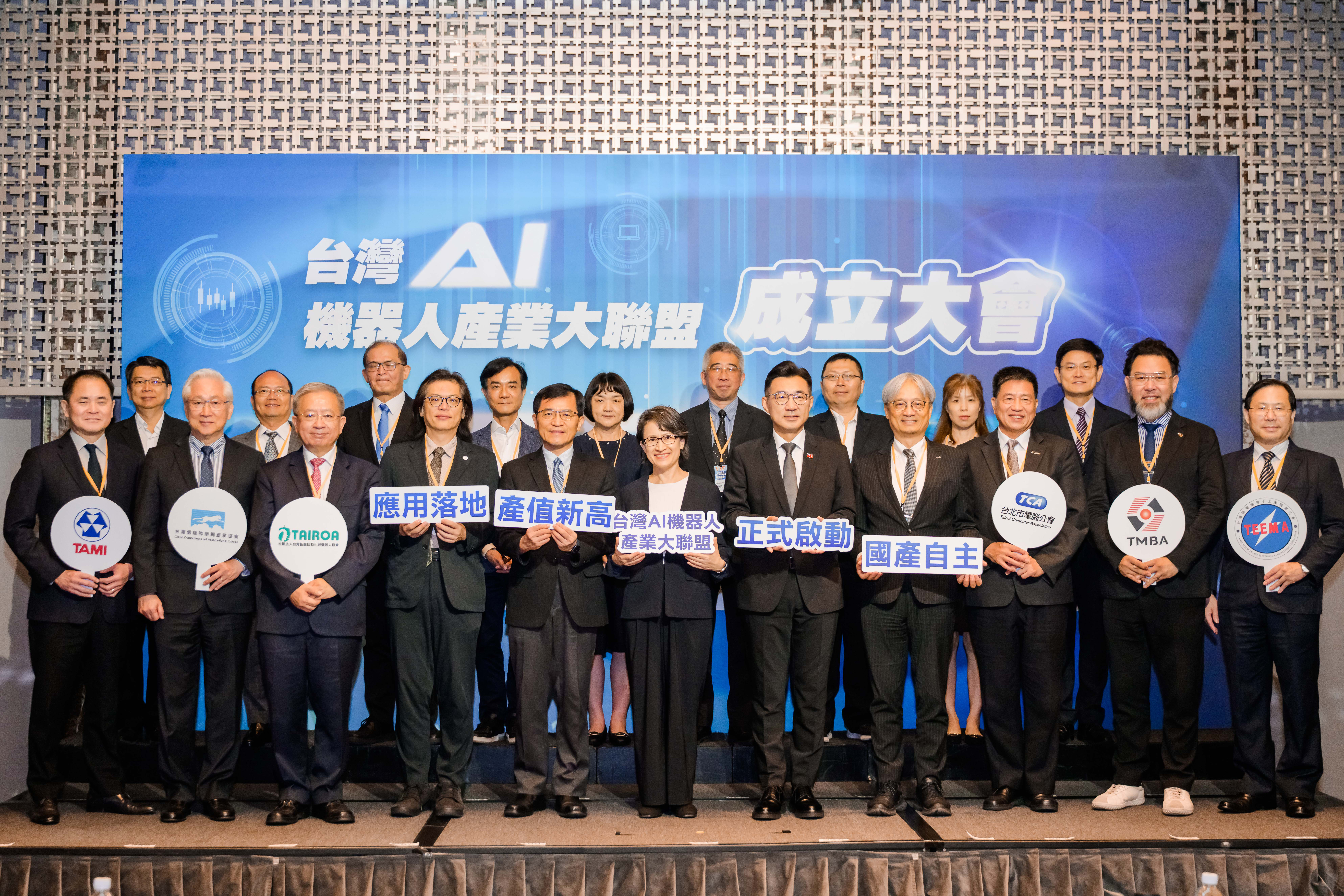
In alignment with government policy objectives and to accelerate the integrated development of smart robotics across industries in Taiwan, six major industry associations have joined forces to establish the "Taiwan AI Robot Industry Alliance." The inaugural ceremony and launch event took place on July 22, 2025, at the Regent Taipei. Distinguished guests, including Vice President Hsiao Bi-khim, Vice President of the Legislative Yuan Johnny Chiang, Deputy Minister of the National Development Council Peng Li-pei, Deputy Minister of the National Science and Technology Council Chen Bing-yu, and Deputy Minister of Economic Affairs Ho Chin-tsang, attended to witness the alliance's official commencement.
A "Transformer" Lineup for Global Competition
The Taiwan AI Robot Industry Alliance was initiated by six premier domestic industry associations:
-
TMBA: Taiwan Machine Tool & Accessory Builders’ Association
-
TAMI: Taiwan Association of Machinery Industry
-
TEEMA: Taiwan Electrical and Electronic Manufacturers’ Association
-
TCA: Taipei Computer Association
-
CIAT: Cloud Computing & IoT Association in Taiwan
-
TAIROA: Taiwan Automation Intelligence and Robotics Association
This "Transformer-level" powerhouse lineup aims to secure a pivotal position for Taiwan in the global competitive landscape. The alliance seeks to transition Taiwan from a "manufacturing powerhouse" into a "smart superpower," implementing a strategy of "Local Innovation, Global Export" to build a comprehensive domestic AI robotics ecosystem.
The "4+3" Core Strategy and 2030 Vision
Leveraging Taiwan's strengths in key components, machinery, precision manufacturing, and system integration—alongside R&D prowess in chip manufacturing, AI algorithms, and smart software—the alliance has proposed a "4+3 Core Strategy." By integrating resources from all sectors, the alliance aims to achieve four major goals by 2030:
-
Platform Development: Creating 4 types and 5 models of internationally competitive domestic robot platforms.
-
Localization: Achieving self-sufficiency in key components by focusing on four core systems.
-
Application: Implementing practical operations across eight major application fields.
-
Economic Impact: Surpassing an annual production value of NT$1 trillion for the AI robotics industry.
Furthermore, the alliance outlined three major action plans: "Grand Competition," "Grand Implementation," and "Grand Exhibition" to promote standardized consensus and commercialization, while calling for international cooperation and brand export under the "TEAM TAIWAN" spirit.
High-Level Government Support
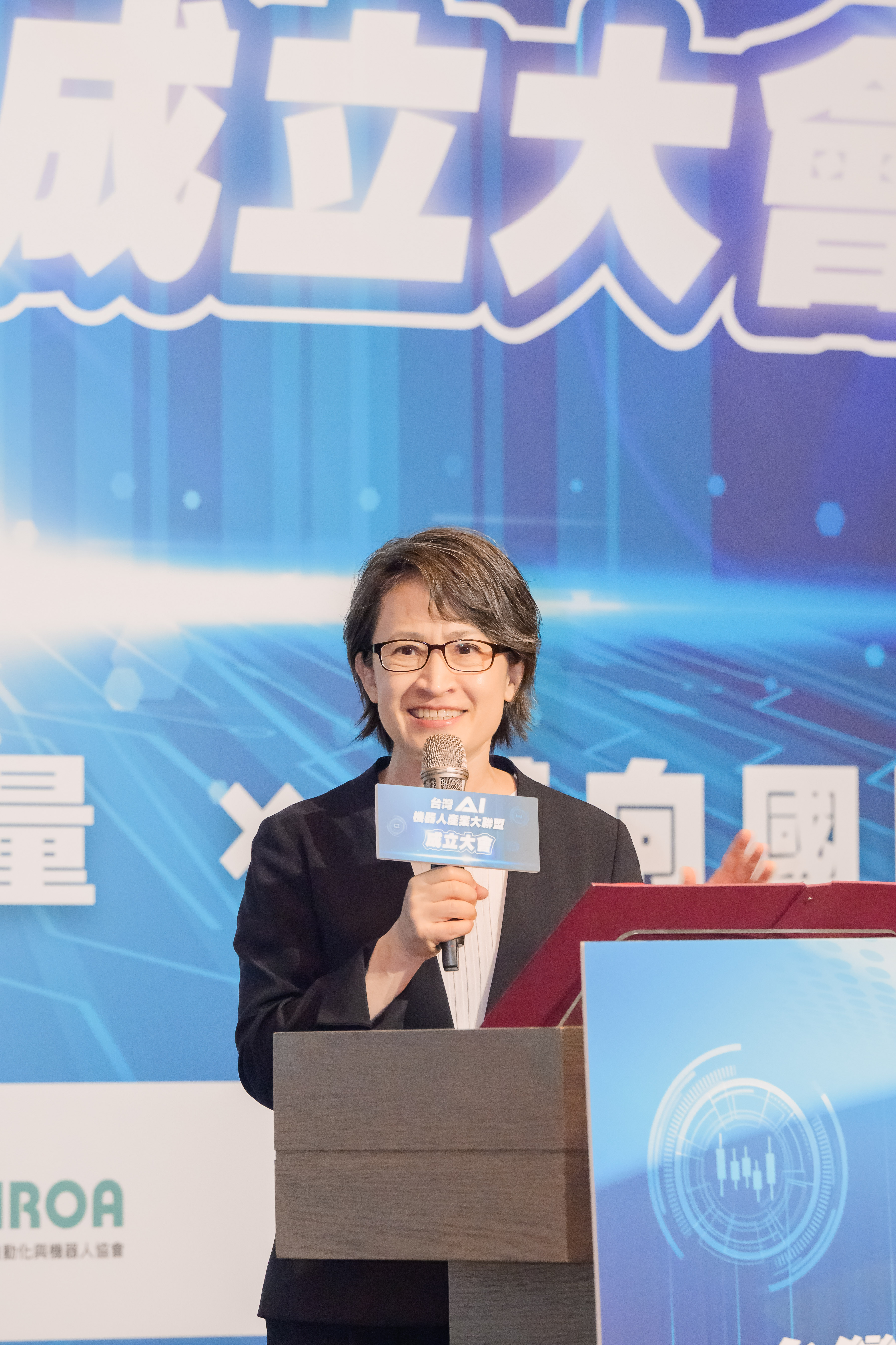
Vice President Hsiao Bi-khim noted that the AI robotics industry will serve as the most critical foundation for the next industrial revolution. While previous revolutions took decades or even half a century to complete, this new wave is likely to transform the world within just a few years. She emphasized that the government is actively developing supporting measures—including demand-side development, application support, industrial regulations, and international partnerships—to ensure Taiwan maintains a competitive edge in the global market.
From Components to Smart Integration
Patrick P. Chen, Chairman of the Taiwan Machine Tool & Accessory Builders’ Association (TMBA), stated that the machine tool industry is actively upgrading from being a core component supplier to an integrator of smart modules and applications. By utilizing key technologies such as joint structures, reduction modules, and servo controls, the industry is entering the high-rigidity power module market.
Chairman Chen also highlighted that the TMTS 2026 exhibition in Taichung will focus on AI applications within the machine tool ecosystem, showcasing the industry's progress in "AI-Powered, Sustainable Manufacturing."