

From Automation to Intelligent Master Control: Siemens SINUMERIK ONE Leads the Digital Era for Machine Tools
In the field of precision machinery, where accuracy, efficiency, and stability are paramount, the automation of a single machine or piece of equipment is no longer a competitive advantage. The key to success lies in whether the control system can simultaneously balance performance, flexibility, and future scalability.
At the TMTS 2026 (Taiwan International Machine Tool Show, Booth H0241), Siemens Digital Industries will showcase its next-generation digital CNC platform—SINUMERIK ONE. By leveraging tighter control, data integration, and digital support, it assists machine tool manufacturers and users in transforming advanced technologies into tangible, replicable competitive advantages.
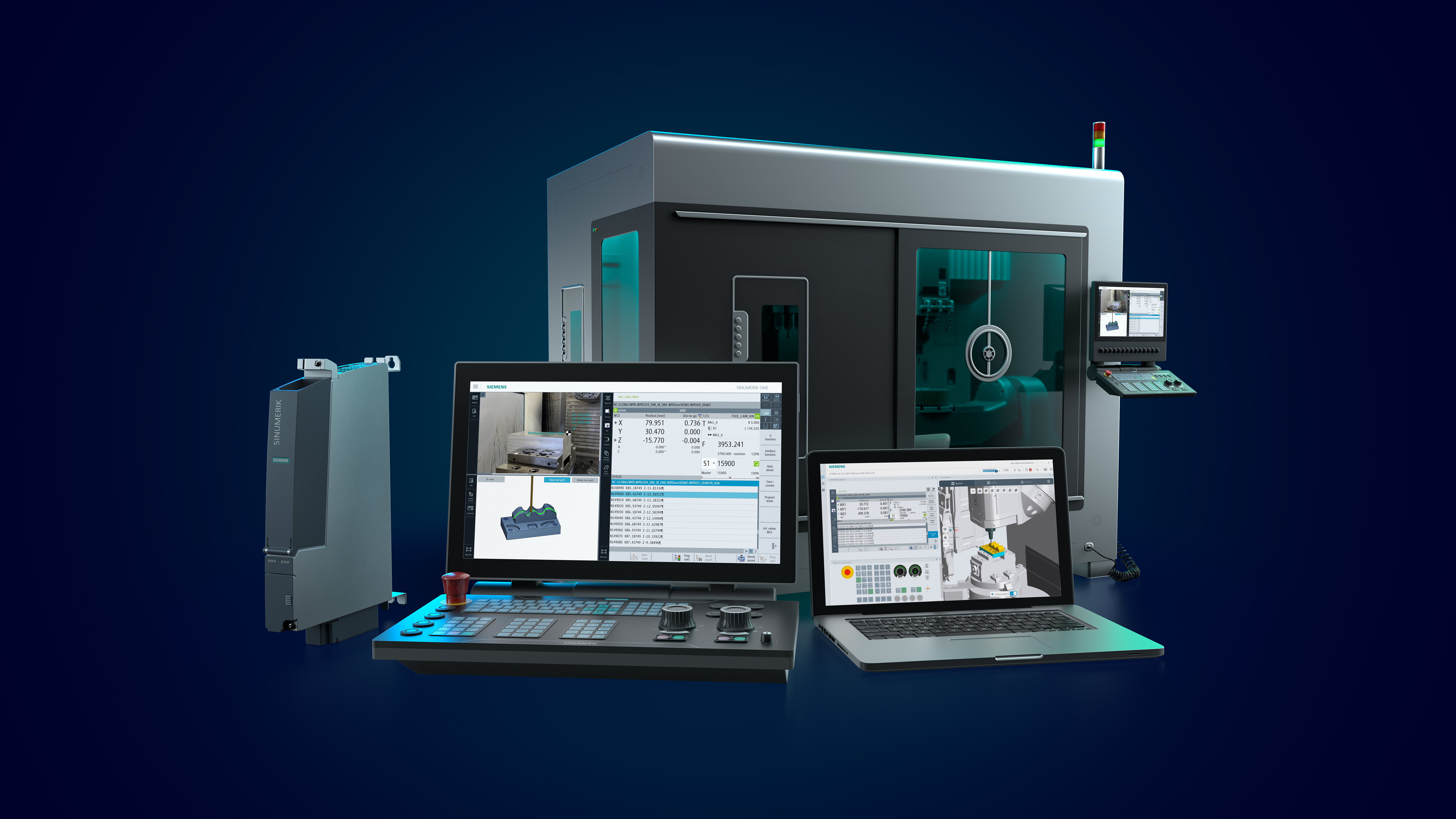
A New Era of Digital Transformation: SINUMERIK ONE Drives Intelligence and High Performance
As a next-generation digital CNC platform, Siemens SINUMERIK ONE focuses on industrial-grade AI and digitalization technologies. With a highly scalable system architecture and significantly enhanced control and computing power, it supports diverse needs ranging from stand-alone machines to highly complex models and even data integration with automated production lines. It accelerates machine response times and overall processing efficiency.
By integrating Digital Twin technology, physical machines and machining behaviors are synchronized in a virtual environment, allowing machine engineering, program verification, and optimization to be completed before actual production. Furthermore, by incorporating software solutions such as AI-assisted 3D scan-to-program generation, equipment condition monitoring, and performance tuning, a closed-loop operation mode—from virtual verification and intelligent analysis to physical feedback—is formed. This assists end-users and manufacturers in shortening development and deployment cycles through digital workflows while ensuring quality stability and long-term competitiveness.
AI-Assisted 3D Scan-to-Program Generation: Significantly Shortening the Design-to-Production Cycle
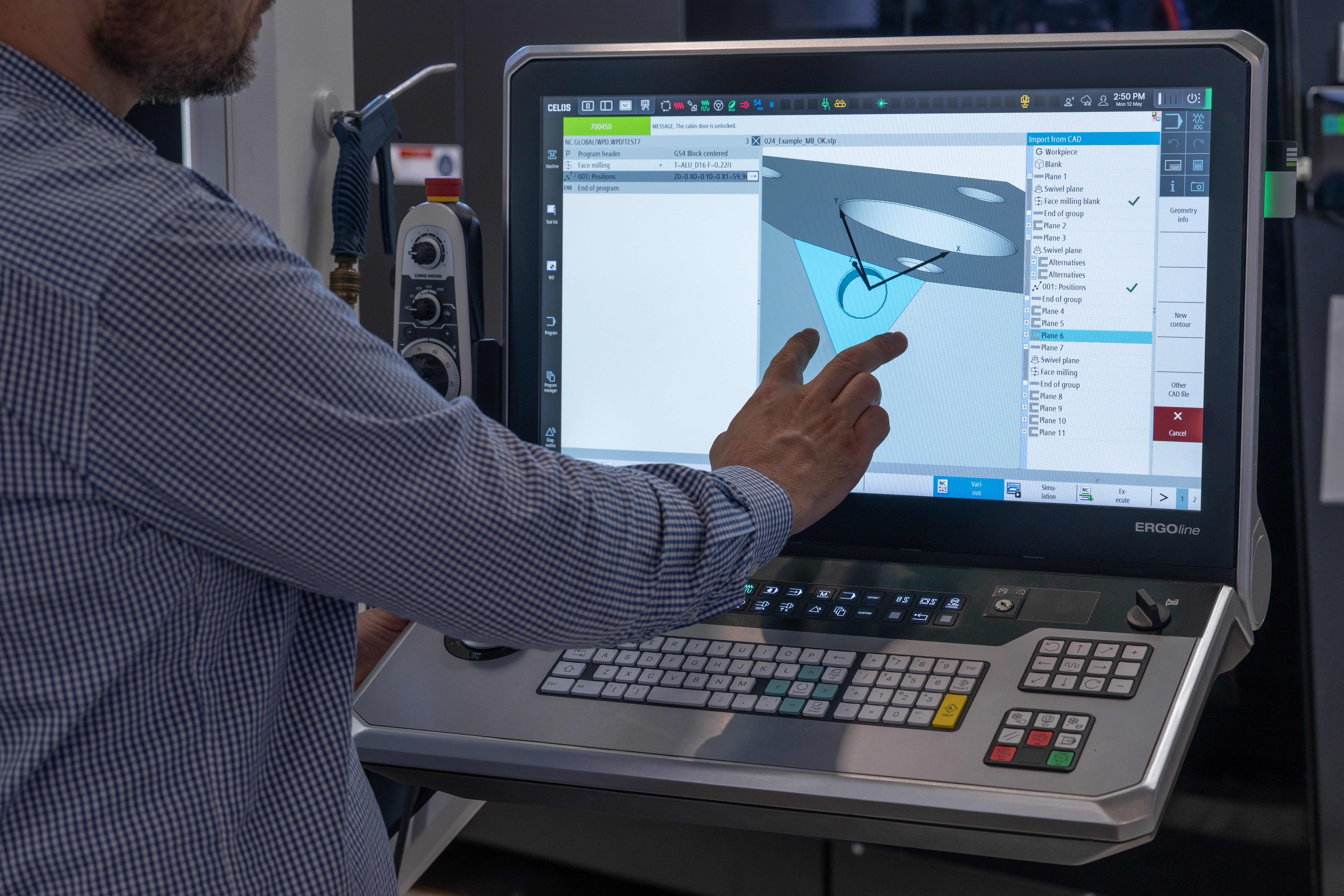
The Siemens 3D Scanner assists manufacturers in rapidly converting 3D design data into executable machining programs through AI-aided processes, drastically reducing preparation time. By using AI to automatically recognize the geometric features of 3D files and suggesting appropriate machining processes, enterprises can improve the efficiency and accuracy of technical personnel in decision-making and program generation. This reduces the risk of human error in software operation, making the preparation workflow more efficient.
For machine tool manufacturers, this capability helps engineers speed up machine application verification and delivery, enhancing the stability and replicability of the hand-over process. For end-users, it allows for more flexible program preparation and adjustment in small-volume, high-variety, or rapidly changing production environments, improving onsite response speed and overall capacity. By combining virtual and physical manufacturing applications, it assists the shop floor in enhancing verification and preparation capabilities before formal production, further shortening product delivery times and ensuring machining quality and manufacturing performance.
Smart Tutoring Control (STC): Breaking Professional Experience Barriers with Machine Learning
The Siemens SINUMERIK Tuning Center (STC) assists manufacturers in completing the dynamic performance tuning and optimization of machine tools in a more intuitive and efficient manner. Through a systematic guided process, STC utilizes vast amounts of historical tuning data and machine learning technology to automatically estimate tuning recommendations suitable for the machine based on past optimization results. This further reduces the issues of repetitive trial-and-error and high dependence on individual experience.
Through such AI-assisted and guided tuning, even engineers who are not specialized in machine tuning can leverage the software's powerful AI functions to quickly complete optimized settings for axial and motion characteristics based on different mechanical equipment types or processing needs. For machine tool manufacturers, the Tuning Center helps shorten tuning time and ensures consistent performance before machines leave the factory; for end-users, it helps engineers reach the machine's optimal state faster, providing a comprehensive upgrade in quality, efficiency, and stability. By reducing reliance on high-level expertise, the Tuning Center makes high precision and high dynamic performance easier to replicate and maintain long-term.
AI Adaptive Control & Monitoring (ACM): Real-time Optimization of Cutting Performance and Processing Stability
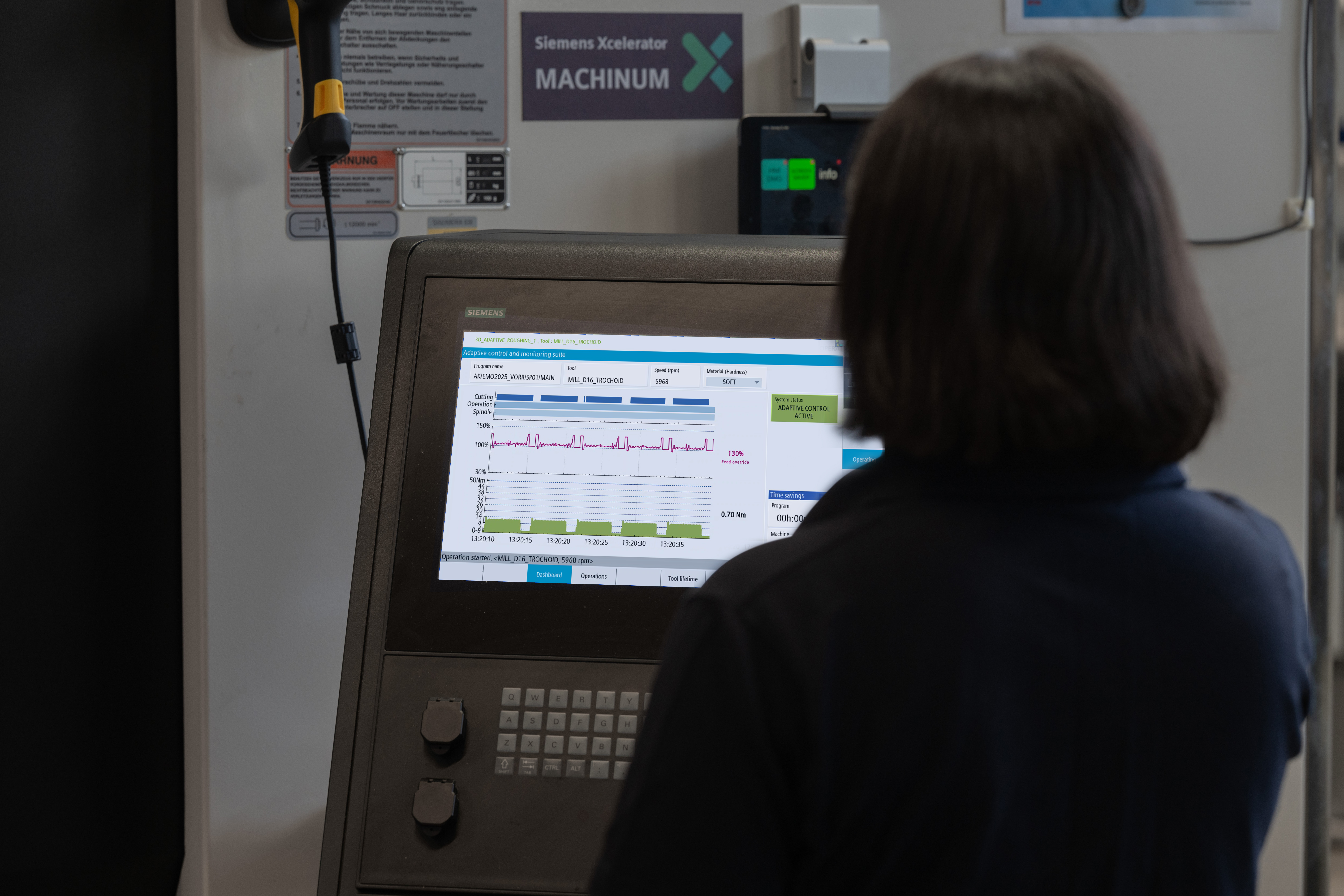
Adaptive Control & Monitoring (ACM) is an adaptive control and tool monitoring technology specifically designed for optimizing CNC cutting performance. By learning from the actual production and machining process, ACM optimizes the workflow and automatically adjusts the feed rate in real-time, enabling the machine to process at the optimal feed rate under varying material hardness, depth of cut, or tool conditions.
This function significantly increases tool life, reduces the risk of tool breakage, improves production efficiency, shortens machining time, and maintains stable processing quality. Through real-time monitoring of tool load and cutting behavior, ACM can detect tool abnormalities early (such as excessive wear, over-cutting, or tool damage), improving machining reliability. For both manufacturers and end-users, ACM enhances production efficiency and overall processing stability without changing the machining program or increasing operational complexity.
Perfect Synchronization of Virtual and Physical: Digital Twin Technology Reduces Development Risk and Accelerates Time-to-Market
Siemens Digital Twin technology allows manufacturers to completely recreate real machines and machining behaviors in a virtual environment, allowing design, verification, and optimization to be completed before physical production begins. Through virtual machines, machine tool manufacturers can perform engineering verification, application demonstrations, and personnel training before the physical equipment is finished, accelerating the pace of product launch and delivery.
End-users can prepare machining programs, test processes, and train operators in advance, shortening the commissioning time once the equipment arrives. This parallel approach of virtual and physical effectively reduces the risk of introducing new equipment or processes while improving machining quality and overall production efficiency, bringing greater flexibility and predictability to the machinery industry.
Industrial-Grade Generative AI Assistant: Industrial Copilot Accelerates Engineering and Knowledge Transfer
Built for highly complex equipment, processes, and engineering environments, this industrial-grade AI assistant helps enterprises navigate challenging scenarios. By understanding mechanical structures, machining processes, and control logic, the Industrial Copilot supports critical tasks such as machine engineering, program preparation, tuning, and maintenance, helping engineers and operators complete settings, troubleshoot, and make judgments more quickly. For machine tool manufacturers, this helps accelerate development and delivery cycles and systematizes professional experience.
By integrating AI into existing engineering workflows, Engineering Copilot TIA can:
- Accelerate Machine Development and Delivery: Use natural language to assist in writing, interpreting, and optimizing TIA project programs, speeding up development and shortening project timelines.
- Lower Learning Barriers and Enhance Workforce Readiness: Newcomers can obtain real-time suggestions, tutorials, and problem diagnostics through AI on the production floor, significantly reducing ramp-up time.
- Strengthen Onsite Response Capabilities: When equipment abnormalities occur or parameters need adjustment, AI provides real-time analysis and guidance, allowing engineers to locate root causes and perform repairs more quickly.
- Facilitate Corporate Knowledge Retention: Systematize and structure the experience of senior engineers, allowing professional knowledge to be replicated, preserved, and continued.
For end-users, the Copilot AI in NX CAD/CAM reduces the learning curve for personnel, providing real-time suggestions and support during product design and machining planning. By integrating AI into existing workflows, Industrial Copilot is becoming a key accelerator for efficiency improvement and knowledge transfer in the machinery industry.
Deeply Rooted in the Precision Machinery Industry: Partnering to Create a Sustainable and Competitive Ecosystem
In a rapidly changing manufacturing environment, the machinery industry is moving from individual technology competition toward a development stage centered on system capabilities and overall collaboration. As a long-standing key platform for Siemens in the field of machine tools and precision machinery, SINUMERIK carries not only control technology but also the industry's expectations for stability, continuity, and future evolution. Through close cooperation with machine tool manufacturers and end-users, Siemens continues to transform next-generation digital and intelligent technologies into long-term manufacturing strength, joining hands with the industry to build a more resilient and sustainably competitive machinery ecosystem.


