

AMB Stuttgart Metalworking Exhibition 2024: A Glimpse into German Technology Trends
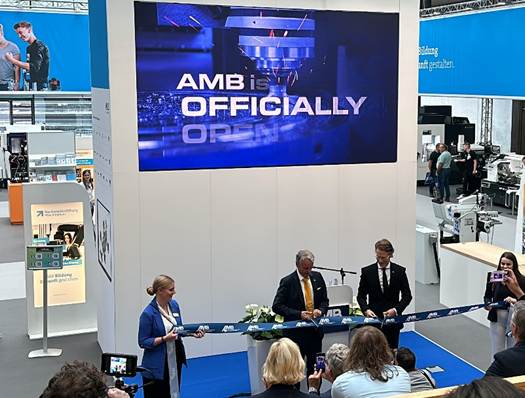
The AMB Stuttgart Metalworking Exhibition (German: Internationale Ausstellung für Metallbearbeitung) is a trade fair in Germany dedicated to the metalworking industry. Since its inception in 1982, it has become a focal point for the German metalworking sector and is now the second-largest machine tool exhibition in Europe, following the EMO World Machine Tool Expo (Exposition Mondiale de la Machine-Outil; EMO). Unlike EMO, which showcases cutting-edge technologies from the perspective of machine tool manufacturers, AMB primarily focuses on attracting local German manufacturers and end-users for in-depth trade discussions.
This year’s exhibition centers on the theme of “The Transformation from Traditional Automobiles to Electric Vehicles.” Many exhibitors presented end-use machining solutions and component development strategies. The main audience of AMB consists of Germany’s automotive manufacturing supply chain, which is currently undergoing a transition from traditional fuel-powered vehicles to electric vehicles, while also facing competition from low-cost EVs from China. From the manufacturing solutions proposed by machine tool companies, it is evident that to address the evolving automotive component machining needs and emerging application areas, many solutions integrate robotic arms—whether installed inside the machine or paired externally with mobile loading/unloading arms. The goal is to significantly enhance the flexibility and scope of machine tool operations through robotic integration.
The exhibition trends can be summarized into four key areas:
- High-level intelligent automation
- Robotic arm applications
- Integration of inspection instruments
- Highly scalable automated production lines
Industrial robots, warehousing systems, and automated guided vehicles (AGVs) for metalworking environments, combined with machine tool equipment through system integration, are becoming increasingly prevalent. Manufacturers are further incorporating advanced technologies such as machine learning, AI, and sensors, enabling robots to handle complex machining tasks with greater agility.
Inspection instruments integrated with robotic arms have evolved into highly flexible and scalable robotic inspection systems. Operators only need to select the correct inspection component from the control panel. Through integrated robotic systems, repetitive manual setup and calibration processes are eliminated, resulting in faster and safer operations.
Companies such as FANUC, CIIZEN, TRUMP, GEWATEC, Hoffmann, and Haeberle demonstrated systems working collaboratively through interfaces, showcasing each step of a workpiece production process. Participating companies presented their specific production stages as part of a digital network, offering demonstrations of digital twin applications from start to finish.
Matsuura (Japan) highlighted its machine tool-centric approach, expanding into peripheral storage and automated unit system integration. Guided by customer needs, Matsuura developed Flexible Manufacturing Cells (FMCs). Its automation and unmanned production solutions feature high flexibility, delivering customized and efficient production strategies for clients.
 |


