

From Sustainable Exhibitions to Low-Carbon Manufacturing: New Opportunities for Enhancing the Export Competitiveness of the Machine Tool Industry
IndustryGlobal Net-Zero Trends: Shifting Sustainability Management from Value-Add to Market Entry Requirement
Net-zero carbon reduction has become a critical global issue faced collectively by the international community. Since COP26, countries around the world have progressively incorporated the goal of “net-zero emissions by 2050” into the core objectives of their climate action agendas, while continuing to strengthen their medium- and long-term decarbonization commitments. As international climate governance frameworks advance, governments are increasingly accelerating the implementation of emissions reduction measures across industrial and service sectors based on the outcomes of the Global Stocktake. In alignment with these international trends, Taiwan has also established phased greenhouse gas reduction targets under the Climate Change Response Act and is promoting deep energy efficiency policies, demonstrating a clear policy direction toward driving low-carbon transformation across industry and service sectors.
In line with these global trends, Taiwan has established phased greenhouse gas reduction targets under the Climate Change Response Act and is advancing deep energy efficiency policies to support the low-carbon transformation of both industry and service systems.
Against this backdrop, Taiwan—long recognized as an export-oriented economy—is facing structural shifts in global supply chains and international trade. In recent years, international buyers evaluating suppliers and equipment purchases have begun to look beyond traditional criteria such as quality, price, and delivery schedules. Carbon management capabilities, sustainability governance practices, and energy efficiency in manufacturing processes are increasingly incorporated into procurement decisions. Through concrete purchasing policies and supply chain management mechanisms, sustainability requirements are being translated into binding commercial conditions.
Sustainability is no longer merely a matter of corporate image or added value; it is gradually becoming a prerequisite for market access, reshaping competitive thresholds and the criteria used in international trade assessments. For export-driven industries, competition is no longer confined to products alone but extends to entire manufacturing systems and supply chain capabilities.
 |
| Source: Freepik |
Apple provides a clear example of this shift. The company has publicly committed to achieving carbon neutrality across its corporate operations and supply chain by 2030, embedding these objectives into supplier management and procurement standards. Through its Supplier Clean Energy Program, Apple requires major manufacturing partners to progressively adopt renewable energy, conduct energy use and greenhouse gas emissions accounting, and report relevant data. Energy efficiency and decarbonization performance have become key indicators in supplier evaluations. This approach demonstrates how international brands are increasingly assessing not only suppliers themselves, but also the underlying manufacturing conditions and long-term sustainability capacity behind them.
Such institutional requirements are now feeding back into manufacturing processes and equipment selection. As energy efficiency and carbon management become baseline expectations within supply chains, procurement evaluation mechanisms begin to directly influence investment decisions related to equipment upgrades. Manufacturers that cannot clearly explain how their equipment and processes address energy efficiency and decarbonization demands will find it increasingly difficult to maintain competitiveness in global markets.
In this context, effectively communicating sustainability capabilities has emerged as a critical challenge for enterprises. Compared with written disclosures or reports, professional conferences and international exhibitions—offering live demonstrations, technical exchanges, and real-time interaction—are evolving from traditional business platforms into key venues for showcasing manufacturing strength and sustainability performance.
For international buyers, exhibitions provide a concentrated environment to compare suppliers, assess technological maturity, and evaluate long-term partnership potential. As a result, exhibitions are no longer merely product display platforms but have become strategic nodes linking sustainability capability, industrial competitiveness, and export momentum.
How Sustainable Exhibitions Make Industrial Capabilities Visible
Sustainable or green exhibitions are not defined by a single measure, but by the integration of multiple dimensions, including event planning, venue operations, booth design, equipment use, and exhibition content. Under global net-zero policy frameworks, the exhibition industry—given its intensive integration of energy use, human mobility, logistics, and display activities—is increasingly recognized as a service sector that must be systematically incorporated into decarbonization governance.
In recent years, major international exhibition organizations such as UFI and JMIC have explicitly positioned sustainability and decarbonization as core directions for industry development. Through advocacy initiatives, guideline frameworks, and net-zero roadmaps, they are guiding the sector toward standardized approaches to carbon management and emissions reduction.
At the operational level, organizers and venue operators are moving beyond isolated energy-saving measures toward a full lifecycle approach. This includes the systematic adoption of energy management systems, renewable energy use, equipment efficiency upgrades, and long-term energy monitoring and carbon accounting at venues. On the event planning and execution side, strategies such as optimizing transportation and logistics flows, managing food preparation, adopting circular exhibition materials, and implementing modular booth designs help reduce the overall carbon footprint of large-scale events.
These practices are gradually transforming the exhibition industry from an experience-driven operating model into one characterized by measurable, trackable, and replicable carbon management frameworks.
As these sustainability structures take shape, exhibition venues themselves are becoming platforms where industrial sustainability capabilities are concretely demonstrated. With clearer sustainability frameworks in place, exhibitor content is also evolving—no longer focused solely on product functionality or performance, but increasingly highlighting energy efficiency, resource use, and emissions reduction outcomes.
For international buyers, exhibitions provide a tangible setting in which supplier sustainability practices can be understood, compared, and evaluated within real-world contexts. As a result, sustainable exhibitions not only reduce the environmental impact of events themselves but also enhance the visibility and credibility of participating industries’ sustainability performance, enabling markets to more clearly recognize and assess their overall capabilities.
Taiwan’s Export-Oriented Machine Tool Industry:
From Manufacturing Strength to Market Communication
Machine tools are foundational equipment for manufacturing, widely used in automotive, aerospace, electronics, semiconductors, and precision components industries. They play a critical role in determining manufacturing quality, processing accuracy, and overall production efficiency. Germany, Japan, Italy, Switzerland, and Taiwan are among the world’s leading producers and exporters of machine tools.
Taiwan consistently ranks among the world’s top ten machine tool exporters, with strong competitiveness in specific machine types and applications, particularly in the mid- to high-end market segments. The industry is known for its strengths in CNC machining centers, multi-tasking turning and milling machines, and highly customized solutions. A dense industrial cluster has formed in central Taiwan, encompassing controllers, spindles, cutting tools, key components, and complete machine manufacturing. This finely specialized and highly responsive supply chain enables rapid market adaptation and constitutes a major competitive advantage for Taiwan in global markets.
The industry is also highly export-oriented, with exports accounting for more than 70% of total output value. Major markets include the United States, Europe, China, and Southeast Asia, making the sector closely tied to global economic cycles and manufacturing investment trends.
As global manufacturing increasingly incorporates low-carbon and energy efficiency considerations into equipment procurement, the role of machine tools within value chains is expanding. While precision, stability, and productivity remain core performance metrics, energy-saving design, standby power efficiency, energy management functions, and lifecycle management are emerging as important supplementary indicators for some international buyers.
Machine tools not only affect the capacity and quality of individual processes but are increasingly seen as key determinants of overall manufacturing energy structures and carbon performance. In practice, buyers may not immediately demand comprehensive carbon data; instead, they assess energy consumption, operational efficiency, maintenance requirements, and long-term operating costs to determine whether equipment supports their medium- to long-term decarbonization strategies.
Given the high unit price and technical complexity of machine tools, physical demonstrations and engineering exchanges play a decisive role in procurement decisions. International professional exhibitions have long served as critical platforms for market expansion. When energy efficiency and performance metrics are presented clearly and intuitively at exhibitions, buyer understanding and trust in the overall value and long-term benefits of equipment are significantly enhanced, influencing subsequent inquiries, trials, and partnership evaluations.
Emerging Trends for the Machine Tool Industry under Sustainable Exhibitions
Under increasingly clear sustainability trends, transformation in the machine tool industry is generally incremental rather than immediate. Adjustments are taking place across product design, manufacturing processes, and exhibition communication.
At the exhibition level, digital and interactive technologies are increasingly integrated into physical displays. Real-time data visualization simulated operating scenarios, and digital content support help buyers more intuitively understand differences in energy use and efficiency. Compared with online showcases, physical exhibitions remain irreplaceable for high-value equipment, as hands-on demonstrations and real-time dialogue continue to play a decisive role.
The impact of sustainability and low-carbon requirements also varies by industry role. Large system integrators are better positioned to present comprehensive solutions at exhibitions, while small and medium-sized specialized machine and component suppliers can differentiate themselves by focusing on key technologies and application scenarios. As buyer inquiries shift from single specifications toward overall benefits and long-term operational considerations, the influence of sustainable exhibitions will increasingly materialize through market interactions.
Cross-Industry Observations:
Turning Sustainable Exhibitions into Export Competitiveness
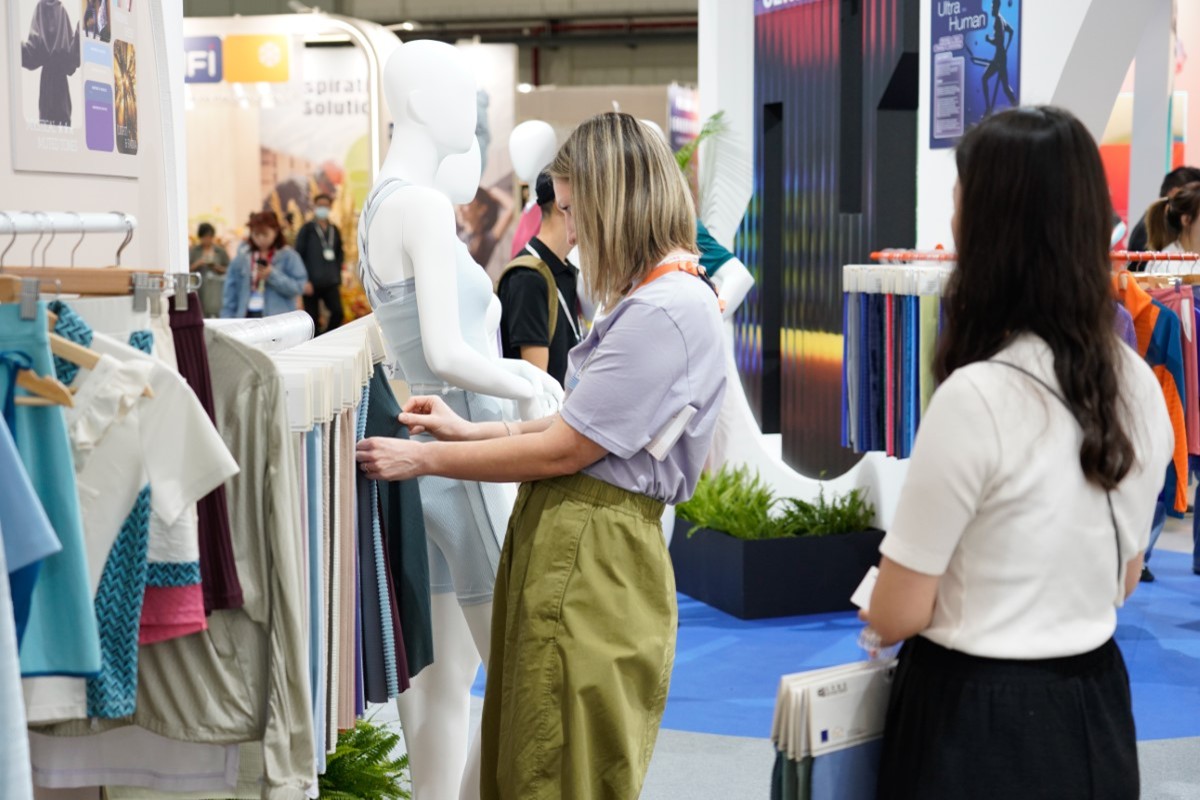
Experience from other export-oriented industries in Taiwan shows that sustainable exhibitions have become important venues for international buyers to understand and evaluate industrial capabilities. In the textile sector, the Taipei Innovative Textile Application Show (TITAS) has in recent years placed sustainable materials, recycled fiber applications, and low-carbon processing technologies at the core of its exhibition themes. Through physical fabric samples and process explanations, international brand buyers can quickly grasp how Taiwan’s supply chain responds to sustainable procurement requirements. The high volume of one-on-one procurement meetings and international buyer visits further demonstrates that sustainability has become a shared language for market engagement.
 |
| Source:TITAS (https://www.titas.tw/zh-tw) |
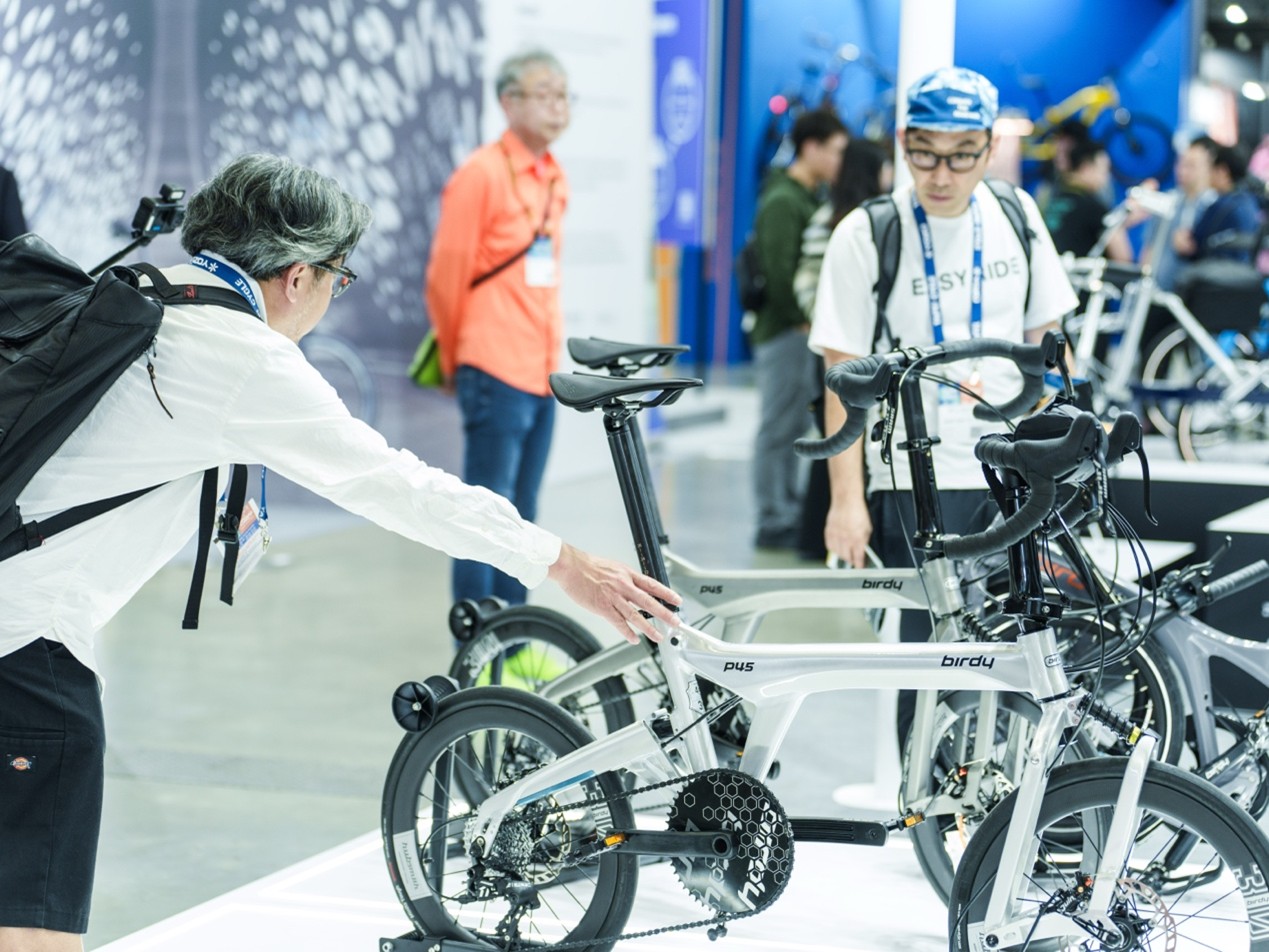
在自行車與運動器材產業中,永續要求同樣深刻影響國際品牌的採購標準。於 臺北國際自行車展中,臺灣廠商展示回收鋁合金、低碳製程、綠色塗裝及供應鏈減碳管理成果,讓買主在展場即可評估供應商是否具備長期合作的永續能力。對品牌商而言, 會展不再只是檢視產品設計或性能,而是同時觀察供應商在材料選擇、製程管理與碳治理上的整體實力,並據此影響後續訂單與合作關係。這些案例顯示,當會展具備清楚的策劃方向,便能協助產業將製造端的永續能力,轉化為市場可理解的競爭優勢。
 |
| Source:Taipei Cycle (https://www.taipeicycle.com.tw/zh-tw/index.html) |
The Opening of TICEC : Transitioning from a Low-Carbon Venue to a New Track for Global Exports.
With the opening of the Taichung International Convention and Exhibition Center (TICEC), iconic machine tool exhibitions have returned to Taichung—the heart of the industry cluster—injecting a powerful low-carbon momentum into the sector. Designed from the outset with sustainability in its DNA, the building has secured the highest honors: eight Diamond-level ratings under the Green Building Label, as well as the Candidate Green Building Certificate (Diamond Grade) and the Carbon Footprint Certification (Diamond Grade). Furthermore, the facility integrates an intelligent management system, earning the Smart Building Certificate (Bronze Grade). These infrastructural advantages transform the center itself into a massive "living case study of sustainability," perfectly meeting international buyers' demands for low-carbon venues.
This Diamond-grade green building is more than just an exhibition space; it is a gateway connecting Taiwan’s machine tool supply chain. Taichung’s unique "front showroom, back factory" advantage allows international buyers to travel from the exhibition floor to manufacturing sites in minimal time, experiencing the transformative strength of the industrial ecosystem firsthand. By combining a Diamond-level sustainable venue with the strengths of a local cluster, the exhibition’s impact extends effectively from the booths to the factory floors, establishing an irreplaceable persuasive power in green trade.
In conclusion, sustainable MICE (Meetings, Incentives, Conferences, and Exhibitions) is no longer just an eco-friendly practice—it has become a vital tool linking industrial capabilities with global markets. By pairing TIEC’s high-standard green specifications with the manufacturing heritage of Taiwan’s machine tool industry, we have the opportunity to redefine our industrial positioning amidst the global wave of low-carbon manufacturing. This will not only significantly enhance international market visibility but also create a sustainable competitive landscape for Taiwan’s export growth and industrial upgrading.
 |
| Source: TICEC (https://www.ticec.com.tw) |


