

Navigating High-Value Blue Oceans: High-End Machine Tool Demand and Intelligent Manufacturing Trends
Preface
The global machine tool industry is entering a new phase of structural transition, with supply chains shifting from regional concentration toward diversified layouts. Taiwan's machine tool industry should invest in dimensions such as technological innovation, intelligent manufacturing, green manufacturing, and customized production to provide more competitive and high-value-added products. This is particularly crucial in complex equipment—such as high-end five-axis, turn-mill, ultrasonic, and whirling machines—while actively engaging in high-growth potential application manufacturing sectors. Furthermore, in response to the digital and green transformation of machine tools, the industry must utilize technologies like digital identity, cyber-physical integration, and artificial intelligence to construct data-driven smart manufacturing solutions, moving toward a new generation of smart manufacturing paths characterized by digitalization, intelligence, and green practices.
Current Status of the Machine Tool Industry (Domestic and International)
In 2024, the global machine tool output value was $78.18 billion USD, representing an 8.3% decline from the previous year. This was primarily influenced by factors such as geopolitics, supply chain restructuring, sluggish demand in Mainland China, and high interest rates in the United States. In 2024, the world’s top five machine tool producing nations were, in order: Mainland China, Germany, Japan, the United States, and Italy. Among them, Mainland China's demand for machine tools was driven by the growth of the new energy vehicle industry and manufacturing sectors for electric vehicle components, powertrains, and battery modules. The world’s top five machine tool exporting countries in 2024 were Germany, Mainland China, Japan, Italy, and the United States. The total global export value of machine tools across all countries declined by 3.2% in 2024; specifically, Germany saw a decline in order demand due to the ongoing impact of the Russia-Ukraine war on European geopolitics and the weakening global economy [1].
According to the November 2025 customs import and export trade statistics from the Ministry of Finance's General Administration of Customs, as compiled by the Taiwan Machine Tool & Accessory Builders' Association (TMBA), Taiwan's total machine tool exports from January to November 2025 were approximately $1.828 billion USD, a decrease of 8.8% compared to the same period in 2024. The total import value was $599 million USD, a growth of 24.9% compared to the previous year [3]. Looking at neighboring Japan, the total machine tool orders for 2024 were approximately 1.49 trillion JPY, a year-on-year decline of 0.1%. From January to October 2025, Japan's machine tool order value grew by 7.0% compared to the same period last year, while the import value declined by 12.2% and the export value grew by 12.4%. Taiwan's machine tool industry has seen a significant reduction in orders primarily because the New Taiwan Dollar has remained relatively strong compared to the Japanese Yen; with a depreciation rate far lower than its competitors, Taiwanese machine tool prices have lacked a competitive advantage.
High-Growth Potential Application Fields for High-End Machine Tools (Aerospace, Transportation, Die and Mold, Medical, Semiconductors, etc.)
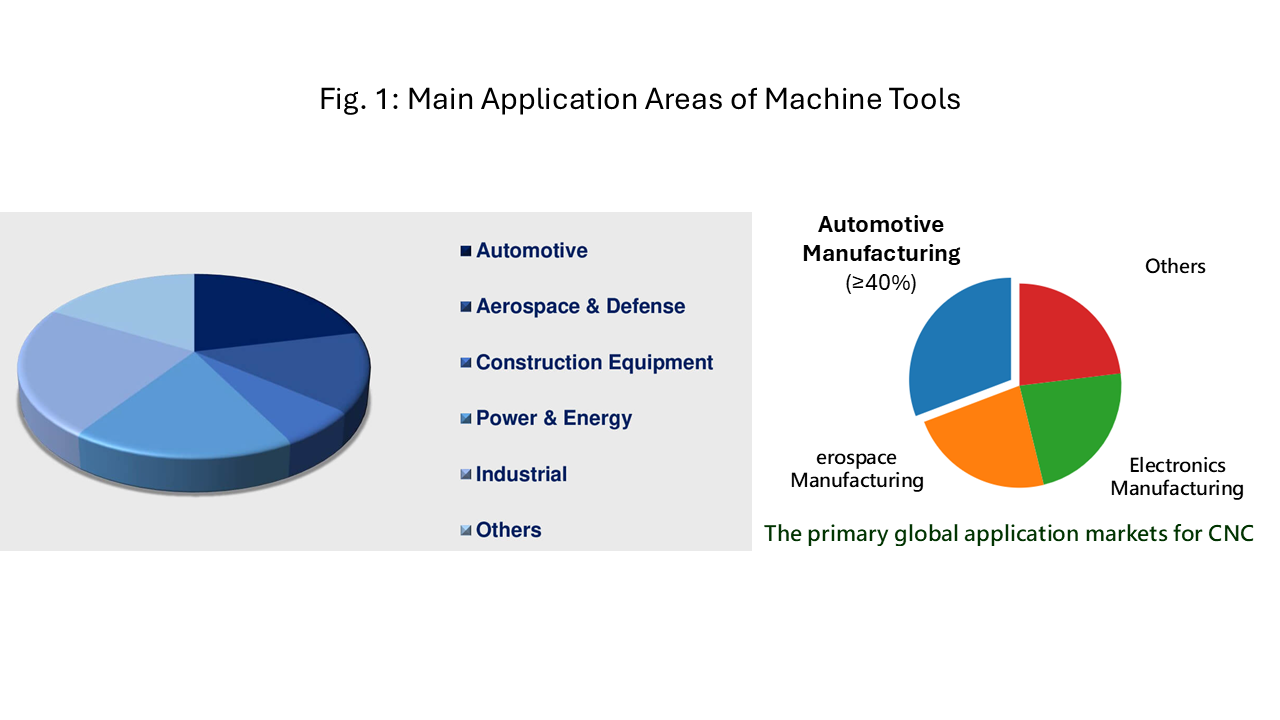
According to market research, the primary application field for CNC machine tools is the automotive industry, where they are utilized to produce components such as engines, transmissions, and suspension parts. Another vital application sector is aerospace and defense, used in the production of turbine blades, aircraft components, and missile parts [4]. In recent years, high-end machine tool applications have shifted from traditional mass production to high-precision processes characterized by small volumes and high diversity. Consequently, transformations driven by advanced technology and smart manufacturing are increasingly appearing in the actual machining industry.
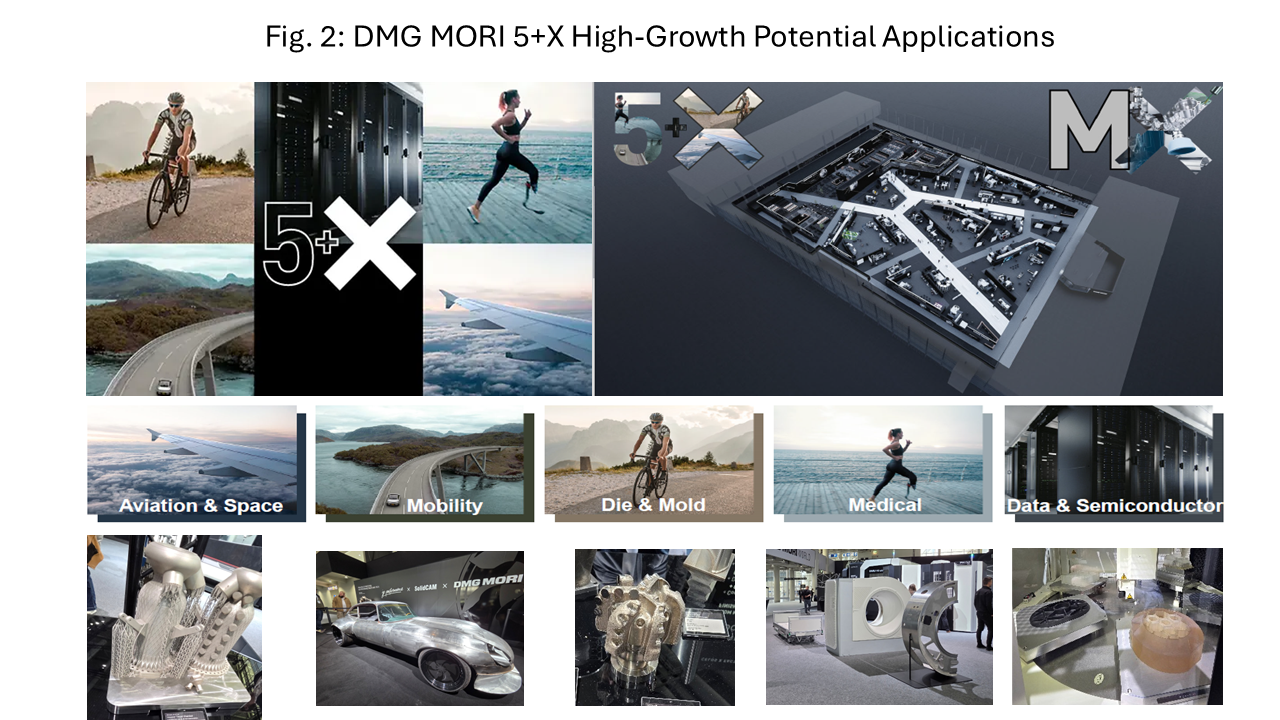
By the end of 2025, the international leading manufacturer DMG MORI introduced its "Manufacturing Future" concept, emphasizing a new generation of digital solutions centered on technical, economic, and sustainability issues. This concept places technology, machining transformation, and the "5+X industries" at its core. These 5+X industries serve as the innovative driving force for machine tool processing, focusing on five high-growth potential application fields: Aerospace, Transportation, Die and Mold Manufacturing, Medical, and Data & Semiconductors. The high geometric complexity of products in these sectors increases the difficulty of machining processes, which in turn demands higher-end machine tool equipment and advanced manufacturing processes.
Demand for One-Stop Process Integration in High-End Machine Tool Equipment (Multi-tasking Equipment: Five-Axis, Turn-Mill, Whirling, etc.)
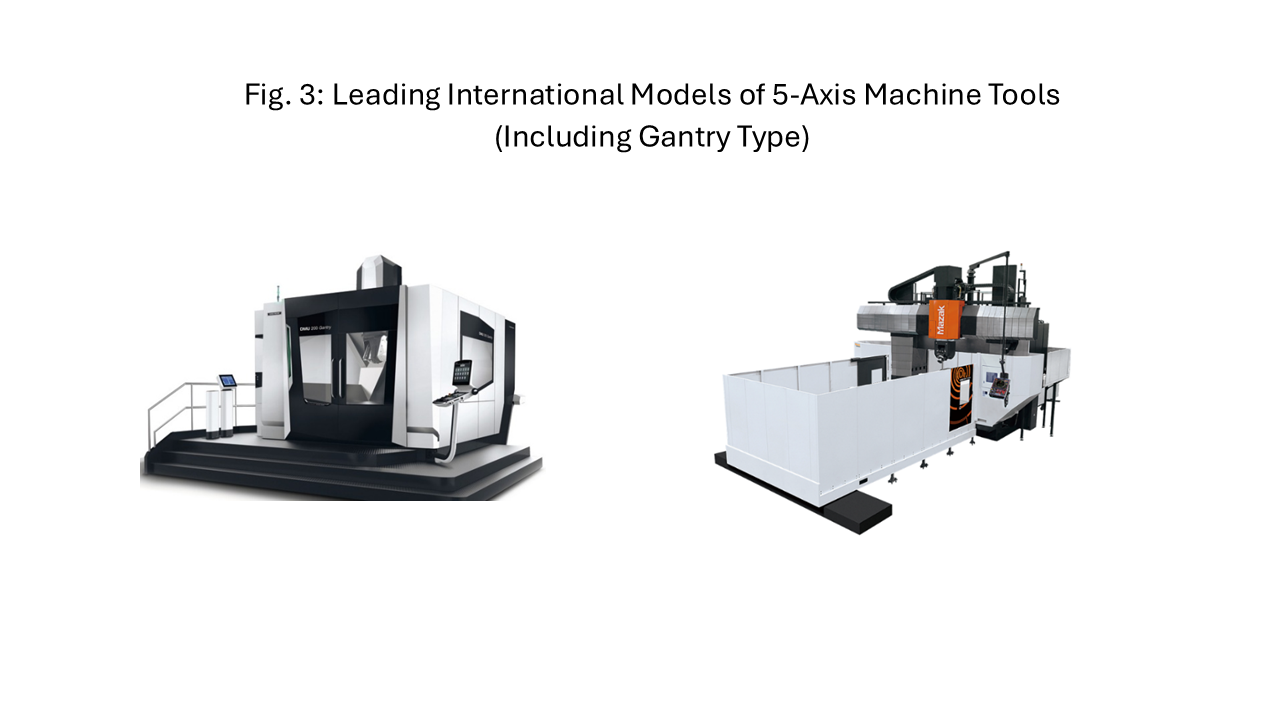
Five-axis machine tools (including gantry types) are high-precision, high-efficiency machining units. They feature structural designs that combine high rigidity and stability, capable of withstanding high-speed movement and heavy loads. Equipped with a five-axis simultaneous machining spindle head, these machines provide various forms of milling for planes, curved surfaces, and inclined surfaces. Among the brands with a relatively high market share, the DMU series introduced by DMG MORI and the VERSATECH series by MAZAK currently enjoy the highest market acceptance and largest customer application base.
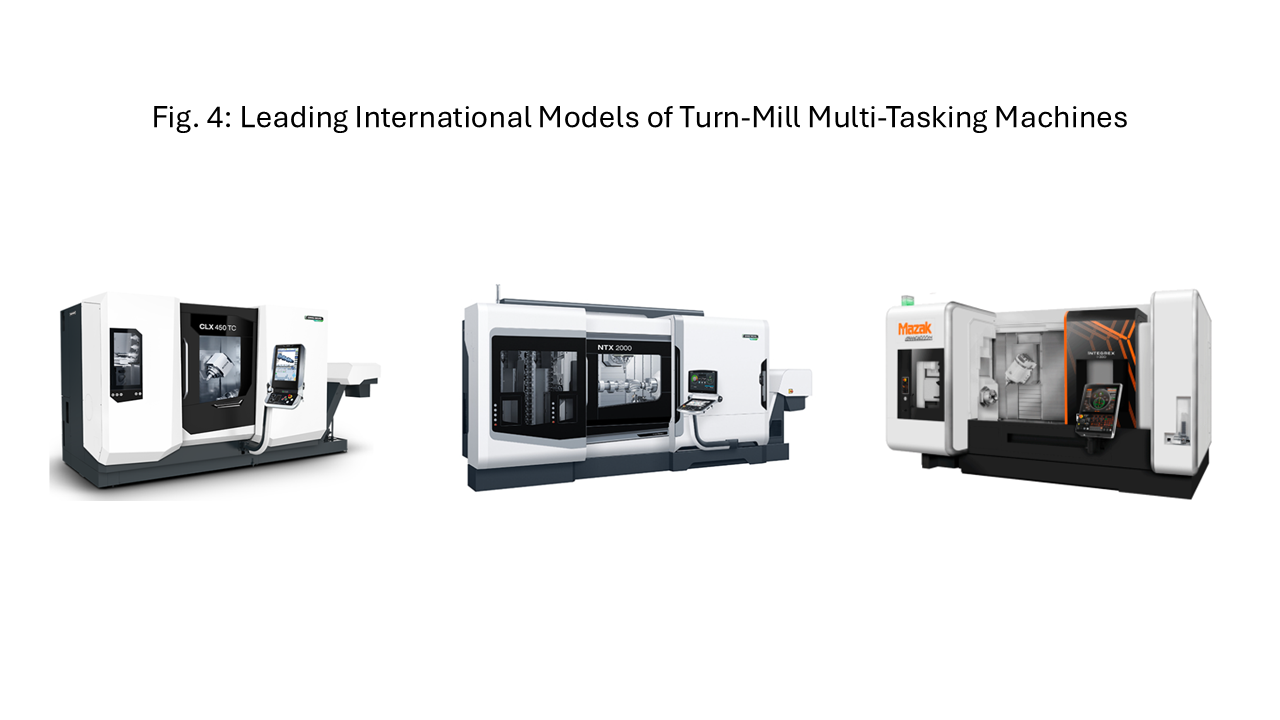
Turn-mill multitasking machines combine functional modules such as five-axis machining, a turn-mill tool spindle (with automatic switching between turning and milling functions), and tool magazine systems. This allows different processes—including turning, milling, drilling, and tapping—to be completed on a single machine. These machines offer advantages such as high machining precision, high efficiency, and a relatively small footprint. Their multifunctional and composite processing capabilities enable the completion of all machining stages in a single clamping. Leading models with high market share in this category include the DMG MORI CLX and NTX series and the MAZAK INTEGREX series. Their performance stability and machining accuracy are at the forefront of the industry, making them benchmarks for global manufacturers.
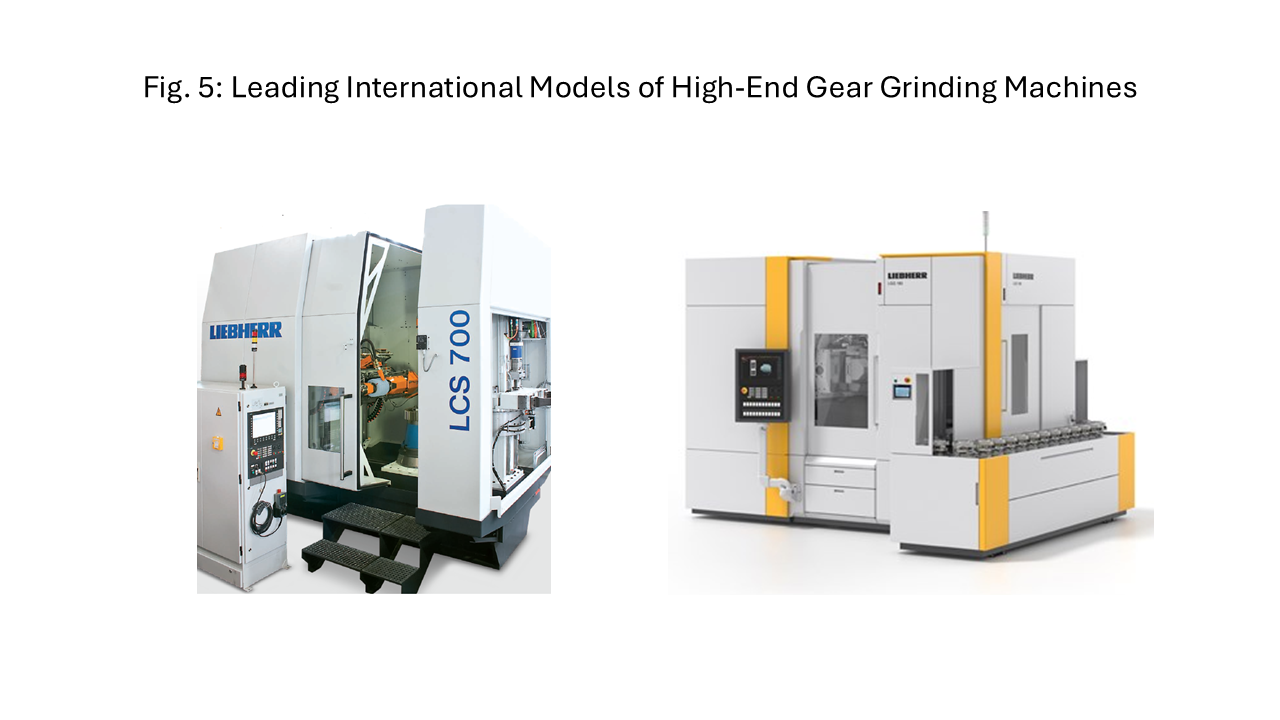
As the new energy and electric vehicle industries rise, the requirements for gear machining precision and surface roughness have become more stringent. This necessitates gear grinding processes to enhance the precision of gear contact surfaces. The development of high-end gear grinding machines is based on continuous generating grinding technology paired with multi-axis, high-performance gear grinders capable of automatically dressing helical grinding wheels. Through the combination of multi-axis motion and the grinding wheel, these machines ensure high-quality gear grinding within short cycle times, while simultaneously performing fully automated inspections and measurements via gear measuring machines. Brands with relatively high market shares in high-end gear grinding machines include the LIEBHERR LGG and LCS series, as well as the KLINGELNBERG SPEED VIPER and G series.
Smart Manufacturing Solutions for High-End Machine Tools (Digital, Green, AI, etc.)
In the face of the volatile and ever-changing global political and economic landscape, accelerating digitalization and decarbonization are the primary solutions for Taiwan's machine tool industry. The application of digital technologies such as AI and 5G will represent a new paradigm for competitiveness in the machine tool sector.
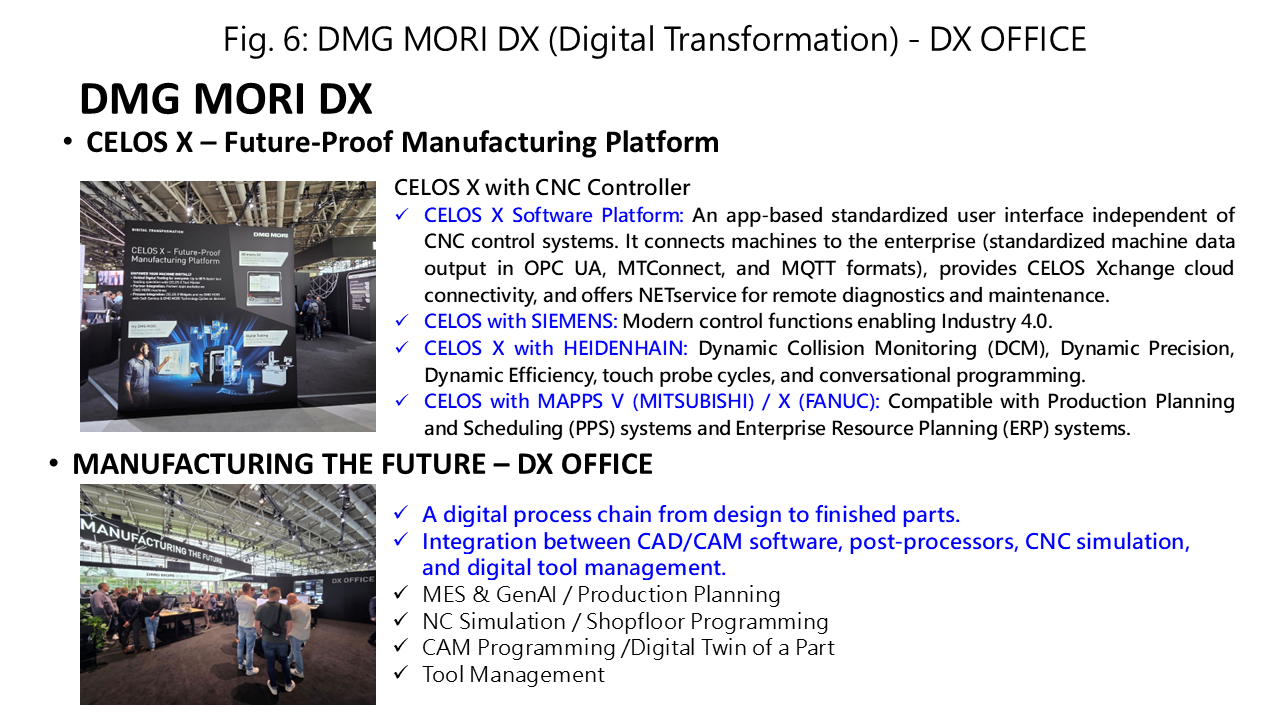
The world-leading manufacturer DMG MORI has introduced Green Transformation (GX) and Digital Transformation (DX) as the core technologies of its smart manufacturing solutions. Regarding digital transformation, the cloud-based CELOS X platform provides an integrated and secure data space for end-to-end factory integration. Digital Twins serve as the key technology empowering digital transformation, allowing complex machining tasks to be optimized in advance and enabling the efficient planning of entire manufacturing solutions.
Furthermore, they have introduced the DX OFFICE, which allows for the preemptive implementation of digital office scenarios such as Gen AI MES, production planning, machine tool simulation, factory programming, CAM planning, workpiece quality prediction, and digital tool management. These high-end smart manufacturing solutions provide a digital process chain that spans from initial design to the finished component.
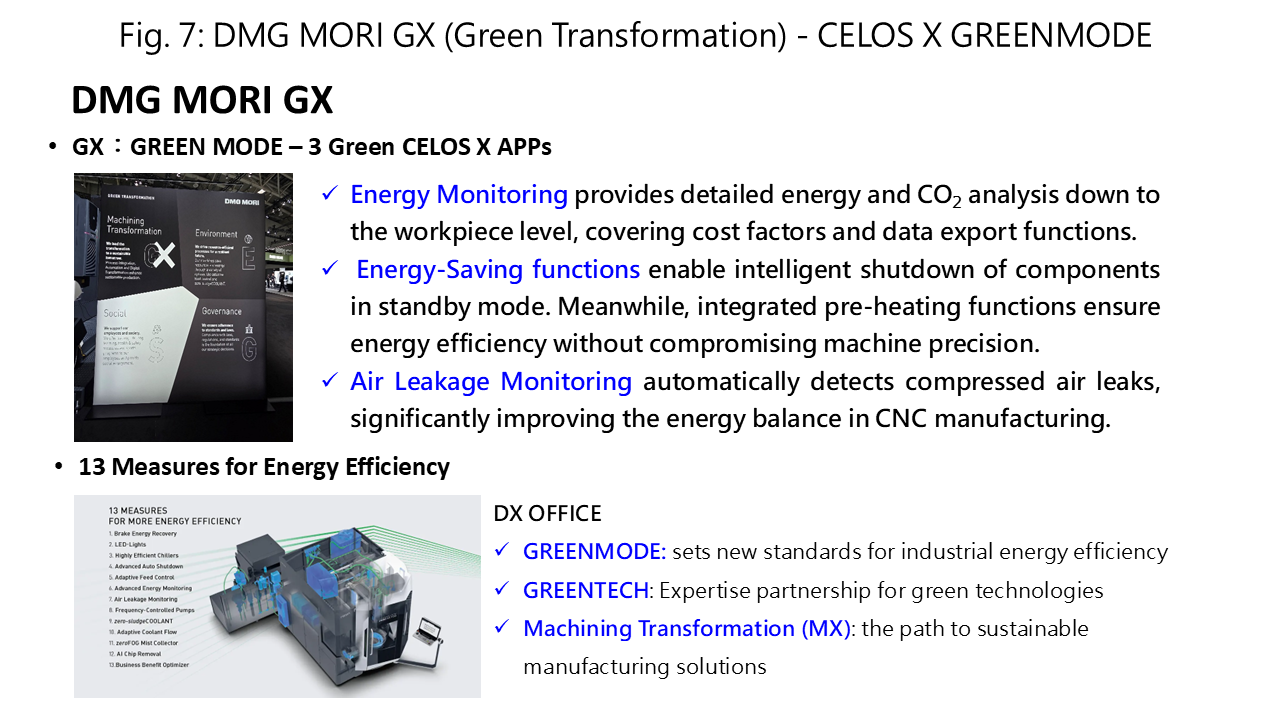
In terms of the core of green transformation, GREEN MACHINES are designed to reduce carbon dioxide emissions. For instance, through process integration, a single machine tool performing multiple tasks consumes less electricity than several machines performing single tasks.
Green hardware features include high-brightness LED lighting, hydraulic pumps with pressure-holding accumulators, and hydraulic pumps equipped with variable frequency drives (inverters). Additionally, the CELOS X Green Mode application assists enterprises in analyzing, recording, and actively reducing energy consumption. It provides functions such as energy monitoring, energy-saving features, and air leak monitoring to automatically detect compressed air leaks. These advancements significantly improve the energy balance in machine tool manufacturing, leading to a reduction in energy consumption of up to 30%.
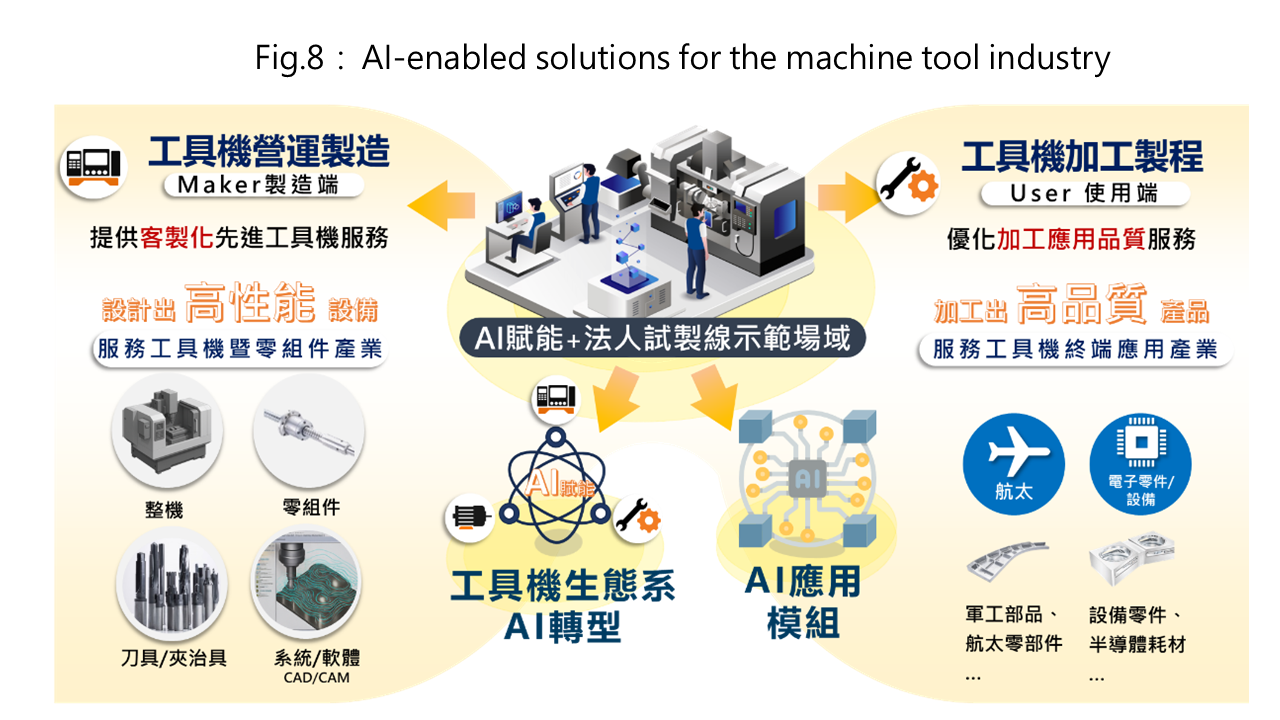
In response to the continuous rise in global manufacturing transformation and high-precision machining demands, the machine tool industry must accelerate its evolution from equipment supply toward intelligent manufacturing services. By utilizing AI-empowered holistic solutions that combine equipment intelligence with process optimization, the industry can focus on two primary areas:
First, regarding the machine tool operations and manufacturing side, AI technology is integrated into the three stages of design, assembly, and inspection. This strengthens structural design efficiency, assembly precision, and quality testing capabilities, building a smart machine tool manufacturing service capacity capable of providing customized and high-performance equipment. This creates an equipment supply model with replicable export value.
Second, regarding the machine tool machining process side, AI is introduced to the production floor for applications such as process optimization, machine condition monitoring, and quality prediction. These applications enhance production efficiency, machining accuracy, and yield rates, ensuring that the machine tool is not merely a piece of equipment, but a smart machining solution capable of continuously improving process quality.
Conclusion: Smart Manufacturing Trends in High-End Machine Tools
International leading manufacturers are taking "Innovative Manufacturing" as their main theme, focusing on the complete industrial chain of metal processing. This encompasses advanced technologies such as machine tools, digitalization, intelligence, and automation. Regarding trends in high-end machine tool models and key components, manufacturers are developing equipment for high-end application markets, including high-end five-axis and multi-tasking machine tools for difficult-to-cut materials, large-scale turn-mill machines, and additive-subtractive hybrid processing machines for high-mix, low-volume production.
In terms of digital transformation technology trends, the implementation of a digital process chain from design to finished parts is gradually achieving complete cyber-physical integration (CPS) for machine tools, spanning from design and simulation testing to operations. In the area of smart manufacturing technology trends, machine tools are being upgraded to "AI Machine Tools" through the introduction of AI-driven value-added technologies that ensure machine precision, AI-enhanced CNC simulation and manufacturing optimization, and edge AI-CAM technologies.
The Taiwanese machine tool industry is currently at the forefront of a "tsunami" caused by the dual impacts of tariffs and currency appreciation. It is at a critical turning point for transformation and upgrading. The industry is actively penetrating high-value-added sectors—such as multi-axis aerospace cutting, medical composite material processing, and semiconductor applications—to establish brand uniqueness and raise technical barriers, thereby upgrading machine tools into smart machine tools and advancing toward a deeper level of smart manufacturing.
References
[1] 2025 Mechanical Industry Yearbook. Industrial Technology Research Institute, Industry, Science and Technology International Strategy Center (ISTI). August 2025.
[2] Taiwan Machine Tool Export & Import Monthly Express. Taiwan Machine Tool & Accessory Builders' Association (TMBA). November 2025.
[3] Mechanical Industry Briefing. International Trade Administration, Ministry of Economic Affairs. November 2025.
[4] CNC Machines Market Size - Global Industry, Share, Analysis, Trends and Forecast 2023 – 2032 [Online]. https://www.acumenresearchandconsulting.com/cnc-machines-market
[5] Chien-Yi Li, Shan-Jen Yang, Chia-Chin Chuang, Shang-Chun Lin, Yuan-Heng Huang, Peng-Hsu Huang, Shao-Gu Huang. "Digital Twin Platform Technology for Five-Axis Machine Tools." Machinery Magazine, Issue 500 (2024/11), pp. 14-21.
[6] Chien-Yi Li, Chia-Chin Chuang, Shan-Jen Yang. "Cyber-Physical Digital Twin Platform for Five-Axis Machine Tools." Machine Tool & Components Magazine, Issue 168 (2025/03), pp. 88-94.
[7] Jen-Chieh Wang, Chien-Yi Li, Shuo-Peng Liang, Chien-Chih Liao. "EMO 2025 50th Anniversary: Focusing on Three Major Technologies—Digital Twins, Flexible Automation, and AI Assistants." Machine Tool & Components Magazine, Issue 176 (2025/11), pp. 48-58.


