

New Key to Building Long-Term Competitiveness in the Machine Tool Industry – Talent as the Foundation for Transformation
As global manufacturing accelerates toward smart, low-carbon, and high-value production, Taiwan’s machine tool industry stands at a critical turning point. While technological upgrades are essential, more and more companies realize that the true key to successful innovation and transformation lies not only in equipment and systems, but in the ability to continuously cultivate, retain, and accumulate critical talent.
Machine tools have long been called the “mother of industry.” Their competitiveness fundamentally comes from accumulated engineering expertise, manufacturing experience, and cross-generational technical inheritance. In an era driven by digital technology, AI, and net-zero carbon goals, the profile of required talent is changing—no longer just single-domain specialists, but versatile professionals who can integrate across fields, understand systems, and maintain lifelong learning.
For this reason, the machine tool industry has increasingly emphasized “talent development” and “talent rooting” as long-term strategies, viewing them as essential investments for innovation rather than short-term manpower solutions.
CHMER’s Practical Approach to Talent Strategy
As a company deeply rooted in the machine tool sector, CHMER promotes smart manufacturing and green machine tools while simultaneously building a long-term talent framework. Through structured training and industry-academia collaboration, CHMER prepares for the next decade and beyond.
From “Finding People” to “Developing People”
Facing declining birth rates and fierce talent competition across industries, companies that rely solely on recruitment struggle to sustain long-term growth. CHMER believes a robust talent strategy must focus on cultivation—providing clear career paths and demonstrating the value of expertise within the industry. Therefore, CHMER prioritizes potential as much as immediate capability. Through cross-department learning, job rotation, and support for on-the-job training, employees gradually build interdisciplinary skills. This enables R&D, manufacturing, application, and service teams to understand product technology, system integration, energy efficiency, carbon reduction, and smart applications—creating resilience in the talent structure.
Industry-Academia Collaboration for Long-Term Momentum
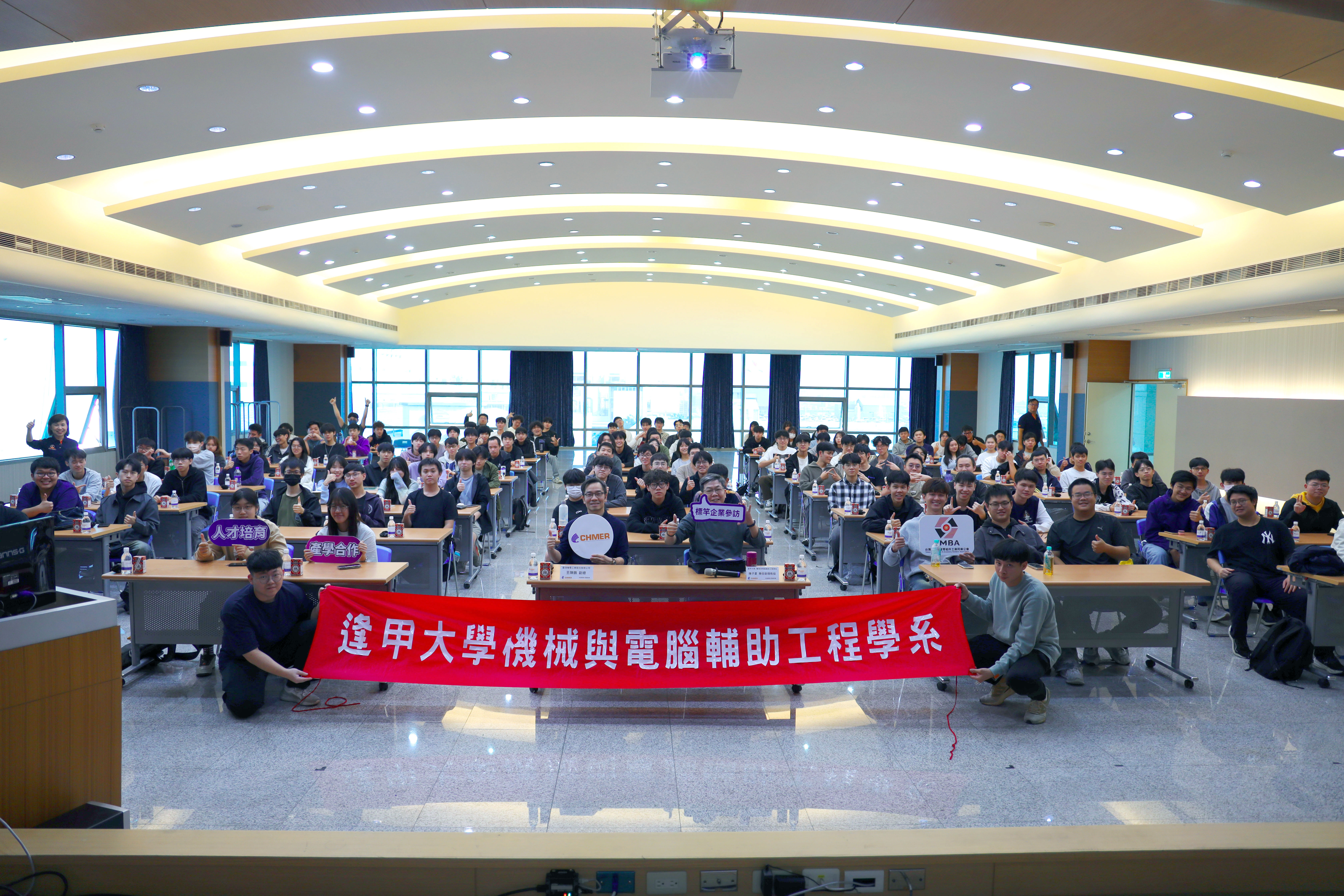
Industry-academia partnerships are indispensable for talent rooting. CHMER collaborates with multiple universities through internships, research projects, and technical programs, allowing students to experience the real complexity and value of machine tool R&D and manufacturing during their studies.
This approach not only narrows the gap between theory and practice but also helps companies cultivate talent earlier. For students, it’s a career exploration process; for companies, it’s an investment in future knowledge and experience.
Talent Rooting: The Solid Foundation for Innovation
Innovation and transformation never happen overnight. Whether smart control, automation integration, or design and process changes for net-zero goals, all rely heavily on talent with system thinking and continuous learning ability. CHMER understands that only when talent commits to long-term growth can transformation strategies truly take root.
Thus, the company focuses not only on skill development but also on career growth and organizational belonging. Through structured systems and communication, employees find opportunities at every stage, creating a positive cycle.
Preparing for the Next Generation of the Industry
In an increasingly competitive global environment, Taiwan’s machine tool industry must achieve both technological upgrades and generational talent transition. By centering on talent development and implementing long-term, steady strategies, CHMER lays the foundation for innovation and opens possibilities for the next generation.
Ultimately, a company’s competitiveness comes from its people. When talent takes root, the industry can keep moving forward.
 |
 |
 |


