

Designing Safety into Machine Tools: Risk Assessment, Industry Standards, and Validation as the Path to Inherent Safety
As smart manufacturing, automated equipment, and artificial intelligence technologies advance rapidly, the machine tool and machinery equipment industries are not only a critical foundation for Taiwan’s manufacturing transformation and upgrading; the safety of their equipment also directly affects production safety across downstream industries. In the past, occupational safety management focused mainly on operational control after equipment entered the factory, including protective devices and personnel training. However, if hazards already exist during the design and manufacturing stages of machinery, even the most rigorous on-site management may still leave risks that are difficult to eliminate completely.
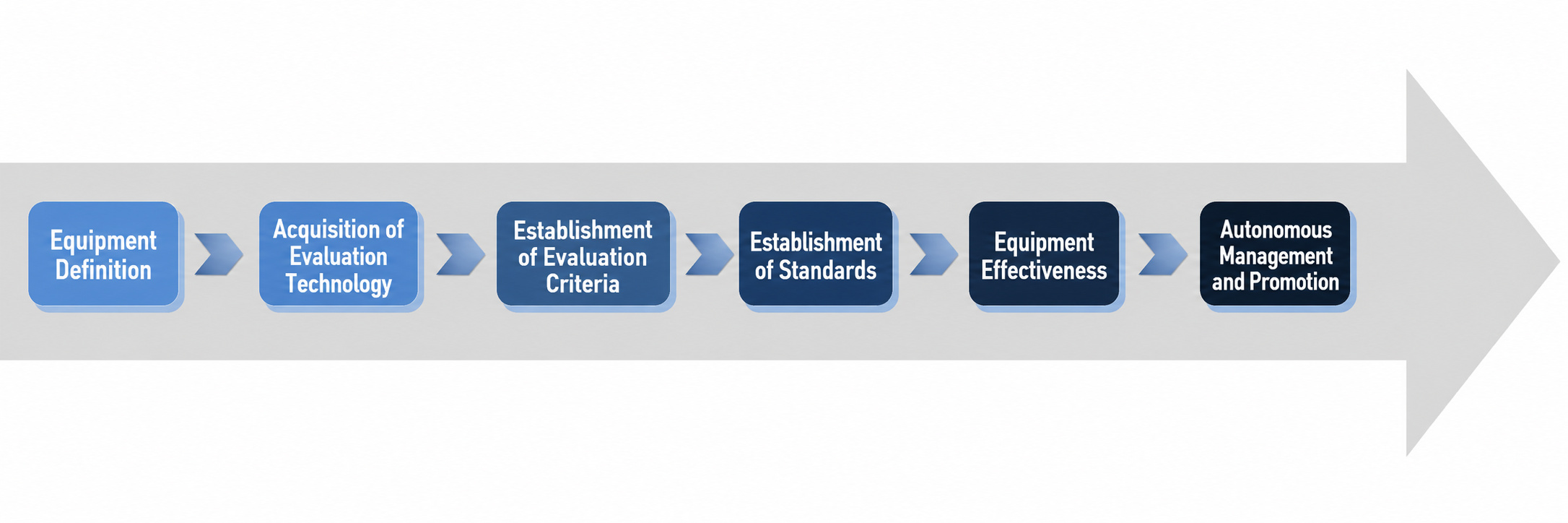
Therefore, occupational accident prevention must move further upstream—from post-incident improvement and user-side protection toward source-level equipment design, risk assessment, and industry-led safety management. Since 2019, Taiwan’s Occupational Safety and Health Administration (OSHA), Ministry of Labor, has promoted the Industrial Inherent Safety Program. By engaging industry associations, equipment manufacturers, and user enterprises, the program has gradually established a pathway of “introducing risk assessment, building safety standards, and implementing equipment validation,” transforming equipment safety from an improvement issue within individual factories into shared design and manufacturing requirements across the industry.
 |
The New Risks of Smart Manufacturing: Safety Management Must Return to the Equipment Source
With the growing adoption of Industry 4.0, smart machinery, automated control, and human-machine collaborative equipment, workplace hazards are no longer limited to traditional risks such as cutting, entanglement, stamping, electric shock, or falling objects. New risks now include software control failures, abnormal interlocking functions, energy supply interruptions, sensor misjudgments, and unexpected movements arising from the integration of multiple machines. If safety measures are limited to adding guards after equipment completion, posting warning labels, or asking operators to stay alert, hazards often cannot be eliminated at their source.
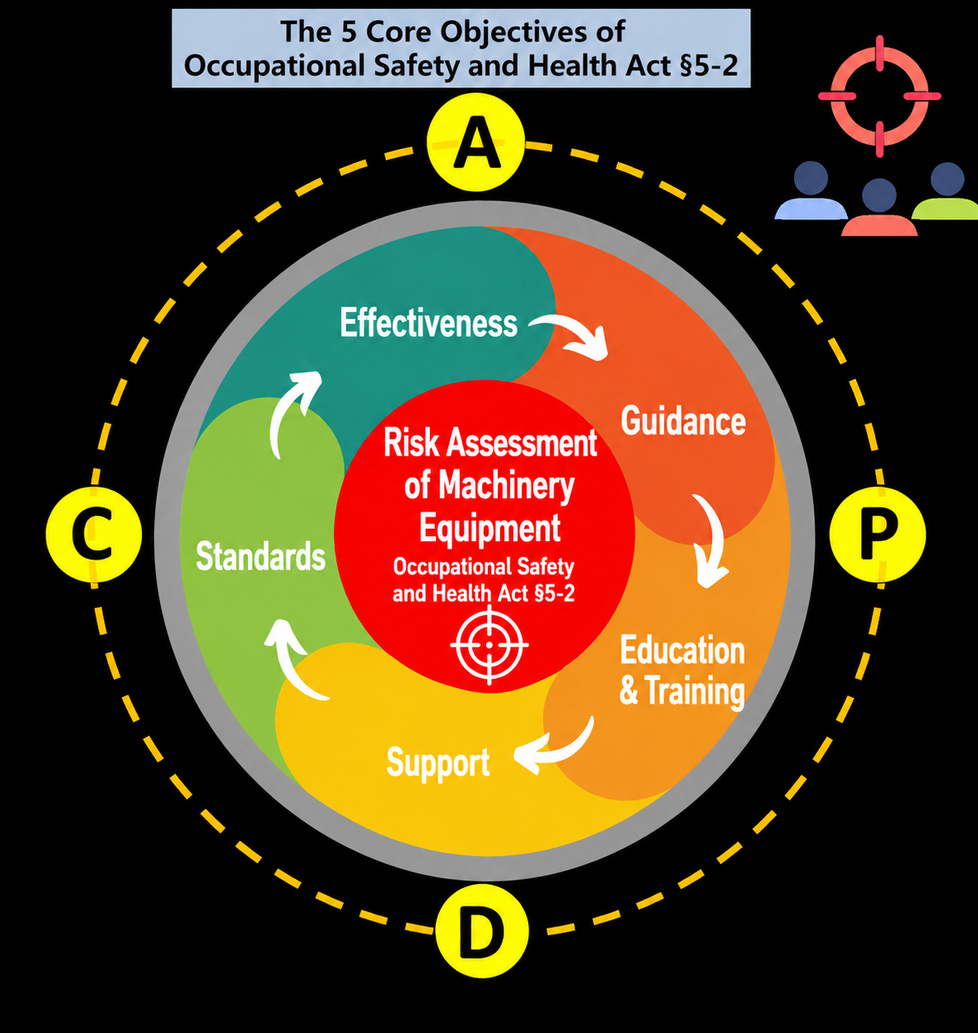
Article 5, Paragraph 2 of Taiwan’s Occupational Safety and Health Act clearly stipulates that designers, manufacturers, or importers of machinery, equipment, and devices shall conduct risk assessments during the design, manufacturing, or import stages and endeavor to prevent occupational accidents during equipment use. The Industrial Inherent Safety Program is built on this existing regulatory requirement, helping equipment manufacturers incorporate safety into their R&D and manufacturing processes. Following the hierarchy of risk reduction, hazards should first be eliminated through design; when they cannot be fully eliminated, guards, safety interlocks, control systems, and other engineering measures should be adopted, with warnings and user information used only to address residual risks.
 |
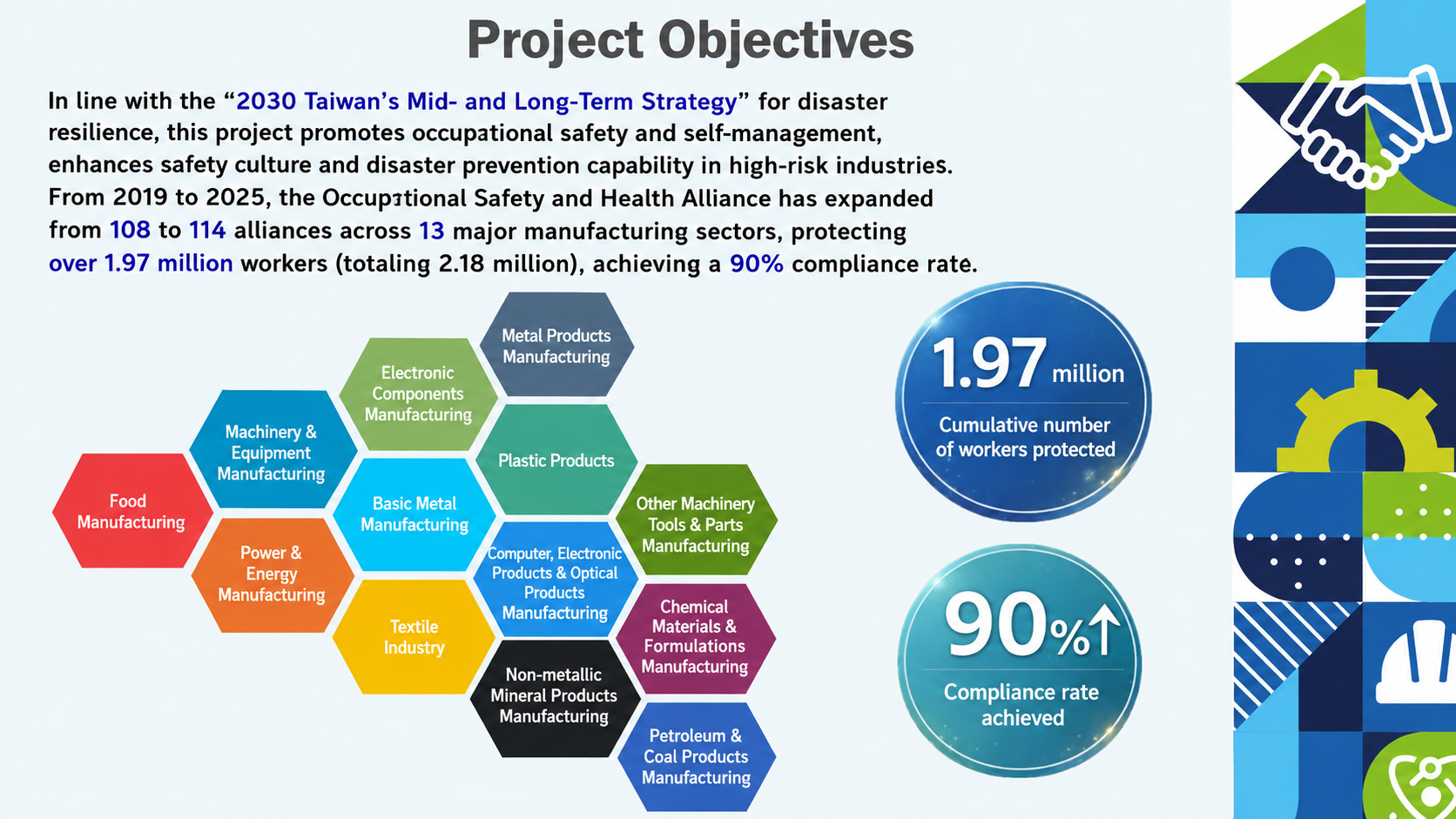
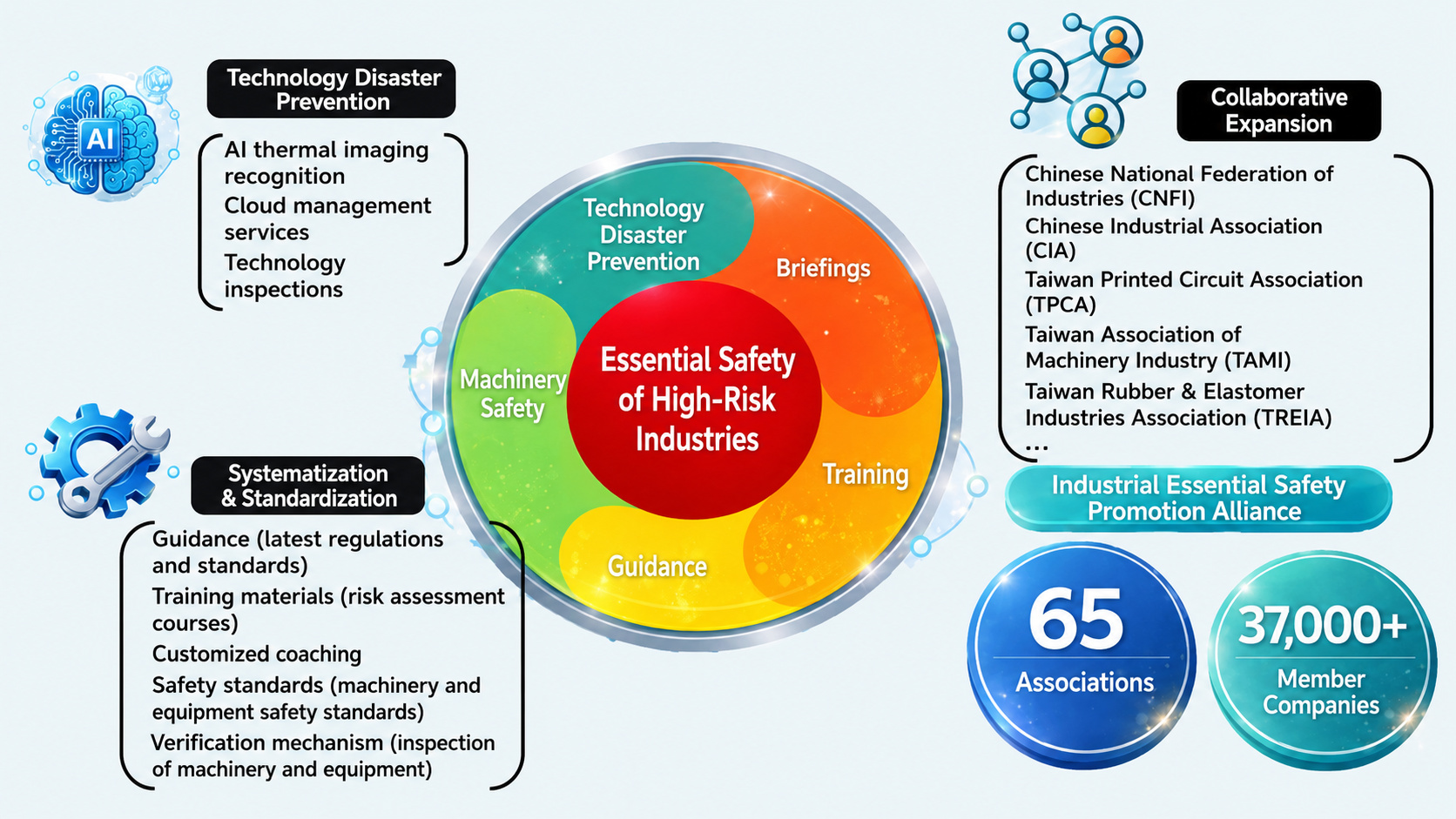
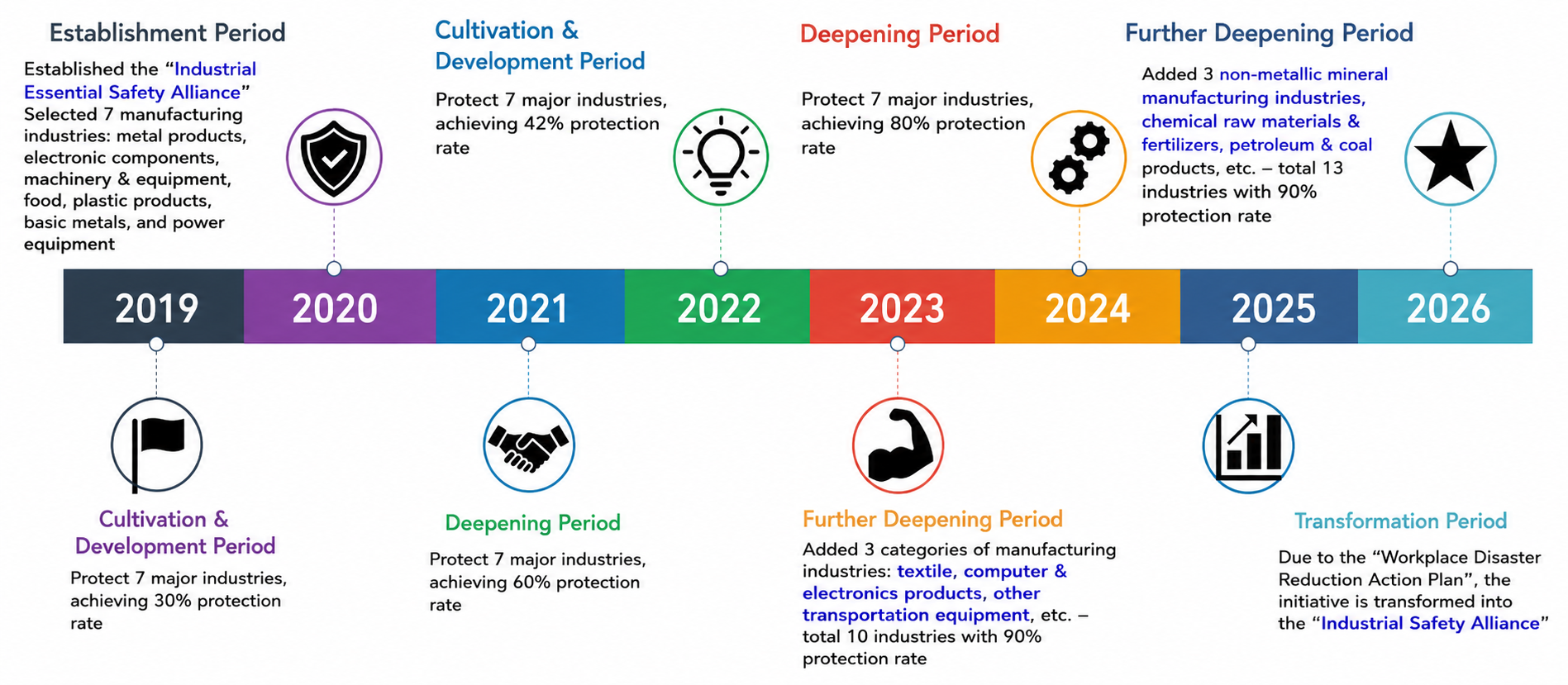
From 2019 to 2023, OSHA promoted the “Industrial Smart Inherent Safety Enhancement Program,” initially targeting seven manufacturing sectors with high occupational accident risks: metal products, electronic components, machinery equipment, food, plastic products, basic metals, and electrical equipment. In 2024, the scope expanded to ten major manufacturing sectors, and in 2025 it further expanded to thirteen. By the end of 2025, the Industrial Inherent Safety Promotion Alliance had brought together 65 industry associations and local industrial organizations, covering approximately 37,000 member companies and 1.97 million workers, with an overall coverage rate of 90%. This has gradually formed a safety support network jointly participated in by the government, industry organizations, and enterprises.
 |
 |
Step 1. Helping Equipment Manufacturers Introduce Machinery Risk Assessment
The machine tool and machinery equipment industries play a dual role in promoting inherent safety. On the one hand, machinery equipment manufacturing itself involves machining, welding, lifting, assembly, trial runs, and electrical work. On the other hand, its products are widely supplied to metalworking, electronics, plastics, automotive components, and other manufacturing sectors, meaning that equipment design quality directly affects the safety of downstream users. For this reason, the program does not only examine protective measures for existing factory equipment, but also extends guidance upstream to equipment manufacturers.
Between 2019 and 2025, the program worked with industry organizations including the Taiwan Association of Machinery Industry, the Taiwan Machine Tool & Accessory Builders’ Association, the Taiwan Printed Circuit Association, the Taiwan Casting Industry Association, the Taiwan Surface Finishing Industry Association, and the Taiwan Plastics Industry Association. In total, it assisted 18 equipment manufacturers in introducing machinery risk assessment techniques.
Risk assessment is not merely a matter of checking whether equipment is fitted with guards. Rather, it starts from the complete life cycle of machinery and equipment, examining different stages such as transportation, installation, normal operation, setup and adjustment, cleaning and maintenance, repair, troubleshooting, unexpected startup, and dismantling or disposal. It systematically identifies hazards related to mechanical, electrical, and control systems, then estimates risks and implements risk reduction measures.
To ensure that these techniques can continue to operate within industry, the program has held 32 introductory machinery risk assessment courses with 1,282 participants, as well as 18 advanced courses with 425 participants. In addition to explaining regulations and basic methods, the courses use equipment case studies and practical exercises to guide design, R&D, manufacturing, occupational safety, and procurement personnel in developing a shared language for risk management. Safety is therefore no longer simply an improvement requirement raised by the occupational safety department after equipment completion, but a product condition that should be incorporated from the R&D and design stages.
Step 2. Transforming Individual Risk Assessments into Industry Safety Standards
After equipment manufacturers complete risk assessments, the results will still be difficult to turn into common industry requirements if they remain within a single company. To make these experiences replicable and scalable, the program further brings together industry associations, equipment manufacturers, and occupational safety experts to translate common hazards, necessary safety functions, and risk reduction measures into industry-led safety standards, equipment safety checklists, reference specifications, and technical guidelines.
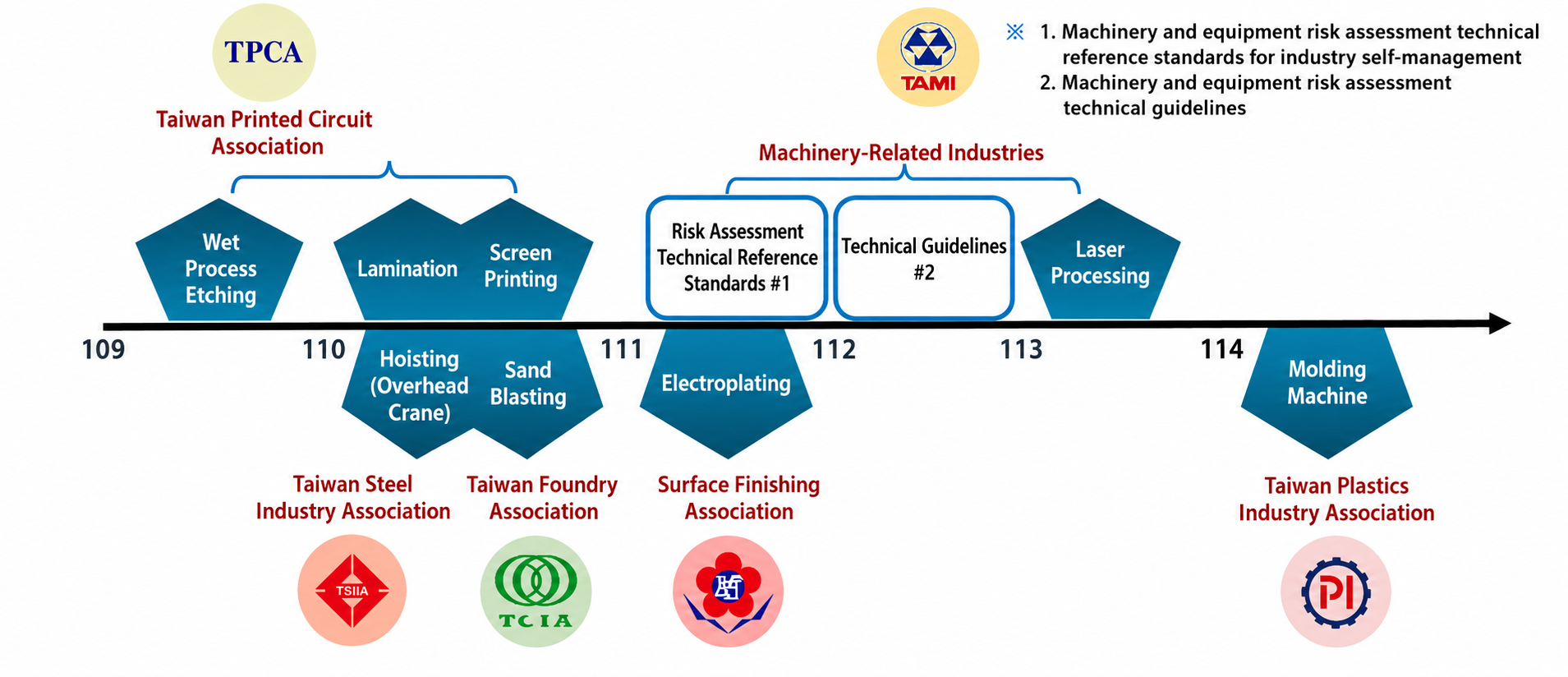
As of 2025, safety standards or checklists have been completed for wet etching equipment, lamination equipment, screen printing equipment, sandblasting equipment, lifting equipment, electroplating equipment, laser processing equipment, and extruders. In addition, the “Reference Specification for Industry Self-Management of Machinery Risk Assessment Techniques” and the “Technical Guidelines for Machinery Risk Assessment” have also been completed, forming a total of ten safety standards, specifications, or guidelines.
These outcomes mean that equipment safety requirements no longer exist only in individual guidance reports. Equipment manufacturers can use them to review design and manufacturing content; purchasers can incorporate necessary safety functions into procurement specifications; users can verify compliance during delivery and acceptance; and industry associations can promote autonomous safety management among members through common standards. For the machine tool and accessory industries, safety standards also serve as a supply chain communication tool, reducing discrepancies between equipment suppliers and customers in their understanding of safety requirements.
 |
Step 3. Using Validation Mechanisms to Ensure Safety Standards Are Truly Implemented
Once safety standards are established, a mechanism is still needed to confirm whether equipment has truly been designed and manufactured in accordance with those standards. The program therefore further developed an equipment safety validation mechanism. Through applications submitted by equipment manufacturers, reviews of risk assessment documents and design materials, and on-site equipment verification, the mechanism confirms whether protective devices, emergency stops, safety interlocks, operating modes, and user information comply with industry safety standards.
As of 2025, the program has completed 12 machinery equipment safety validations. Through the validation mechanism, safety standards can move beyond written requirements and be implemented in actual equipment, while providing equipment manufacturers, purchasers, and users with a more consistent basis for safety judgment. Simply put, risk assessment answers the question of how to identify and reduce hazards; safety standards answer what requirements the industry should commonly meet; and validation mechanisms answer how to confirm that equipment truly complies with those standards. Only when these three are connected can a complete cycle for promoting inherent safety be formed.
The value of validation lies not only in obtaining a result. During the process of reviewing equipment structure, safety functions, and on-site verification, manufacturers incorporate these concepts into design and implementation. This helps transform safety requirements from the experience of individual engineers into a capability that the industry can continuously execute, while gradually accumulating technical competence in equipment safety design.
Connecting Source-Level Design with User-Side Management to Build Life-Cycle Equipment Safety
In addition to source-level equipment management, the program continues to help equipment users improve their working environments through on-site diagnosis, technical guidance, and training. From 2019 to 2025, it completed 927 instances of enterprise guidance and held 501 training sessions, with a total of 28,470 participants.
Guidance results over the years show that the average improvement rate for high-risk and regulatory non-compliance issues among enterprises has reached approximately 90%. In 2025, the proportion of enterprises proactively applying for guidance increased to 56%, indicating that companies are gradually shifting from passively accepting improvement requirements to actively seeking equipment and management upgrades. Source-level risk assessment and safety design can reduce inherent equipment hazards, while user-side operation, maintenance, training, and change management can prevent new risks from emerging during actual operation. Only by linking the two can a complete life-cycle safety management system for equipment be established.
Policy Continuity in 2026: Expanding Regulatory and Technical Implementation through the Industrial Safety Alliance
In 2026, in line with the “Action Plan for Strengthening Workplace Disaster Reduction,” the Ministry of Labor will further integrate the existing industry cooperation network into the “Industrial Safety Alliance.” The Alliance is positioned primarily as a platform for policy promotion and resource collaboration among the government, industry associations, and enterprises. It helps communicate current regulatory requirements, risk assessment techniques, safety standards, and guidance resources to industry, supporting the establishment of organizations with inherent safety systems.
For the machine tool and machinery equipment industries, the Industrial Safety Alliance can help more equipment manufacturers and user enterprises understand the importance of source-level risk assessment through risk assessment training, senior executive briefing sessions, demonstration visits, and promotion among industry association members. It can also help extend existing safety standards and validation experience to more sectors. In other words, the Industrial Safety Alliance is an organizational platform through which the government advances the implementation of regulations and safety technologies, while machinery risk assessment, industry safety standards, and equipment validation mechanisms constitute the core technical pathway for improving inherent safety in the machine tool and machinery industries.
 |
Safety Design Will Become a New Competitiveness for Taiwan’s Machine Tools
As global manufacturing moves toward smart, low-carbon, and highly automated production, the value of machine tools is no longer defined only by machining accuracy, speed, and stability. It also depends on whether equipment can operate safely in coordination with personnel, robots, and other production systems. Inherent safety does not mean adding more warning labels to the outside of equipment. Rather, it means introducing risk assessment from the earliest design stage, reducing identified risks to an acceptable level through inherently safe design, and then confirming equipment compliance through industry safety standards and validation mechanisms.
When safety requirements can be designed and verified, equipment safety is no longer solely the management responsibility of occupational safety personnel or users. It becomes part of product design, manufacturing, and quality management. In the future, equipment with complete risk assessment documentation, compliance with industry safety standards, and successful validation will be better positioned to earn the trust of customers and international supply chains, making “safe manufacturing” a source of product value and market competitiveness for Taiwan’s machine tool and machinery equipment industries.


