

Global Leaders Converge for a 360-Degree Interpretation of AI Robotics
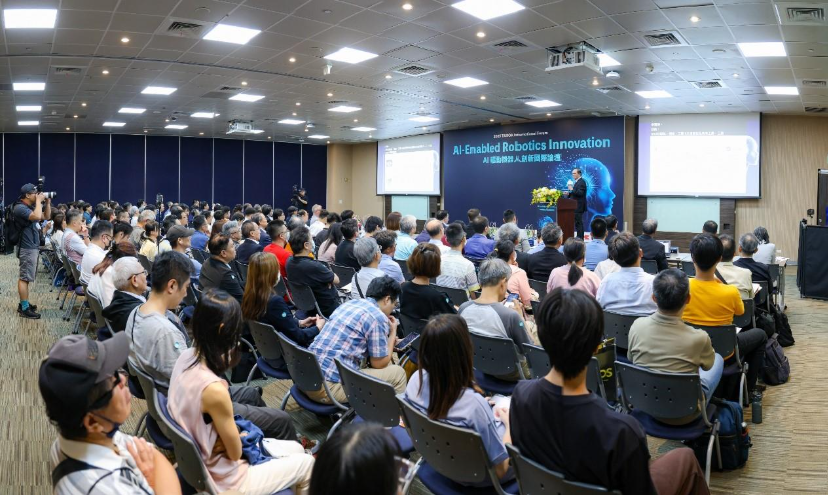
The Taiwan Automation Intelligence and Robot Show (TAIROS) and the Taipei International Industrial Automation Exhibition took place from August 20 to 23 at the Nangang Exhibition Center. A centerpiece of the event, the "Full Interpretation of AI Robotics Trends" forum—organized by the Taiwan Automation Intelligence and Robot Association (TAIROA)—brought together over 800 experts across dozens of sessions. Discussions focused on breakthroughs in AI technology, international safety standards, humanoid and quadruped robots, and the practical achievements of AI in manufacturing.
 |
The Rise of "Physical AI" and Edge Computing
NVIDIA noted that AI is entering the era of "Physical AI." By utilizing the Isaac Sim digital twin platform, the Project GR00T humanoid robot initiative, and the SoR modular platform, the transition from simulation to physical application is accelerating. Intel emphasized that edge computing will become a core driving force, while Infineon pointed out that Edge AI can reduce energy consumption by up to 90% while improving reliability. The Industrial Technology Research Institute (ITRI) added that "Domain-Specific AI" is more practical for the manufacturing sector, noting that the integration of cloud and edge computing will be key.
Safety Standards and the EU AI Act
The upcoming ISO 10218:2025 standard will extend safety requirements to AI decision-making processes, necessitating a "deterministic layer" to ensure reliability. Industry giants FANUC and Kawasaki Heavy Industries stressed that safety is not just a technical issue but also involves psychological trust. Rockwell Automation highlighted that digital twins can verify safety protocols in advance, while Techman Robot has already integrated AI with safety designs to comply with the EU AI Act.
Hardware Evolution and International Highlights
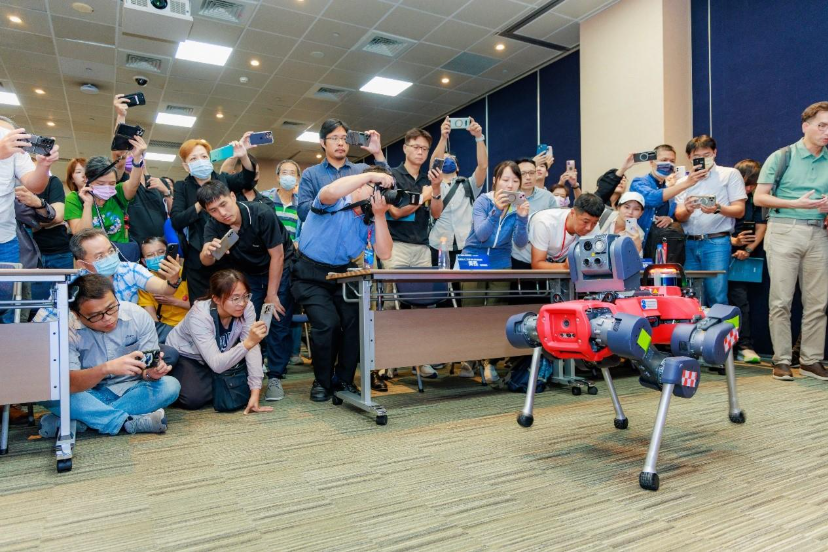
TECO believes Taiwan holds a competitive edge in mechatronics, transmission components, and sensors, predicting significant growth in the humanoid robot market after 2027. Mega-Fabs Motion Systems shared that joint motors are evolving into integrated drive modules, while NexCOBOT introduced the concept of a "Robot Brain." A major highlight of the exhibition was the Taiwan debut of the ANYmal quadruped robot by Swiss company ANYbotics, demonstrating autonomous industrial inspection applications.
 |
Measurable Gains in Production Efficiency
Companies including Foxlink, NexCOBOT, iAmech, and III (Institute for Information Industry) demonstrated the impact of AI on productivity. Notable results included:
-
Lead times shortened from 22 days to just 3 days.
-
Inventory turnover improved by 8.265%.
-
Quantifiable achievements in supply chain management, quality inspection, and carbon reduction.
ITRI and various vendors shared AI applications across six major domains: order quoting, R&D design, scheduling, production management, and intelligent processing, signaling that "intelligence" has been fully implemented across the industry.
A Vision for the Future
S.Y. Sit, Chairman of TAIROA, stated that Taiwan should use AI to enhance existing applications while simultaneously investing in humanoid robots and new hardware R&D. He emphasized that safety must remain the core driver of industrial upgrades, noting: "The fusion of AI and robotics is no longer a future concept—it is happening right now."


