

TMTS 2026 International Forum: From Embodied AI to Resilient Supply Chains—The New Era of AI-Driven Manufacturing
When AI is no longer just a tool for process optimization but begins to "learn, judge, and inherit expertise," the competitive logic of the manufacturing industry is undergoing a total transformation. In collaboration with TechOrange, the TMTS 2026 International Forum provided an in-depth analysis of how Embodied AI is entering production lines and how human experience is being digitally replicated. The forum explored topics ranging from AI robotics and Digital Twins to defense, aerospace, and semiconductor supply chains, highlighting how Taiwan's machine tool and precision machinery industries are building a more resilient intelligent manufacturing ecosystem amidst geopolitical shifts and high-volatility environments.
The Rise of AI Robotics: From Production Line Automation to Teachable and Inheritable Intelligent Manufacturing
Insights from the speakers at this year's TMTS International Forum reveal that AI Robotics is no longer a simple extension of automation. Instead, it has become a critical solution for addressing labor shortages and high-volatility environments. Four experts outlined the new "Smart Manufacturing" track for the machine tool industry, covering technical trends, core capabilities, industrial applications, and AI implementation.
-
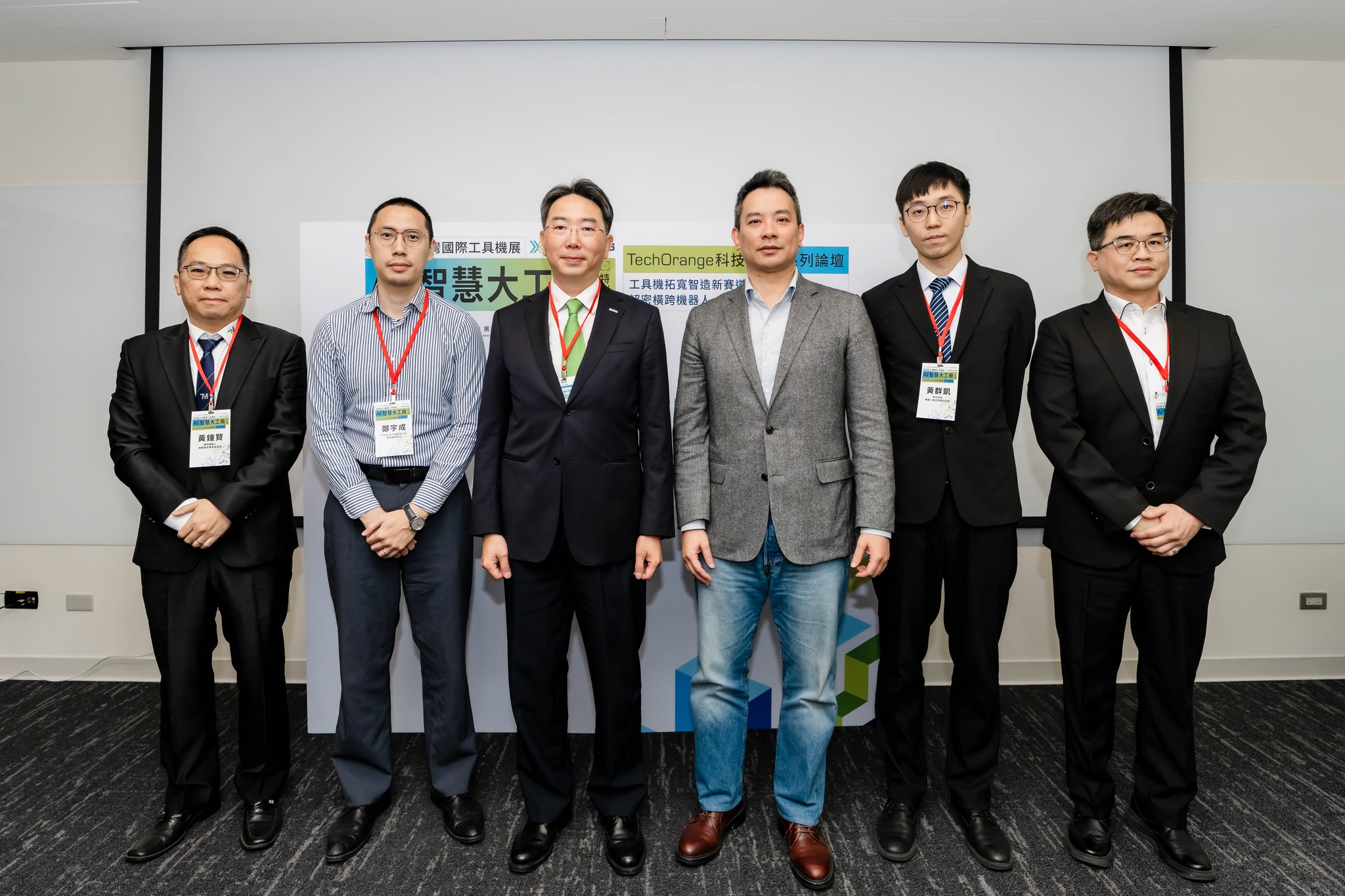
Chung-Hsien Huang, Assistant Vice President of the Vision Application Division at Techman Robot, pointed out that AI is evolving from assisted perception toward "Embodied Intelligence" with judgmental capabilities. Through Digital Twin technology, enterprises can simulate production lines and perform AI training in virtual environments, reducing trial-and-error costs. Coupled with synthetic data generated by Generative AI, robots can stably perform loading, unloading, and inspection even in oily or unstructured environments, laying the foundation for highly flexible manufacturing.
-
Yu-Hsiu Chung, Senior Associate Manager at SOLOMON, approached the topic from the perspective of active vision, emphasizing that the future challenge for robots lies in the real-time integration of vision and behavior. Through the Vision-Language-Action (VLA) model and no-code platforms, robots can rapidly learn new objects and tasks, significantly lowering the barrier to implementation and line changeovers while accelerating cross-sector applications.
-
Yu-Cheng Cheng, Senior Sales Manager at Profet AI, introduced the concept of the "Domain Twin." By using machine learning to transform the maintenance and process expertise of senior personnel into "Digital AI Employees," companies can support predictive maintenance and yield optimization, strengthening long-term operational resilience.
-
Syntec Technology, a long-time leader in CNC control systems and peripheral integration, represented by Chun-Kai Huang, Manager of the Robot Product Department, focused on the practical implementation of AI. He proposed "One Machine, One Arm" automation solutions. By deeply integrating CNC controllers with collaborative arms, Syntec has developed "customized collaborative three-joint arms" that are fence-free, highly protective, and easy to operate. This makes robots a standard feature for new machines, helping SMEs transition toward smart factories with high cost-performance ratios.
In summary, AI robotics has upgraded from mere equipment installation to becoming the core of intelligent manufacturing—combining cutting-edge technology with human expertise.
 |
Driving New Momentum in Defense and Aerospace: Manufacturing Resilience via Data-Driven Insight and International Collaboration
The expert shares in this session sketched a critical blueprint for Taiwan’s defense and aerospace industries under global shifts. From the combat evolution of drones to the intelligent transformation of advanced aerospace equipment, all signs point to a single core truth: Taiwan’s precision machinery is at a turning point, moving from selling individual machines to providing "Intelligent Integrated Solutions."
-
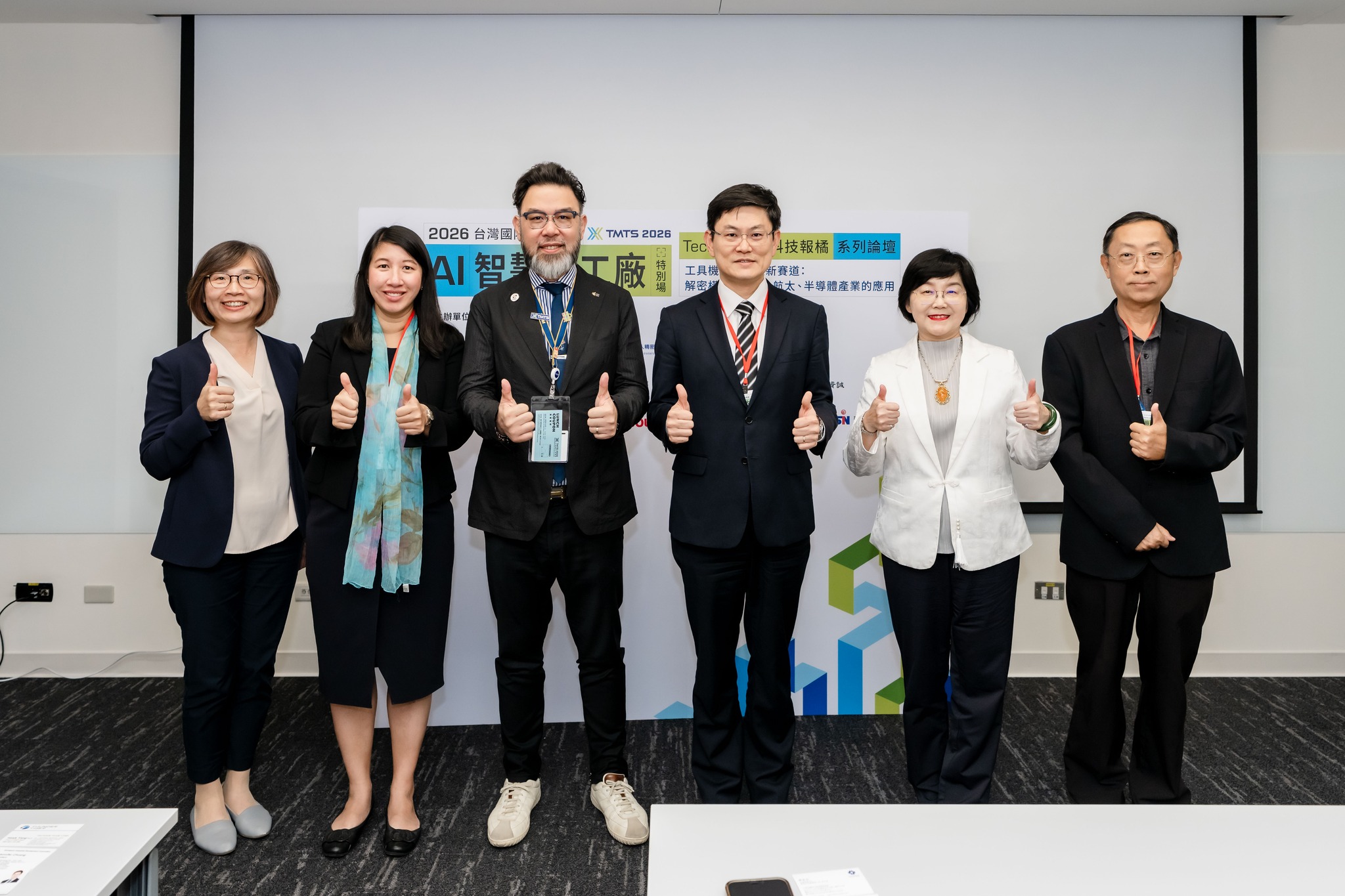
Dr. Jane-Way Zherg, General Director of the Mechanical and Mechatronics Systems Research Laboratories at ITRI, noted that drones have shifted from specialized military hardware to highly consumable "ammunition." This transition demands higher mass-production capabilities and supply chain resilience, creating opportunities for Taiwan's precision machinery players to pivot toward high-value defense manufacturing. ITRI has already invested in system design, flight control software, and Green UAS certification to help players enter aerospace-grade machining and the localization of key components, shaping a "Trusted Democratic Supply Chain."
-
Christine Herbst-Kubitz, CEO of Siemens Taiwan, emphasized that the aerospace industry faces multiple challenges in cost, time-to-market, and supply chain resilience. She believes Digital Twins and Industrial AI are key drivers of transformation. Through end-to-end digital solutions, Siemens helps customers significantly shorten machining and verification times, enhancing manufacturing efficiency and sustainable competitiveness.
-
Hsiu-Mei Chuang, President of AIDC, shared that the aerospace leader has spent a decade using data-driven decision-making and AI empowerment to digitalize the experience of veteran master craftsmen. This expertise is applied to quoting, quality inspection, and predictive maintenance, solving issues related to aging equipment and talent gaps. Through human-machine symbiosis and Generative AI, AIDC is accelerating its move toward smart manufacturing and a resilient drone supply system.
-
Thunder Tiger, a benchmark in the domestic drone industry, represented by CTO Fu-Sen Yang, shared how the company focuses on land, sea, and air tri-phibious unmanned vehicles. By combining AI autonomous navigation with anti-interference communications and validating reliability through real-world combat data, Thunder Tiger is collaborating with international partners and AIDC. Leveraging Taiwan’s ICT strengths, they are rapidly expanding production to meet the growing global demand for "Made in Taiwan" (MIT) drones in both defense and civilian markets.
 |
From Trillion-Dollar Trends to Craftsmanship Implementation: AI Transformation Tactics for the Semiconductor Supply Chain
The semiconductor session focused on the structural changes driven by Generative AI, spanning market growth momentum, memory architecture, cooling materials, and smart manufacturing. Experts noted that AI is accelerating chip development toward high performance, low power consumption, and high customization. The key to supply chain competition has shifted from single-point technology to integration capabilities and manufacturing resilience.
-
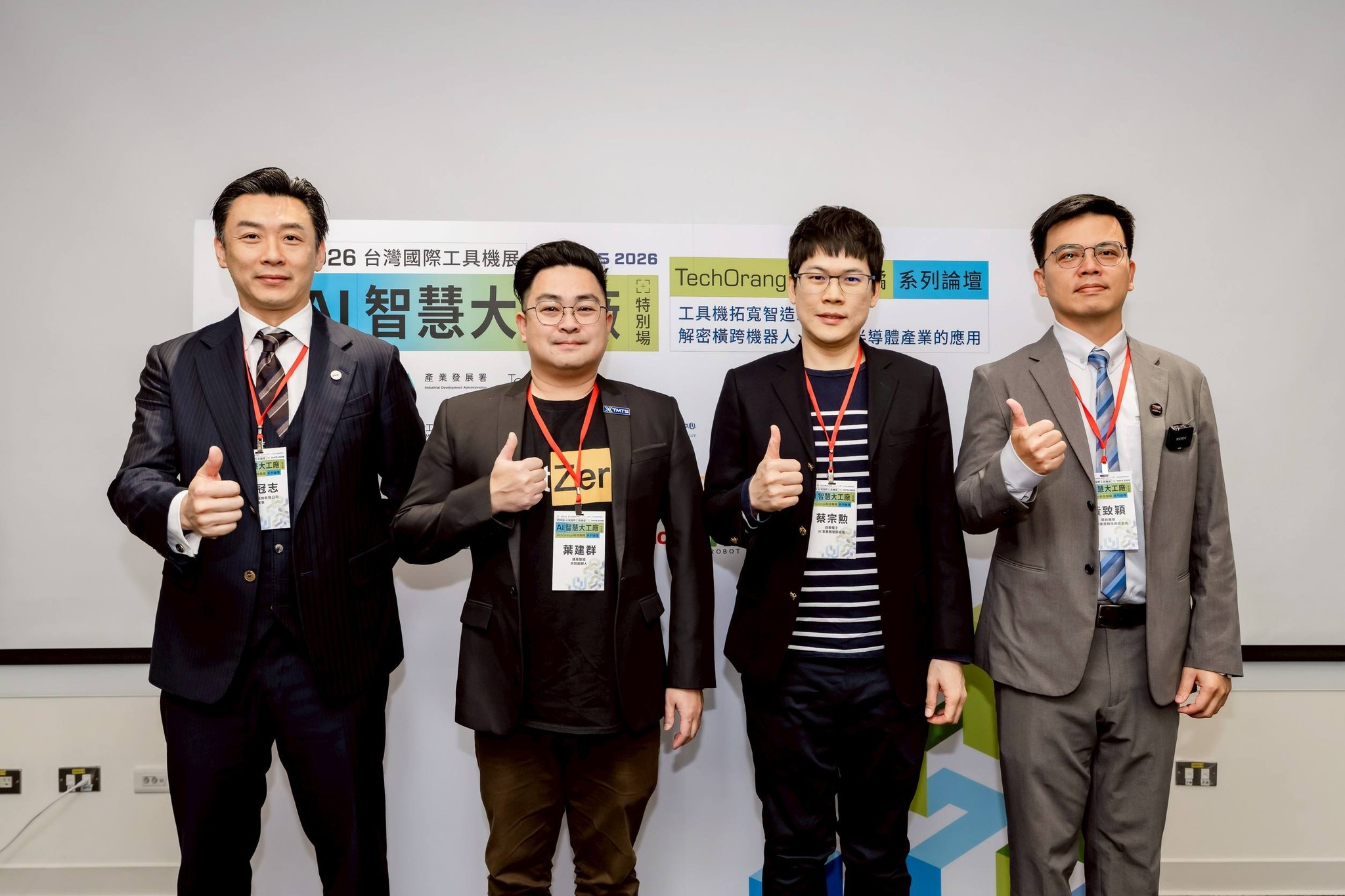
Jerry Liu, Partner at PwC Taiwan, pointed out that the global semiconductor market is expected to grow from $600 billion in 2024 to over $1 trillion by 2030, driven primarily by servers/networking and automotive sectors. Post-2030, autonomous driving, humanoid robots, and brain-computer interfaces will drive a new wave of demand for ultra-low power, highly integrated, and customized ASICs.
-
Tsung-Hsun Tsai, Associate Manager at PHISON, addressed memory bottlenecks caused by Generative AI with the aiDAPTIV+ solution. By using NAND Flash to create an "AI Cache," the technology breaks GPU VRAM capacity limits, allowing large models to run on edge devices while balancing cost, performance, and data sovereignty.
-
Chih-Ying Huang, Director at Walsin Lihwa, discussed materials, noting that AI servers have made liquid cooling a necessity. Walsin Lihwa developed specialized stainless steel for liquid cooling quick-connectors under the new brand "Steeval®." Through material modification, they have improved machinability and corrosion resistance, extending tool life and strengthening the quality of key components for the semiconductor and AI industries.
-
AI is the key to overcoming bottlenecks in precision machining. Chien-Chun Yeh, Co-founder of DataYoo, stated that their platform integrates AI for quoting, scheduling, and knowledge management. This significantly shortens estimation times and digitalizes the expertise of senior technicians, helping semiconductor supply chain processors improve yields, free up manpower, and accelerate digital transformation.
 |


