

TAIROS 2026 Signals a New Chapter for Robotics: Taiwan Manufacturing Advances from Key Components to Physical AI
Introduction
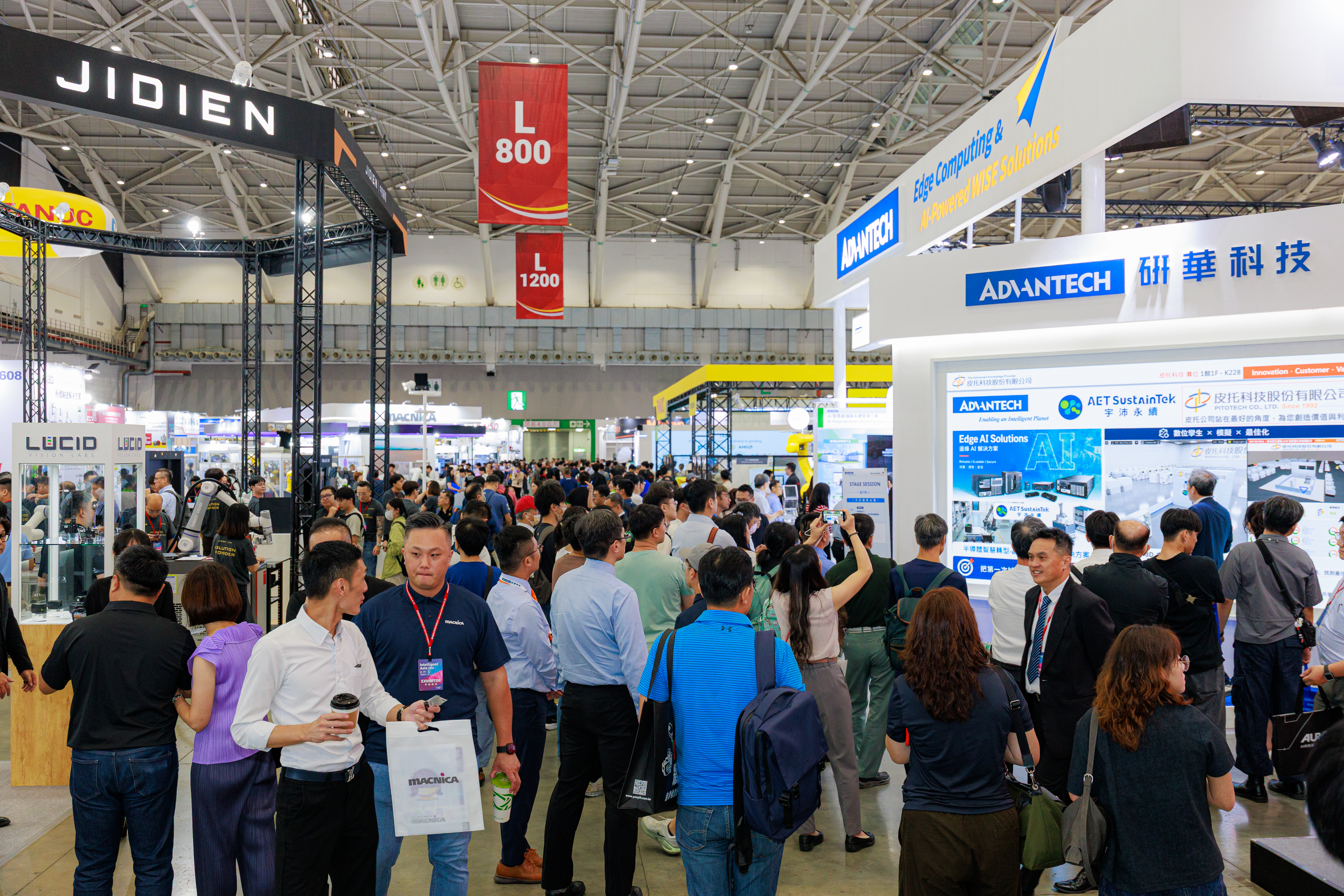
With the continued advancement of artificial intelligence, sensing technologies, and precision control, the exhibits at TAIROS 2026 reveal that the technological positioning of robotics is shifting from dedicated equipment designed for single tasks toward general-purpose systems with both environmental adaptability and professional capabilities.
Many robotics companies are prioritizing high-value application fields with clearly defined task requirements, such as semiconductors and electronics manufacturing services, in order to establish demonstration cases that can operate continuously and be replicated at scale. Future industry development will focus on AI models, sensing and control, whole-machine system integration, and safety validation, while accelerating the modularization of hardware and software as well as the standardization of interfaces. Although humanoid robots were a major highlight at the exhibition, market evaluation criteria are gradually shifting from demonstration effects to actual delivery volume, continuous operating time, task success rate, implementation cost, and the ability to deploy rapidly and scale across different application fields.
 |
Source: TAIROA (2026)
Exhibition Observations: Robots Are Moving from Standalone Machines to Intelligent Systems
TAIROS 2026 shows that robotics technology is evolving from traditional high-precision motion control toward the integration of vision, force sensing, AI decision-making, and Sim-to-Real capabilities. For example, Chieftek Precision Co., Ltd. (cpc) showcased cpcRobot, which can be flexibly deployed for loading and unloading, assembly, and inspection. FANUC combined its own camera technology, automatic hand-eye calibration, and FingerVision to demonstrate capabilities in cable wiring and wiping irregular curved surfaces. Solomon Technology Corporation used AI vision and AR to handle complex cable guidance, while MVTec demonstrated wafer and PCB anomaly detection with HALCON. These examples indicate that for robots to enter highly variable tasks such as wiring, grinding, wiping, and precision inspection, they must simultaneously integrate vision, touch, force sensing, and real-time control, rather than relying solely on the speed and accuracy of the robotic arm itself.
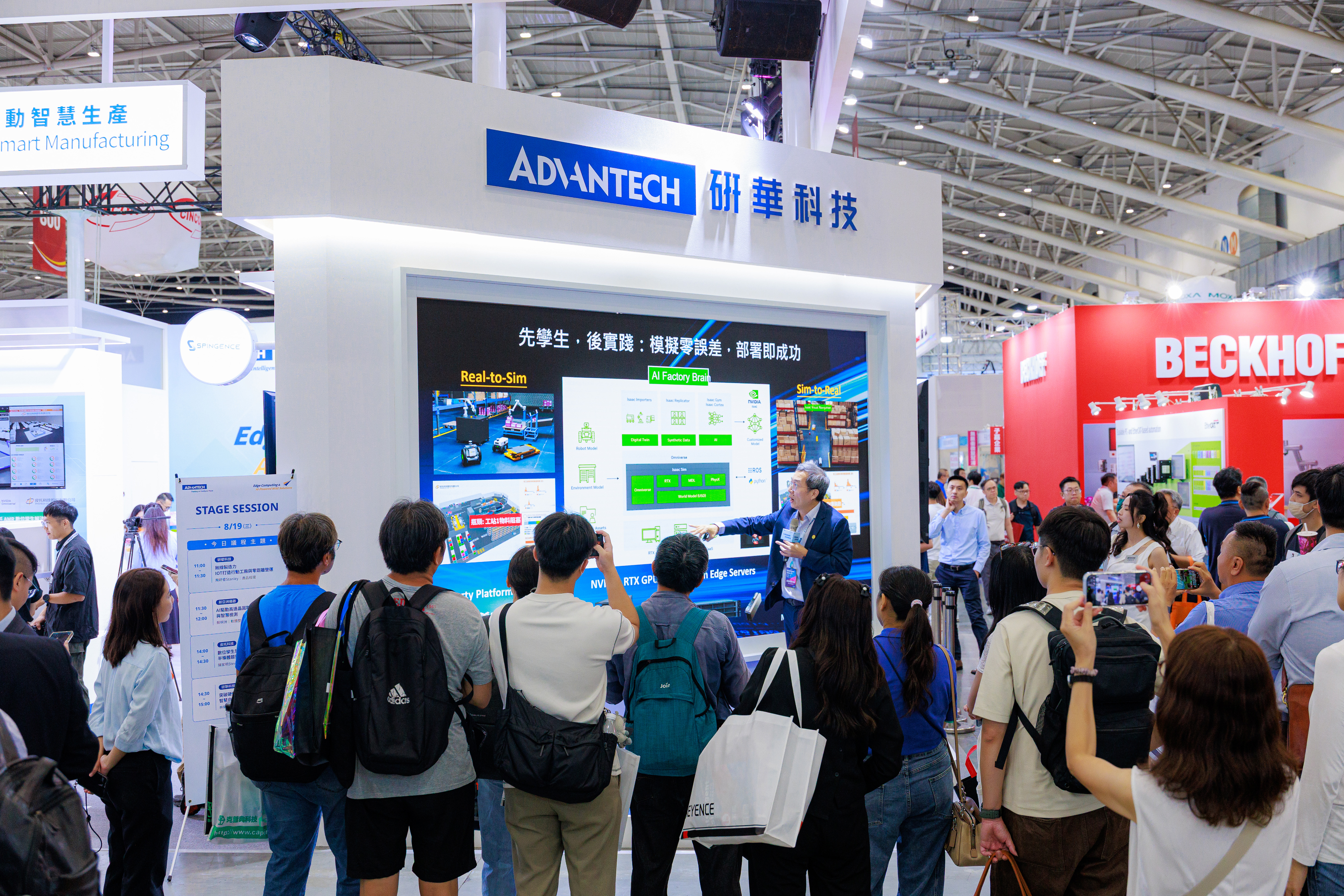
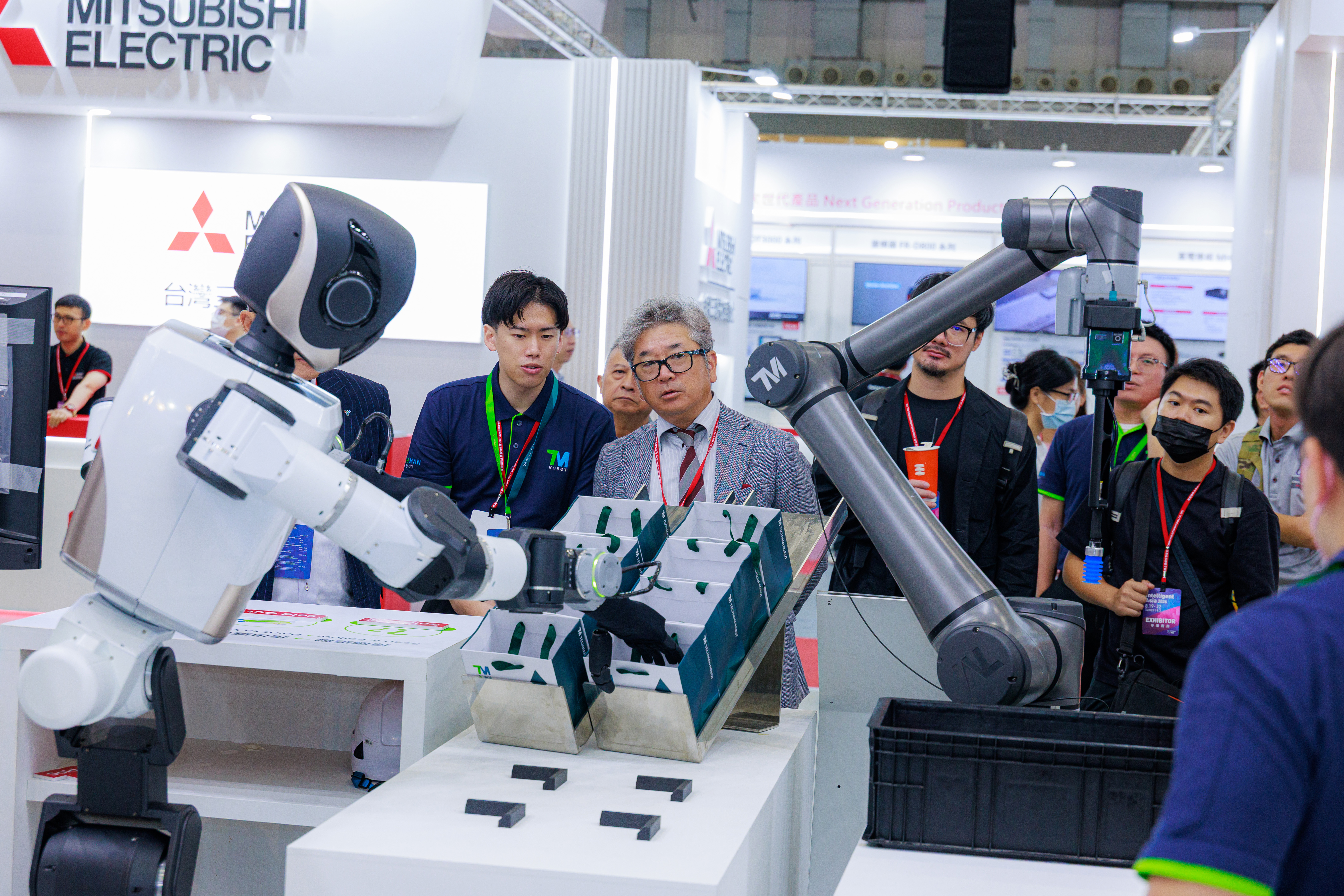
Virtual-physical integration also emerged as a major theme at the exhibition. TECHMAN ROBOT INC. (Techman Robot) used NVIDIA Omniverse and Isaac Sim to simulate semiconductor FOUP and heavy server handling. Delta Electronics, Inc. demonstrated dual-arm collaboration, its self-developed AI robot control platform, and virtual training results. Advantech Co., Ltd. integrated AMR dispatching systems, edge platforms, and Omniverse, with related solutions already implemented at AUO Corporation facilities. ITRI showcased technology that trains more than 4,000 robotic dogs in a virtual environment across multiple gaits before applying the results to high-risk fields such as firefighting. These examples show that robot development processes are shifting from repeated physical trial and error to training and validation in digital twin environments before deployment in real-world settings.
 |
Source: TAIROA (2026)
Industry Chain Development: Key Components and System Solutions Are Upgrading in Parallel
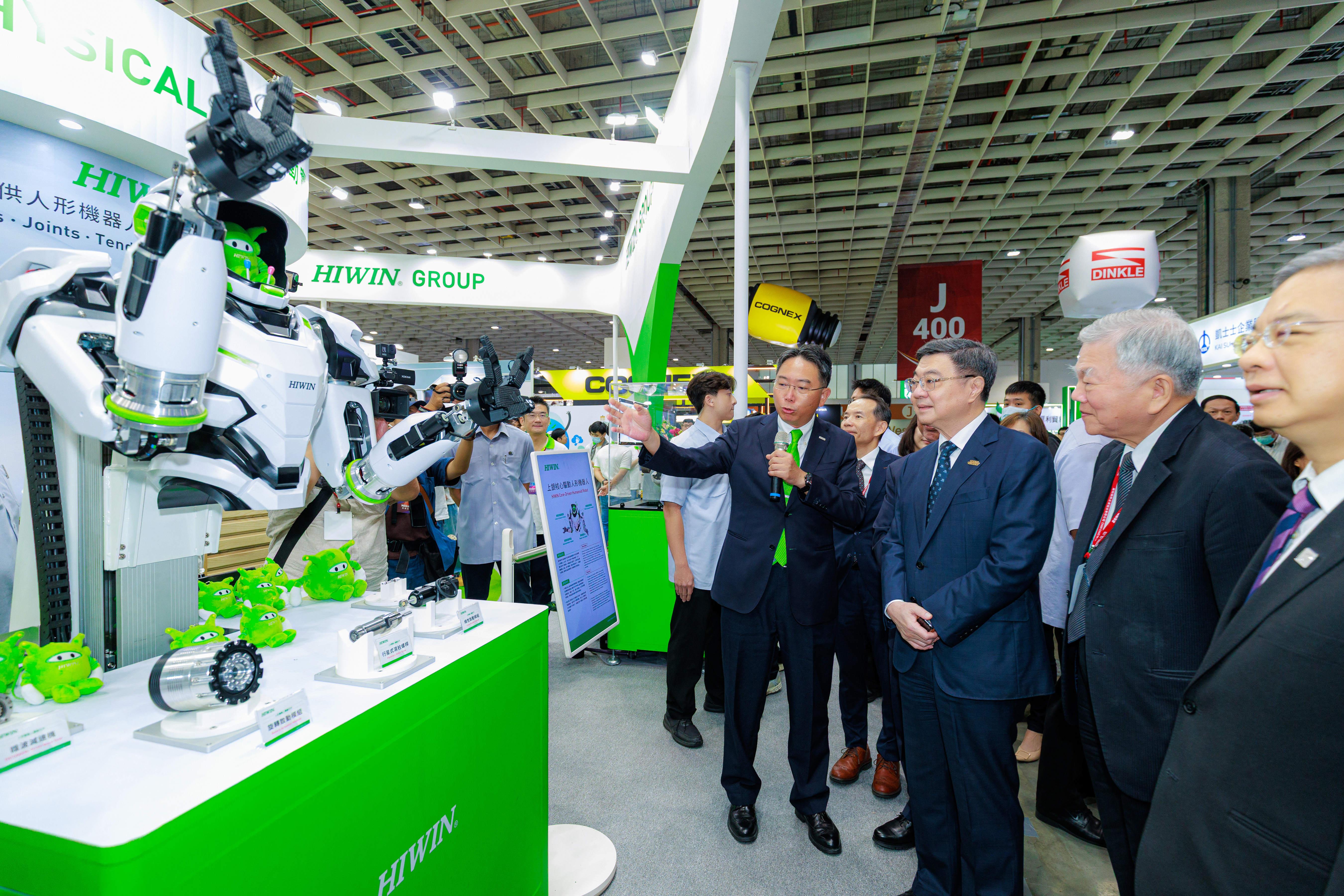
From the perspective of the industry chain, many Taiwanese companies are moving from single-product supply toward the integration of key components, robot bodies, and field solutions. For example, HIWIN Technologies Corp. (HIWIN) showcased humanoid dual-arm logistics robots, intelligent welding systems, and precision positioning solutions for semiconductor PLP and CPO applications, demonstrating vertical integration capabilities from ball screws, planetary roller screws, harmonic reducers, and actuator modules to control systems. TBI MOTION TECHNOLOGY CO., LTD. (TBI Motion) used a bionic muscle structure to generate high thrust for heavy-load handling, while PARKSON WU INDUSTRIAL CO., LTD. (AXION) introduced high-precision harmonic reducers for the industrial robot joint market. These exhibits reflect Taiwan’s strong foundation in precision transmission, motion control, and manufacturing mass production, as companies begin extending existing capabilities into humanoid robots and Physical AI.
Field applications are also expanding from fixed production lines to equipment maintenance and remote operations. ASUSTeK Computer Inc. (ASUS) uses magnetic vibration sensors to monitor gears, belts, and bearings, then applies large language models to analyze abnormal trends. AXON demonstrated remote operation of a forklift in Japan from a physical cockpit in Taiwan, reducing the need for personnel to enter high-risk environments. KUKA demonstrated precision collaboration, process data monitoring, and production history tracking through a shared coordinate system for dual robotic arms and intelligent micro-torque fastening. The robots displayed at the exhibition are no longer limited to repetitive handling tasks; they are increasingly becoming key execution endpoints that connect physical equipment, edge computing, AI platforms, and on-site workflows.
 |
Source: TAIROA (2026)
Technology Focus: Joints, Perception, and Model Capabilities
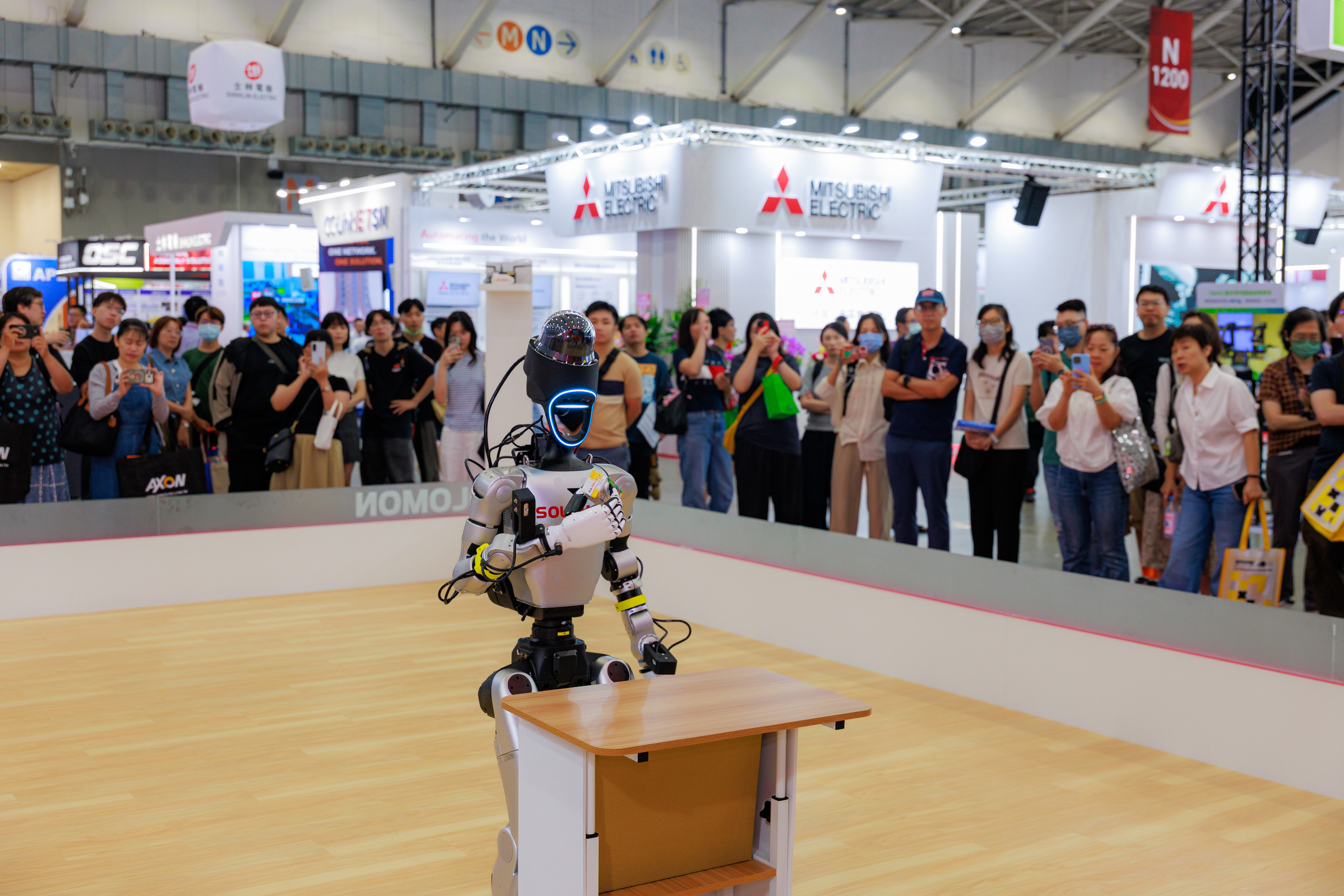
The technological development presented at this year’s exhibition can be summarized across three levels: joints, eyes, and brains. Joint actuators remain a key focus for Taiwan’s robotics supply chain, with companies such as HIWIN, Precision Motion Industries, Inc. (PMI), TBI Motion, and TOYO AUTOMATION CO., LTD. (TOYO Automation) all investing in this area. Joint actuators account for roughly half of a humanoid robot’s cost, and the yield rate, durability, thermal stability, and ease of maintenance of reducers, roller screws, sensors, motors, and drives directly affect whether humanoid robots can move toward mass production. Future joint modules will develop toward higher torque density, greater efficiency, and integrated servo joints, reducing size while improving power density and dynamic performance through the modular integration of drive, transmission, and sensing systems. In terms of materials, lightweight structures such as carbon fiber will be introduced to reduce weight while maintaining rigidity and load capacity.
In perception, technology is moving from lower-cost RGB vision toward more reliable 3D and depth-sensing solutions. For the robot brain, development is progressing toward the integration of VLA models, world models, large models, and reinforcement learning, enabling robots to understand environments, plan tasks, and execute autonomously. However, the number of companies currently investing in this area remains limited, mainly due to insufficient real-world robot data, high data collection costs, and the difficulty of fully transferring simulation results into real-world environments. International technology companies such as NVIDIA, Google, Meta, and OpenAI are developing world models with the aim of enabling robots to understand how the world works, but general-purpose large models will not solve all problems at once. A more practical path is to make step-by-step breakthroughs according to specific application scenarios while accumulating data, reliability, and implementation experience.
 |
 |
Source: TAIROA (2026)
Industry Competition: Hardware-Software Integration and Ecosystem Capabilities
Most robotics companies believe that the critical factor in future competition will be whether robots can achieve stronger perception, judgment, decision-making, and task generalization capabilities. Industry competition will expand from hardware specifications and cost to model capabilities, data loops, algorithm iteration, and field validation. The exhibits show that many companies are moving from single machines and components toward Physical AI-centered system integration applications, following End-to-End and Sim-to-Real technology routes. Through the integration of visual, voice, and motion commands, robots are beginning to gain environmental understanding, task planning, and autonomous operation capabilities. Companies that master real-world field data and AI model integration will have greater opportunities to establish market leadership.
Taiwan’s domestic industry still faces challenges including inconsistent hardware-software interfaces, insufficient component compatibility, and high barriers to integrating perception, control, and AI models. Although many companies possess individual products and technologies, robot manufacturers often need to handle drive interfaces, communication protocols, and system integration on their own, making it difficult to quickly form replicable and mass-producible solutions. At this stage, robotics products also rely heavily on NVIDIA chips and simulation technologies for computing processors and simulation training platforms. In addition, rare earth magnets are important materials for motors and joint actuators, while mainland China controls supply capabilities from mining and refining to processing and manufacturing. If U.S.-China technology competition intensifies further, export controls on rare earth materials could affect key component costs, supply stability, and mass-production schedules.
During the exhibition, several research forums discussed the need for Taiwan to accelerate the establishment of common software frameworks, standardized interfaces, modular components, and testing and validation platforms. Industry participants also believe that the supply chain must move beyond supplying single components to develop hardware-software integration and platform capabilities. The general view is that future competition will gradually become ecosystem competition. Companies that can establish a common intelligence foundation and connect software, hardware, data, and application partners will be more likely to expand implementation scale. Product value will also extend from the hardware itself to software capabilities such as perception, interaction, decision-making, and execution.
HIWIN is a typical example. In the past, when people mentioned HIWIN, the first things that came to mind were ball screws, linear guideways, and various key components for machine tools. Today, however, HIWIN has clearly stated that it no longer defines itself entirely by the machine tool industry. In the first half of this year, all of HIWIN’s top five customers even came from the semiconductor industry. This represents an important shift: has HIWIN merely accumulated the ability to produce “machine tool components,” or has it mastered precision transmission, positioning, and control technologies?
If the answer is the latter, the markets a company can address become completely different. The same technology can be applied not only to machine tools, but also to semiconductor equipment, robotics, medical devices, aerospace, and optoelectronics. Moreover, the value created by the same product may differ dramatically depending on the market in which it is applied.
For example, when smart screws are applied to traditional machine tools, customers may consider them too expensive. When applied to semiconductor equipment, however, the situation is different. If a wafer fab experiences unexpected downtime, it may incur extremely high operational losses. As long as smart screws can help monitor equipment conditions, predict failures, and reduce downtime risk, customers may be willing to pay a higher price. In many cases, the issue is not that a product lacks value, but that companies are still using old-market logic to sell new capabilities. The same product can create vastly different value in different markets. For companies that can reposition their markets, accelerate product upgrades, and expand new applications, the next wave of growth remains promising, with the potential to demonstrate competitiveness and development momentum beyond the previous business cycle.
Conclusion
Humanoid robots remain the stars of the exhibition, although many of them come from mainland Chinese brands. Market attention is also shifting from demonstration effects to whether practical reliability can be established. For humanoid robots to enter factories and commercial fields, they must still go through production, deployment, maintenance, and safety validation, making them difficult to replicate as quickly as software models. Future competitiveness should not be evaluated only by whether movements are smooth, but also by equipment uptime, failure rates, maintenance requirements, per-unit deployment cost, cross-field replication capability, and fleet learning effectiveness. The market is still in a stage where multiple technology routes are developing in parallel, and no clear mainstream architecture or leader has yet emerged. The key to future competition will be whether companies can be the first to overcome industrialization barriers such as reliability, cost control, mass production, and business models, transforming technological prototypes into sustainable products and services that can be implemented in real-world settings.
Overall, TAIROS 2026 presents the development direction of Taiwan’s robotics industry as it moves from standalone equipment to intelligent systems, and from components to integrated solutions. Taiwan already possesses diverse strengths in precision transmission, robot bodies, AI vision, control platforms, and application fields. In the next stage, it should strengthen cross-domain technological and industry-chain collaboration, establish AI robotics solutions that are verifiable, mass-producible, replicable, and exportable, and further transform existing manufacturing advantages into competitiveness for the era of Physical AI.


