

A New Wave in Semiconductor Supply Chains: Taiwan’s Precision Machinery Steps Forward
As AI reshapes the global technology landscape, the demand for faster chips and greater computing power is placing unprecedented pressure on the semiconductor supply chain. High-performance computing (HPC) has become a key driver of this momentum. SEMI’s latest forecast now places global semiconductor output at US$1.5 trillion by 2030, a substantial upward revision from the previous US$1 trillion outlook.
With Moore’s Law approaching its physical limits, however, semiconductor competition is no longer defined by node shrinkage alone. The focus is moving toward system-level integration and advanced packaging technologies such as CoWoS, 3DIC, through-glass vias (TGV), and panel-level packaging (PLP). At the same time, product generation cycles have compressed from two to three years to just one to one and a half years, intensifying pressure on equipment capacity and delivery schedules and creating a timely opening for Taiwan’s precision machinery sector.
Rising Forecasts, Shorter Lead Times: Local Collaboration Moves to the Fore
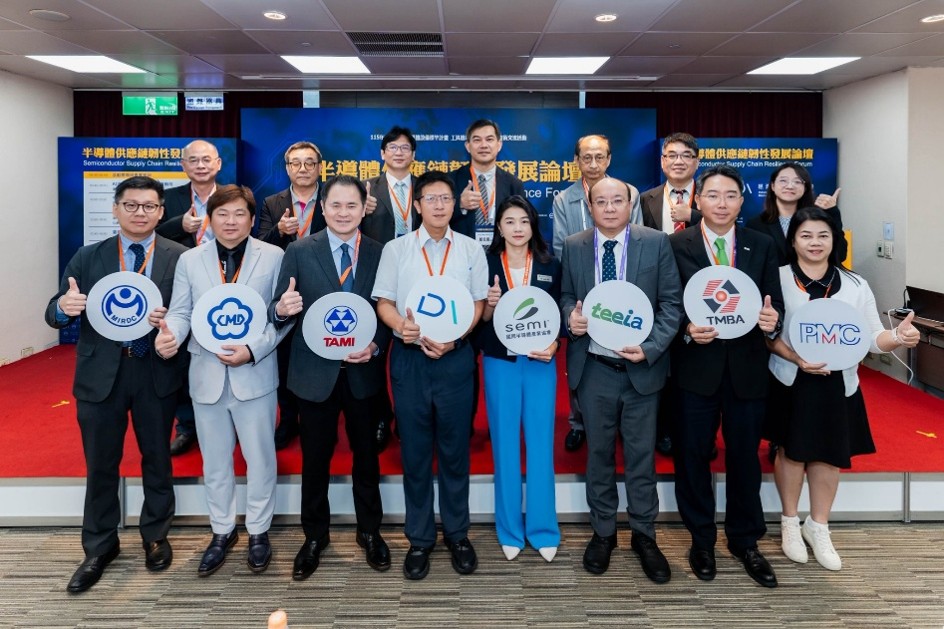
Against this backdrop, the Industrial Development Administration, Ministry of Economic Affairs, held the “Technical Exchange on Machine Tool Opportunities in the Semiconductor Industry—Semiconductor Supply Chain Resilience Forum” on September 4, 2026, during SEMICON Taiwan 2026 at Taipei Nangang Exhibition Center, Hall 1. More than a technical exchange, the forum served as a meeting point between semiconductor demand and Taiwan’s precision machinery capabilities.
Organized by the Metal Industries Research & Development Centre (MIRDC) and implemented by the Precision Machinery Research & Development Center (PMC), the forum brought together SEMI, the Taiwan Electronic Equipment Industry Association (TEEIA), the Taiwan Association of Machinery Industry (TAMI), the Taiwan Machine Tool & Accessory Builders’ Association (TMBA), and the Precision Machinery Development Association (CMD). Its core purpose was two-way matchmaking: helping semiconductor companies identify qualified local partners while encouraging precision machinery firms to move beyond the role of equipment suppliers and become high-value manufacturing partners.
 |
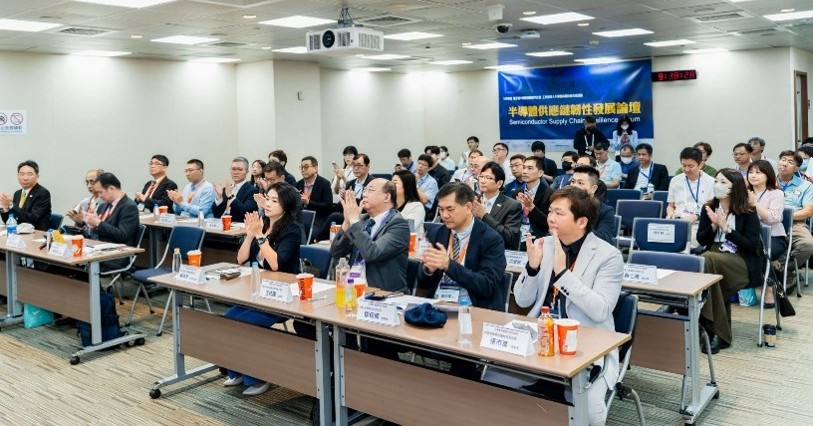
The response from industry was immediate. More than 45 companies and organizations and 75 participants joined the discussion, ranging from semiconductor firms and machine tool builders to key component suppliers, industry associations, and research institutes. Notably, machine tool builders and key component companies accounted for one-third of the participating organizations, reflecting a strong ambition among Taiwan’s precision machinery players to bring their established strengths into high-tech semiconductor applications.
For Taiwan’s precision manufacturing sector, AI-driven demand is more than a market signal—it is a call to upgrade. Deputy Section Chief Chen Chuan-Cheng of the Industrial Development Administration framed the moment as a key opportunity for transformation, noting that the forum was designed to help machine tool companies identify more precisely where and when they can enter semiconductor application markets.
The bottlenecks are also moving downstream. Cynthia Su, Vice President of SEMI Taiwan, pointed out that capacity constraints now extend beyond wafer fabrication to advanced packaging, equipment, materials, and substrates. With its dense cluster of precision machining and equipment capabilities, Taiwan is well positioned to seize trillion-dollar opportunities—provided equipment makers and machine tool companies can deepen co-development.
On the show floor, MIRDC Deputy Division Director Chen Chia-Lin observed three clear shifts: a higher level of specialization, stronger participation from younger talent, and a broader discussion agenda that has moved from pure technology development to overseas supply chain deployment, capacity expansion, and shorter delivery times. Together, these shifts point to a more urgent need for cross-industry collaboration and stronger local supply chain capabilities.
 |
Advanced Packaging Opens the Door for Precision Machining
The technical sessions traced the link between semiconductor process needs and Taiwan’s manufacturing strengths. Semiconductor equipment makers, precision machining specialists, and research institutes shared how advanced packaging is creating new requirements—and how local capabilities can respond.
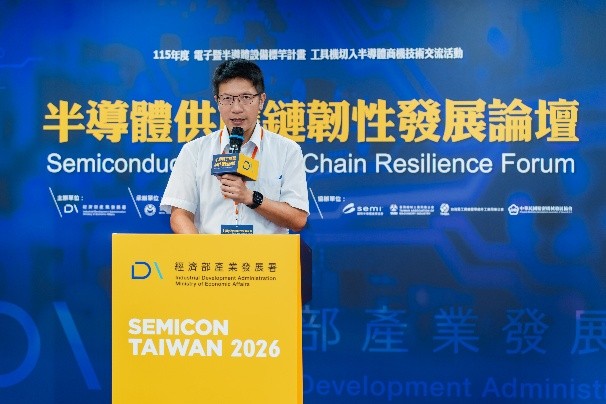
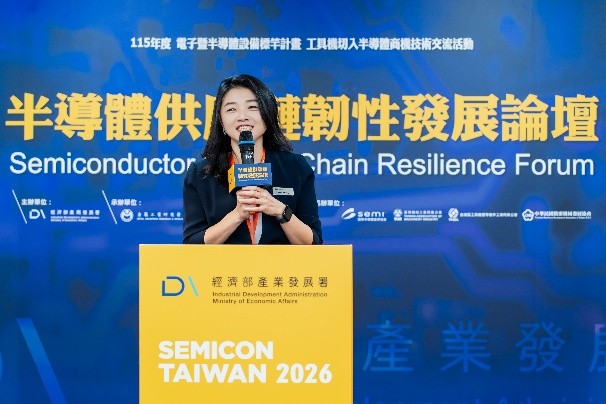
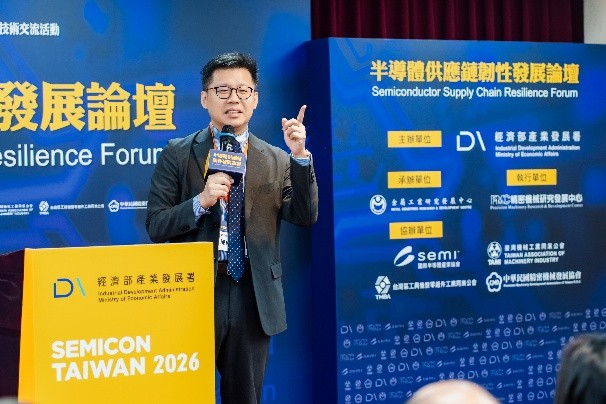
SCIENTECH CORPORATION President Tsou Kan-Ju analyzed the development of CoWoS and heterogeneous integration in advanced packaging, presenting wet process equipment solutions designed for high yield, high throughput, and AI-enabled applications. PMC Deputy Division Director Lin Cheng-Hsing further highlighted the role of glass core substrates (GCS) and TGV laser processing technologies in next-generation AI chip packaging.
GONGIN PRECISION INDUSTRIES CO., LTD. Chairman Su Yu-Hsin offered another view of industrial transformation. From traditional mold making, the company has advanced into high-end precision manufacturing for semiconductor and aerospace applications, focusing on complex, high-precision components. As global semiconductor supply chains reorganize and AI creates new demand, GONGIN is responding with localized supply, short lead times, and agile high-mix, low-volume production.
Other presentations underscored the breadth of precision machinery applications in semiconductor manufacturing: FAIR FRIEND ENTERPRISE CO., LTD. (FFG) Associate Manager Hung Chung-Yu presented vacuum chambers and the COPOS intelligent visualization system; FALCON MACHINE TOOLS CO., LTD. (CHEVALIER) Associate Manager Chen Shih-Chang demonstrated mirror polishing technology for electrostatic chucks (E-Chuck), achieving surface roughness as low as Ra 0.015 μm; Hantop Intelligence Technology Co., Ltd. Associate Manager Chu Shih-Huang introduced ultrasonic-assisted machining for hard and brittle materials including silicon carbide (SiC), quartz, and ceramics; and HOLD WELL INDUSTRIAL CO., LTD. General Manager Huang Shih-Ying presented intelligent monitoring technology for ceramic grinding.
 |
 |
 |
From Hidden Champions to Strategic Partners
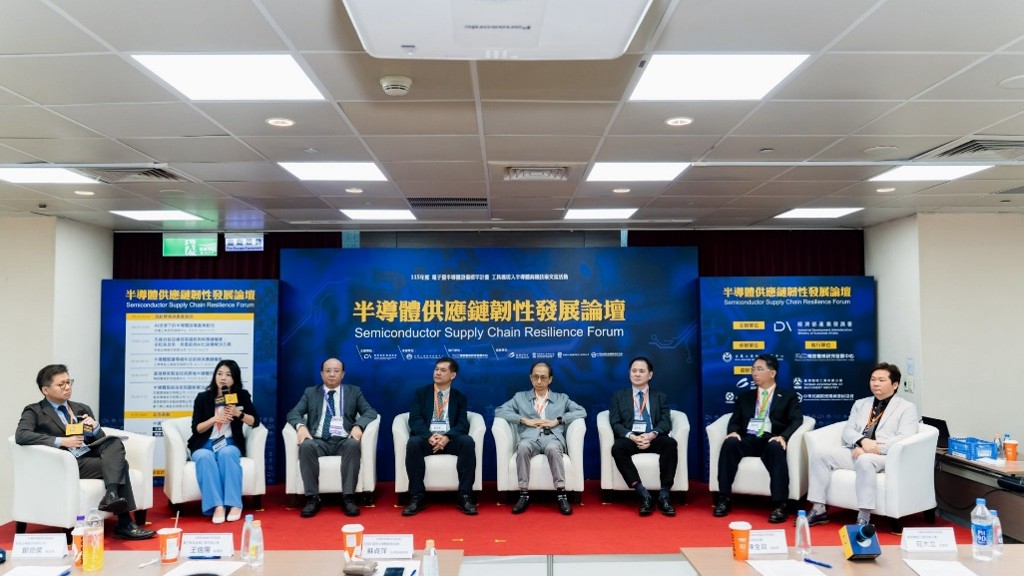
In the panel discussion moderated by MIRDC Deputy Division Director Chen Chia-Lin, seven leaders from industry associations and enterprises turned the conversation from capability to strategy. The question was not simply whether precision machinery companies can enter the semiconductor supply chain, but how they can become visible, earn trust, and move upstream into the development process. Four strategic paths emerged from the discussion.
Start with the customer’s bottleneck.
Entering the semiconductor field is not about showcasing machining capabilities first; it begins by understanding where customers are constrained. Cynthia Su, Vice President of SEMI Taiwan, suggested that companies use customer pain points as their entry point, identify the process challenges facing equipment makers and end users, and then propose solutions that can be co-developed. TEEIA Secretary General Wang Hsin-Yang added that traditional machinery companies must actively enter the semiconductor ecosystem through forums, exhibitions, and supply chain exchanges, building the relationships and trust needed to capture AI-driven transformation opportunities.
Turn quality systems into trust.
In the semiconductor equipment supply chain, machining precision is only the entry ticket. What sustains long-term collaboration is stability, repeatability, and traceability. SCIENTECH CORPORATION President Tsou Kan-Ju noted that semiconductor equipment companies evaluate suppliers not by a single successful machining result, but by consistent quality management, including OQC, IPQC, and continuous improvement mechanisms. GONGIN PRECISION INDUSTRIES CO., LTD. Chairman Su Yu-Hsin shared how MIS, ERP, and MES systems have helped the company build production visibility, process tracking, problem analysis, and stronger customer trust.
Find the opening in packaging, testing, and transmission.
As the semiconductor supply chain expands, the market boundaries for precision machinery are widening as well. TAMI Chairman Chuang Ta-Li observed that more than 100 machinery companies joined SEMICON Taiwan 2026, while Taiwan’s machine tool exports to the packaging and testing cluster in Penang, Malaysia, have also shown strong momentum. TMBA Supervisor Convener Cho Wen-Heng noted that transmission components are moving beyond machine tools into semiconductor and robotics applications, giving Taiwan’s machining and assembly capabilities a broader role in helping equipment makers connect capacity quickly.
Make hidden champions visible.
As semiconductor equipment development accelerates, collaboration must begin earlier. Precision Machinery Development Association Chairman Chang Shih-Yu urged Taiwan’s precision machinery firms to stop remaining “hidden champions” and instead work with industry, government, academia, and research institutes to build an industrial capability map. By making process capabilities, quality systems, and application experience visible to equipment makers—and by joining co-design at the early development stage—precision machinery companies can move from passive order-taking to strategic problem-solving partnerships.
 |
Perspective: From Manufacturing Strength to Co-Development Capability
- The forum made one message clear: the demand map is expanding. As advanced packaging capacity continues to grow, demand is rising for structural parts, vacuum chambers, precision components, and hard and brittle material processing—areas where Taiwan’s precision machinery companies already have a solid technical foundation.
- But technical capability alone will not be enough. Semiconductor customers place real value on PPM-level quality control, complete process traceability, cleanliness, and high-vacuum readiness. For many traditional machine tool companies, these are the next capabilities to strengthen if they want to move deeper into the semiconductor supply chain.
- The cooperation model is changing as well. With product cycles now compressed to one to one and a half years, equipment makers need partners that can join the development process early—not just suppliers that deliver after specifications are fixed. Industrial capability mapping and early-stage co-design will be essential to making qualified local companies visible and strengthening Taiwan’s semiconductor supply chain resilience.
For Taiwan’s machine tool and precision machinery industries, the opportunity lies not only in machining accuracy, but in becoming part of the semiconductor development cycle itself. By strengthening cleanliness, high-vacuum capability, quality traceability, and PPM-level quality control while engaging semiconductor equipment makers through early co-design, Taiwan’s precision machinery sector can move from a behind-the-scenes manufacturing force to a visible partner in the global high-tech supply chain.


